Categories
Career Free Advice Tech Working

How do you spell success?

Working in tech means being comfortable with change and uncertainty. Successfully working in tech means not letting change and uncertainty paralyze you.

Forge ahead on the best information you have, and be prepared to change direction as needed.

Categories
Advertising Collectibles Community content creativity Damned Fine Journalism Design Designers Desktops Digital Preservation Formats Free Advice glamorous HTML industry launches links music My Back Pages Own your content social media social networking software Surviving Tech Web Design Web Design History Web Standards Websites zeldman.com

My weekend project

It’s Sunday; I’m playing with my music collection, content as a fed-and-burped babe. Allow me to explain.

I realized last night that, in tracking my shifting musical tastes via my Last.fm Pro account, I’m basically remaking “Pardon My Icons,” the creative project I launched on this very website in 1995, back when it was still at a tilde address (it did not become zeldman.com until ’96), and which first brought my work to the attention of other creatives who were also discovering the early web and making it their own.

Me, collage, and music

Although I was not serious about it, I started making collage art when I lived in Washington DC in my 20s.

Back then I was serious about composing and producing. I used an Akai 12-track recorder, a rack of synth modules commanded by my Yamaha DX7 with a custom E! card, and a PC running Personal Composer MIDI, arranging, and composition software. I also had an old Selmer Bundy flute, an African reed instrument whose name I forget (and whose “reed” turned out to be a dried locust carcass, as I would discover, to my horror, when the instrument broke), Fender amps, mics, and a variety of percussion instruments with which I made music in my Washington, DC-based recording studio. But that’s a whole ’nother story.

I did not expect to earn a living as a composer, and in that negative expectation I was more than amply fulfilled.

So I scrounged up a day job at a local advertising agency as a naively optimistic copywriter.

And a night job as a stringer for The Washington Post’s Arts section.

Music journalist by night

The paper’s arts section editor in those days was named Richard. I’d gotten his attention without soliciting it after creating “Khz” for City Paper. Khz was my weekly music column. I covered the emerging go-go and hardcore scenes, as they were what was happening in DC, and the whole country would soon be listening. Naturally, the Post made me stop writing about that interesting and relevant stuff, and instead paid me $40 per to crank out anodyne concert reviews of mainstream artists like Kenny Rogers when their tours came through DC. (I was comped to the ticket but paid my own travel and gas out of the 40 bucks.)

I typically had 30 minutes from the time the headliner started to call in my review, which meant I had to write it in my head while watching the beginning of the performance, then run to a pay phone booth (kids, ask your parents) and dictate it aloud to someone on the copy desk, before the concert had even begun to build up a head of steam. This wasn’t fair to the artists. I did the best job I could under the circumstances, taking pride in how quickly I could structure and ship a news story. Richard fired me before I could quit, but that, too, is another story.

Most importantly at that time, I lived with a girlfriend. She was an artist and architect who had left that career to study computer programming. We were social (many friends, drinking was often involved), and serious about our art—which, in my case, was music, even if I earned my living writing concert reviews and crafting passable but hardly brilliant ads.

Through all of those ups and downs, and to the side of those major efforts, I kept at the collage for years, putting in several hours a night making the things. When each was finished—and deciding that any art product was finished was damned tough for my restless young mind—I would carefully frame it behind glass, and mount it on the walls of our apartment.

Was it art? Just a hobby? Who knows? It made me happy.

And then gradually, as I put more effort into my music and ad careers, I set the collage-making aside, for a time.

New career in a new town

Ten years later, I was a New York art director and copywriter, two years sober, and no longer in that same romantic relationship. That’s okay, I was in a new one.

I’d packed my music studio equipment—now obsolete because Akai stopped making the proprietary multitrack tape format that their 12-track unit ran on—in a storage unit. Eventually I’d give away all that music and recording equipment (keeping only the multitrack masters), but that, too, is another story.

Cutting-edge for a day

Then in 1995, one of our ad clients asked the agency if we could make them a website. Like many of you, we lied and said, sure. And then we figured out how to actually do it.

The client was Warner Bros., the project was “Batman Forever,” our visionary client was Donald Buckley, my partners were Steve McCarron, Alec Pollak, and Doug Rice, and the website was a huge hit, attracting half the people who visited the early web. (Alec’s “Flashback 1995: batmanforever” shares screenshots, which are great, although they cannot convey what a breakthrough the site was in March, 1995.)

With 3 million people using the web in 1995, the site got 1.5 million visits a day for over a year. Not bad.

Pardon my icons (1995)

First gallery spread of “Pardon My Icons,” a zeldman.com entertainment from 1995 ff.

I immediately set to work creating a personal site (this one), and Pardon My Icons was one of its first “entertainments.”

As is often the case with my creative efforts, I made these tiny, Warhol-inflected bits of art as a protest against what I saw as the mediocrity of the icons in general use on that early, early web.

(Similarly, my friends and I would later start The Web Standards Project in protest against the dumb ways most folks were being told to create websites, e.g. using proprietary tags instead of W3C and ECMA standards, because browsers didn’t properly support those. Having lost access to my musical master tapes because I’d invested in Akai’s non-standard and eventually discontinued tape format, I was kind of keen on not letting the internet fall victim to the same kind of nonstandard f*ckery. But that, too, is another story. We are gathered here to talk about icons and collage. So let’s do that:)

A mental break

I track my music on Last.fm Pro. Here’s my account. (But don’t look unless you, too, have a Pro account. I’ll explain why in a moment.)

Photo spread: some of the artists I listen to, as shown on last.fm Pro.
Some of the artists I listen to, as shown on last.fm Pro.

Last.fm lists the artists you play, arranging them by the number of plays. Thus, if you were to play three tracks by Freddie Gibbs and two by Bill Evans, you’d have a collage featuring those two artists, with Freddie preceding Bill because he has one more play than Bill.

But if you play three tracks each of Freddie Gibbs and Bill Evans, then Bill will come first, because Bill comes before Freddie alphabetically.

Through such moves, over time, an ever-shifting collage unfolds. But only in Last.fm Pro.

In regular, free old last.fm, you can see other people’s artists as a list, arranged by number of plays, interrupted by an ugly barrage of ads. This is a useful free service for those who are curious about what their friends listen to. But it is a list, not an artful collage, of course.

Collage for days

In Pro, you can see their artists and yours as an ad-free collage that goes on for pages and pages. Plus, as a Pro user, you can choose which photo represents which artist—and even upload your own. When viewing your collection, you and your visitors will see a collage of your favorite artists, in descending order of plays (and with the English alphabet deciding who at each play count precedes whom), using artwork you not only select, but you can also create and upload to the service.

I like Pro. And even though the product isn’t exactly in what you’d call hyper active development—even though the server isn’t always fast, even though there are a few bugs that will probably never get fixed, even though new features are introduced rarely, and the company’s customer service department isn’t exactly the most active help desk in tech—despite those minor drawbacks, the site does things no other website can do. And at US $3, the Pro account isn’t exactly priced out of reach for most customers. (If you can afford a computer, internet access, a music collection and/or a music streaming service, you can probably scratch the 3 bucks together as well.)

How to collage on last.fm

By controlling what I listen to, and the order in which I listen, I’m slowly building an infinite collage of my evolving musical tastes.

By choosing or finding the artist photos (often post-producing them in Photoshop), I create my mood, my rhythm, and my shifting color palettes.

There are design rules governing where portraits should be placed. For instance, people whose face or gaze points rightward get placed on the left of the grid, so they lead the viewer’s eye from left to right, into the composition, whereas those who gaze to my left belong on the right side, leading the viewer’s eye back in.

To reposition someone, I may listen to a few extra plays of them. Or use last.fm’s Pro Admin to subtract a few plays.

When I started using Last.fm, I merely wanted a visual record of what I was listening to, and when I listened. But as you may have inferred, an accurate count of everything I’ve listened to over the past years is no longer my goal in using last.fm; the goal is now the endless collage.

It’s kinda spiritual.

(Reminder: the only way to see it is to be a Pro member of last.fm, which turns off ads and enables you to view your own and other people’s collections in a grid format instead of a list. If you’re a non-member, you see a list jammed with ads.)

If a tree falls, is it art?

Unlike the real-world collages I made in my 20s (which could be mounted on a wall), and unlike 1995’s “Pardon My Icons” (which could be viewed in any browser connected to the web), my current art-making/hobby activity is not publicly viewable except by last.fm Pro users. And that’s okay. ’Cause I’m not designing this for anyone besides myself to enjoy. I mean, if you see it, cool. But if nobody ever sees it, engaging with it will still make me happy.

Which makes this collage business—what? Therapy? Gaming? (Just of a different sort than anybody else?) A form of stimming? It definitely helps lower my general anxiety, providing a space where I can make pretty pictures while listening to my favorite music, which, driven in part by the desire to expand the collage, is widely inclusive and always expanding.

The hunt for fresh collage material also helps keep me interested in new music. (Readers who feel stuck, take note.) And my collage-making, however unimportant it may be, also provides a needed mental health break during these hellish times.

I do this activity every weekend when my more normal friends are biking or baking or dancing.

Is this activity, into which I’ve now poured many hours of my life, artistry or autism? Who cares? The point is that it’s escapist and harmless and we all need some of that in our lives, however we can grab it.

However you grab your moments of calm, meditation, and happiness, never be ashamed of taking care of yourself.

See also…

Rediscovering music: If Spotify exposes you to new music other people are listening to, Last.fm helps remind you of great music in your existing collection that may have slipped your mind.

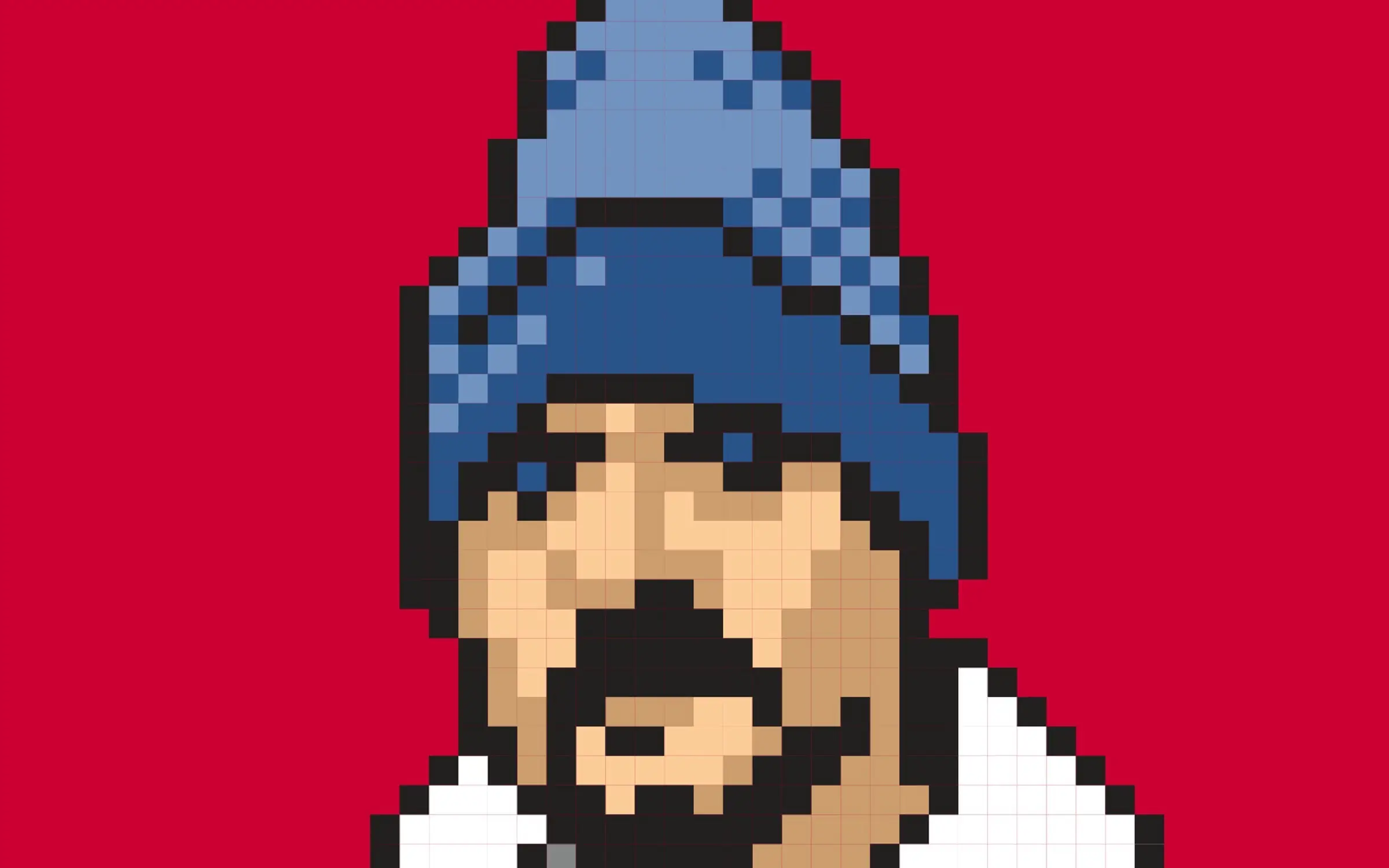
For love of pixels: Stroll with us down memory lane as we celebrate the pearl anniversary of pixel art creation’s primary progenitor, and some of the many artists and design languages it inspired.

Categories
37signals A Book Apart A List Apart Acclaim Adobe An Event Apart books Brands business Career Collectibles Community conferences content Coudal Partners Deck, the Designers E-Books editorial eric meyer Ethan Marcotte Free Advice glamorous Grief Happy Cog™ HTML5 Indieweb industry Jason Santa Maria Jeremy Keith launches Mentoring My Back Pages New York City NYC Products Publications Publisher's Note Publishing Responsibility Responsive Web Design San Francisco Small Business speaking State of the Web Surviving The Essentials The Profession This never happens to Gruber Typekit User Experience UX Wah! Web Design Web Design History Websites Wit and Wisdom Working writing zeldman.com

Of Books and Conferences Past

Some of A Book Apart’s 50-odd primary paperbacks, arranged like a color spectrum, and photographed against a piece of wood.

Just as nobody who marries spends their wedding day planning their divorce, almost nobody starts a business contemplating what rocks it will eventually splinter and break upon, and how to build a life raft for themselves.

I take that back. Some folks I know, who played pivotal roles in the evolution of the web, actually started their businesses with a clear goal of selling them to somebody bigger. Like Typekit was designed to sell to Adobe. Or Blogger was designed to sell to Google.

Such folks, several of whom are now post-economy wealthy, lived in the Bay Area in the 1990s and early 2000s, where building to flip was widely discussed and accepted.

Meanwhile, in NYC…

I, on the other hand, live in New York. So I started my web businesses (like Happy Cog™ design studio) to serve clients, as NYC creatives have always done, and with no understanding that I would one day need to leave the company and should have an exit plan. Why would I exit? Why would I ever stop doing work that brought excitement and meaning to my life?

Similarly, I started my personal site with its “Ask Dr. Web” tutorials in 1995, and co-founded my web design publication, A List Apart, in 1997, for the sheer joy of sharing knowledge, with no concept of making money, let alone of one day selling the business.

Eventually, despite my naivete, and mostly thanks to Jim Coudal and Jason Fried, A List Apart began making money by running one carefully screened ad per page. I used that money, as you will expect, to pay our writers, editors, and producers. And when it came time to stop running ads, I slowed our publication schedule, paid writers out of my own pocket, and worked with a small crew of fellow volunteers, who published ALA because we believed in the mission. (Still do.)

If I had come of business age in San Francisco, I likely would have sold A List Apart to somebody like O’Reilly, but that was never my plan because I make toys to play with, not to give away.

An ecosystem apart

In spite of A List Apart’s running at a loss, in the early 2010s I co-founded two businesses that spun out of it: An Event Apart design conference with Eric Meyer, and A Book Apart with Mandy Brown (later replaced by CEO Katel LeDu) and Jason Santa Maria. And during those first years, business was great.

We published HTML5 For Web Designers the day after Steve Jobs, waving an iPhone on the world’s biggest stage (okay, sitting at his desk), announced that Flash was dead because HTML5 would bring app-like dynamism to the web using open standards instead of proprietary code. It (our first book, I mean) sold brilliantly. “Gee, publishing isn’t that hard” I naively told myself. (No, I knew it was hard. My favorite publishers had been laying off my favorite editors for ten years before my partners and I took the plunge. But the early success did make me think the books we published about web design would always find a large, eager audience. In time, I would learn otherwise.)

And while we began the publishing house by relying on the best writers we knew personally to write about the topics they were most passionate about, I’m proud to say that, as we went along, we also discovered brilliant first-time book authors, helping them create perfectly polished, fluff-free manuscripts that made genuine contributions to our readers’ understanding of UX and all it entails. (And not just to our readers. The insights they brought to their work after digesting our books rubbed off on their colleagues.)

In giving these brilliant writers a platform, we not only helped them take their careers to the next level, we also helped people who create web content think and work better, which in turn helped the people who used the websites, applications, and products our readers designed and built. Of that, I am proud.

Stay hungry

An Event Apart (RIP) was also a damned fine early success. Web designers liked our innovation of a multi-day, single-track conference, with a holistic approach to web design, code, and content, and unifying themes between the individual talks. Our freaking-amazing speakers debuted Huge Ideas including Mobile First and Responsive Web Design—ideas which, like perfect contextual menus in UX, arrived at the very moment designers needed them.

Not only that, but these humble geniuses also sat in the auditorium with our audience for all three days of each conference event: listening to each other’s presentations, and updating their own presentations to better bounce off each other’s ideas and the evolving themes of that particular show. 

I could spend hours telling you how our producer Toby M. made miracles happen at every show, or how person-in-charge Marci E. brought joy to our community. How many of our speakers became authors. How some “graduated” from An Event Apart as newcomers replaced them. How the diversity of our speaking line-up, which wasn’t terrific in 2008, improved greatly each year. (Not that we ever said, “We need another black speaker” or “We need a trans speaker” or what-have-you. Just that we learned to swim outside the pool we came from, and discover great talent everywhere.) Our speakers were also almost uniformly Just Nice Good People, which doesn’t always happen when you’re collecting the greatest minds in an industry. 

That’s not even to mention the incredible people who attended our shows, some of whom became lifetime friends for me.

So why, given the joy these businesses brought to everyone connected to them, including me, would my partners and I have even conceived of an exit strategy? We wanted the Good Times to roll on forever.

But of course they never do.

Things end

COVID did in An Event Apart. Some conferences survived, of course. Different priorities, different overheads, different business models. Some that survived do not pay their speakers. Others, where the conference is an adjunct to a bigger business, laid off or reassigned conference staff while the pandemic made live events impossible. Others that survived mostly rely on volunteer labor, whereas we had paid staff. They were worth their weight in platinum, and we’d have paid them more (because they were worth more) if the pandemic and six-figure hotel contracts hadn’t made continuing the show impossible. My partner and I earned nothing during the business’s last five years, and got personally stuck with a six-figure debt when the event closed. It is what it is.

Although books should be COVID-proof, multiple financial problems eventually beset our publishing house as well. For most of the run of the business, my partner and I earned nothing beyond the glow of contributing to our community’s knowledge. We paid our CEO, authors, and editors, kept nothing for ourselves, and tried, oh how we tried, to keep the business going as its revenues tanked.

Speaking only for myself, I’ve learned that I am good at starting businesses and keeping them going creatively, as long as somebody else figures out the money. I suck at that, and I’m obsessed with the notions of fairness and self-sacrifice that were drummed into me by a narcissistic family that valued me for taking on the roles they were emotionally incapable of handling—such as bringing up my baby brother in my father’s absence, which no child is  equipped or should be asked to do, and yet it happens all the time. Growing up this way made me put my own self-interest last. Which is also why it never occurred to me to plan an exit. And by the time I needed to do so, the businesses were not in shape to sell.

Closing a conference is bad, but attendees can go to other conferences, and speakers can speak at other conferences; closing a conference doesn’t end a community. It sucks for the business but doesn’t strand participants.

But closing a publishing house hurts like hell, and you feel you let everybody down. I know how much our closing hurt some of our authors, and I think about that, instead of the good we achieved, when I look back. 

No doubt when my partner and I write the large personal checks to cover our deceased business’s outstanding debts, we’ll be regretting the harm our closing caused, not basking in the warm glow of how many careers we changed for the better. Like the standup comedian who obsesses about the guy who’s frowning at table 3, and doesn’t hear the laughter of the rest of the crowd. We also, hopefully, won’t focus too closely on our financial wreckage. Just pay the bill, and move on.

Anyway, I hadn’t publicly addressed the endings of these businesses, so I figured it was time to do so. I’m sharing my experience only. If you ask any of the people I worked with on these projects, they might have a different story to tell. And that would be their story, and it would be every bit as valid as anything I’ve said here.

I also didn’t ask permission of my partners, speakers, or authors before sharing these thoughts. Probably I should have. But, hey. As I’ve said. I’m speaking here only for myself.

So, anyway.

Parting gift

Is it worth the risk of starting a web-related business that isn’t a venture-backed startup? I still think it is, and I applaud all who try. Heck, I might even do so myself someday. If you’re doubtful because of (((gestures at everything))), it might be worth noting that I started Happy Cog™ during the dot-com crash, when studios were closing all around me. And we launched A Book Apart during the world financial crisis of late 2008. Don’t let (((all this))) deter you from trying something bold. Let me know when you do. I’ll keep watching the skies.

P.S. Under swell third-party ownership and management, Happy Cog is still going strong. Check it out!

Categories
Authoring Best practices Blogs and Blogging Code Compatibility CSS Design development Free Advice Future-Friendly HTML industry Layout links maturity Off My Lawn! Platforms Rants Responsibility Standards State of the Web The Profession Web Design Web Design History Web Standards wisdom

The More Things Change… (or: What’s in a Job Title?)

I’m not a “[full-stack] developer,” regardless of what my last job title says.

I’m not even a front-end developer, thanks to the JavaScript–industrial complex.

I’m a front-of-the-front-end developer, but that’s too long.

So, I’m a web designer. And I also specialise in accessibility, design systems, and design.

…Why do I think that this is the best title? Here’s why.

I’m designing for the web. The infinitely flexible web. The web that doesn’t have one screen size, one browser, one operating system, or one device. The web that can be used by anyone, anywhere, on any internet connection, on any device, on any operating system, on any browser, with any screen size. I’m designing with the web. Using the web platform (HTML, CSS, JS, ARIA, etc.), not a bloated harmful abstraction. I have a deep understanding of HTML and its semantics. I love CSS, I know how and when to utilise its many features, and I keep up-to-date as more are added. I have a strong understanding of modern JavaScript and most importantly I know when not to use it.

Front-end development’s identity crisis by Elly Loel

See also:

The Wax and the Wane of the Web (2024): Forget death and taxes. The only certainty on the web is change. Ste Grainer takes a brief look at the history of the web and how it has been constantly reinvented. Then he explores where we are now, and how we can shape the future of the web for the better. – A List Apart

The Cult of the Complex (2018): If we wish to get back to the business of quietly improving people’s lives, one thoughtful interaction at a time, we must rid ourselves of the cult of the complex. Admitting the problem is the first step in solving it. – A List Apart

Dear AIGA, where are the web designers? (2007): For all the brand directors, creative directors, Jungian analysts, and print designers, one rather significant specimen of the profession is missing. – zeldman.com

Standardization and the Open Web (2015): How do web standards become, well, standard? Although they’re often formalized through official standards-making organizations, they can also emerge through popular practice among the developer community. If both sides don’t work together, we risk delaying implementation, stifling creativity, and losing ground to politics and paralysis. Jory Burson sheds light on the historical underpinnings of web standardization processes—and what that means for the future of the open web. – A List Apart

The profession that dare not speak its name (2007): “No one has tried to measure web design because web design has been a hidden profession.” – zeldman.com

Categories
"Found Objects" Acclaim Adobe Apple Applications apps art direction Authoring content copyright creativity Culture democracy Design Free Advice Ideas Nonsense social media stealing theft type Typography

Just add water.

Quick, before everyone else thinks of it. Set the word “SUCCESSION” in Engravers Gothic and export it to a transparent PNG. Download photos of confederate general Mitch McConnell and Republican Johns Thune (R-S.D.), Cornyn (R-Texas), and Barrasso (R-Wyo.). Grab and burn Nicholas Britell’s main title theme from Succession. Import all files into Final Cut Pro or Adobe After Effects. Add dissolves, fades, and film scratch overlays. Export. Upload to YouTube or Vimeo. Embed and amplify via all 500 social media networks. Sit back, relax, and bask in your 15 seconds of glory.

“Succession” is copyright HBO. Mitch McConnell is a wholly owned subsidiary of the NRA.

Categories
Best practices blogger Blogs and Blogging Community content Content First Content-First creativity editorial findability Free Advice Ideas Indieweb industry links Marketing Off My Lawn! Own your content Platforms Publications Publishing Search Standards State of the Web Teapot The Essentials The Profession Wah! writing

Algorithm & Blues

Examining last week’s Verge-vs-Sullivan “Google ruined the web” debate, author Elizabeth Tai writes:

I don’t know any class of user more abused by SEO and Google search than the writer. Whether they’re working for their bread [and] butter or are just writing for fun, writers have to write the way Google wants them to just to get seen.

I wrote extensively about this in Google’s Helpful Content Update isn’t kind to nicheless blogs and How I’m Healing from Algorithms where I said: “Algorithms are forcing us to create art that fits into a neat little box — their neat little box.”

So, despite Sullivan’s claims to the contrary, the Internet has sucked for me in the last 10 years. Not only because I was forced to create content in a way that pleases their many rules, but because I have to compete with SEO-optimized garbage fuelled by people with deep pockets and desires for deep pockets.

Is the Internet really broken?

For digital creators who prefer to contain multitudes, Tai finds hope in abandoning the algorithm game, and accepting a loss of clout, followers, and discoverability as the price of remaining true to your actual voice and interests:

However, this year, I regained more joy as a writer when I gave upon SEO and decided to become an imperfect gardener of my digital garden. So there’s hope for us yet.

As for folks who don’t spend their time macro-blogging—“ordinary people” who use rather than spend significant chunks of their day creating web content—Tai points out that this, statistically at least a more important issue than the fate and choices of the artists formerly known as digerati, remains unsolved, but with glimmers of partially solution-shaped indicators in the form of a re-emerging indieweb impulse:

Still, as much as I agree with The Verge’s conclusions, I feel that pointing fingers is useless. The bigger question is, How do we fix the Internet for the ordinary person?

The big wigs don’t seem to want to answer that question thoroughly, perhaps because there’s no big money in this, so people have been trying to find solutions on their own.

We have the Indieweb movement, the Fediverse like Mastodon and Substack rising to fill the gap. It’s a ragtag ecosystem humming beneath Google’s layer on the Internet. And I welcome its growth.

For more depth and fuller flavor, I encourage you to read the entirety of “Is the internet really broken?” on elizabethtai.com. (Then read her other writings, and follow her on our fractured social web.)


“The independent content creator refuses to die.” – this website, ca. 1996, and again in 2001, paraphrasing Frank Zappa paraphrasing Edgar Varese, obviously.

Hat tip: Simon Cox.

Categories
Code CSS Design Free Advice

Position Wanted: Front-End Director

WE have creative directors and design directors, but we don’t seem to have any front-end directors. And maybe we should.

For years at big companies, people in different silos have written CSS with no information or understanding about each other’s work. This results in huge, sloppy files that have a negative impact on site performance, as folks write more and more complex rules trying to override pre-existing ones … or “solve” the problem by adding dozens or even hundreds of classes to their CSS and markup.

Professionals with serious front-end chops have tried to solve the problem by coming up with complex rules and systems which, by the time they filter their way down to less experienced developers, get turned into dogma. Every time I see a front-end article’s comments section rapidly fill with absolute statements about whether it’s okay or not to use id, I recognize that someone’s good idea has turned into somebody else’s religion.

And while I commend my colleagues who craft approaches to CSS that help avoid the inevitable problems large-scale enterprises encounter when many coders in many silos work on many components without talking to each other, I think there may be another way to look at the problem.

We all know having many people in many silos write CSS any old way doesn’t work, unless you consider bloat and poor performance working.

And while restricting how you allow people to write code solves some of these problems, it introduces others: too many class names is just another word for bloat.

So how about following the example of other creative endeavors, and putting a single mind in charge? After all, no matter how many disparate photographers, teamed with how many art directors, work on a given issue of a periodical, there’s always a lead art director who advises, helps plan shoots, and ultimately approves the work. Every orchestra requires a conductor. And no matter how many animators work on a film, there’s always a director. There’s a reason for that.

Imagine shooting a film with no director and no storyboards, in which each scene was written by a different screenwriter, and nobody knew the shape of the overall story. It wouldn’t make a coherent movie, much less a good one. Yet that’s how too many big organizations still approach front-end design and development.

So here’s a thought, big orgs. Instead of throwing a thousand front-end developers at your problem and seeing what sticks, consider creating a front-end director position as empowered as any other director at your organization.

Categories
A Book Apart A List Apart A Space Apart Acclaim Announcements Culture Design Education experience Free Advice

Shopify Partners Program wants you—and so do I!

Partner Studio

AS MUCH as I love reading (and writing and publishing) books and articles about design, I’ve never learned as much from a book as I’ve picked up over time while rubbing shoulders with colleagues who share my work space.

It’s why, even though NYC office rents are ludicrously expensive, I opened a shared design studio space in gently trending NoMad, Manhattan in January of 2012. And why, just three short months ago, I leaped at the chance to help launch the Shopify Partners Studio Program—a coworking space and casual mentoring program for exceptionally talented freelance ecommerce designers and developers.

The first six participants included a web developer and social media consultant; a visual experience designer; a freelance web developer and blogger; two freelance designer/developers; and a copywriter/marketing consultant. Three of them sought feedback from me on exciting business and product ideas they’d come up with; two asked me for career guidance and business advice. All taught me more than I taught them, and inspired me to look at my own work and career with fresh eyes.

Most or all of these lovely and talented people will be moving on soon, as the next phase of Shopify Partner Studio begins. Which brings us to you.

Apply now to join the next round of Shopify Partner Studio! If selected for residency, you’ll gain access to a suite of opportunities to kickstart your business, including:

  • Free rent and high-speed Internet for three months in my studio on lower Madison Avenue.
  • Mentorship from your humble narrator, Shopify executives, and “other industry icons.” (I put the quotations around Shopify’s phrase to not sound like a complete egomaniac.)
  • Fast-tracked access to the Shopify Experts Marketplace, where Shopify sends its 243,000 merchants looking for help with store, theme, and app builds.
  • A free Shopify store to build your portfolio website.
  • A free ticket to Smashing Conference NYC.

So what are you waiting for? Join me and some of your smartest colleagues in an experience that just might help make your career. Apply now to the Shopify Partners Studio Program.

Categories
Best practices Code Compatibility Content First content strategy Content-First Design Free Advice HTML Illustration Images IXD maturity Mobile mobile Multi-Device Off My Lawn! Performance photography Responsibility Responsive Web Design Standards State of the Web The Essentials The Profession Told you so tweets Usability User Experience UX Web Design Web Design History Web Standards Websites

The Year in Design

  • Mobile is today’s first screen. So design responsively, focusing on content and structure first.
  • Websites and apps alike should remove distractions and let people interact as directly as possible with content.
  • 90 percent of design is typography. And the other 90 percent is whitespace.
  • Boost usability and pleasure with progressive disclosure: menus and functions that appear only when needed.
  • One illustration or original photo beats 100 stock images.
  • Design your system to serve your content, not the other way around.
  • Remove each detail from your design until it breaks.
  • Style is the servant of brand and content. Style without purpose is noise.
  • Nobody waits. Speed is to today’s design what ornament was to yesterday’s.
  • Don’t design to prove you’re clever. Design to make the user think she is.

Also published in Medium

Translated into German (also here) by Mark Sargent

Translated into French by Jean-Baptiste Sachsé

Translated into Turkish by omerbalyali.

Translated into Spanish by Tam Lopez Breit.

Categories
A Book Apart A List Apart Adobe An Event Apart Apple architecture art direction Authoring Best practices Big Web Show client services Code content content strategy creativity CSS CSS3 Dan Benjamin Design DWWS E-Books editorial Education eric meyer Fonts Formats Free Advice Happy Cog™ Haters industry Information architecture interface ipad iphone IXD javascript links maturity New Riders peachpit Publications Publishing Real type on the web Respect Responsibility Responsive Web Design Standards State of the Web tbws The Big Web Show The Essentials The Profession This never happens to Gruber Typekit Typography Usability User Experience UX W3C Web Design Web Design History Web Standards webfonts webkit Websites webtype work Working writing Zeldman zeldman.com

2010: The Year in Web Standards

WHAT A YEAR 2010 has been. It was the year HTML5 and CSS3 broke wide; the year the iPad, iPhone, and Android led designers down the contradictory paths of proprietary application design and standards-based mobile web application design—in both cases focused on user needs, simplicity, and new ways of interacting thanks to small screens and touch-sensitive surfaces.

It was the third year in a row that everyone was talking about content strategy and designers refused to “just comp something up” without first conducting research and developing a user experience strategy.

CSS3 media queries plus fluid grids and flexible images gave birth to responsive web design (thanks, Beep!). Internet Explorer 9 (that’s right, the browser by Microsoft we’ve spent years grousing about) kicked ass on web standards, inspiring a 10K Apart contest that celebrated what designers and developers could achieve with just 10K of standards-compliant HTML, CSS, and JavaScript. IE9 also kicked ass on type rendering, stimulating debates as to which platform offers the best reading experience for the first time since Macintosh System 7.

Even outside the newest, best browsers, things were better than ever. Modernizr and eCSStender brought advanced selectors and @font-face to archaic browsers (not to mention HTML5 and SVG, in the case of Modernizr). Tim Murtaugh and Mike Pick’s HTML5 Reset and Paul Irish’s HTML5 Boilerplate gave us clean starting points for HTML5- and CSS3-powered sites.

Web fonts were everywhere—from the W3C to small personal and large commercial websites—thanks to pioneering syntax constructions by Paul Irish and Richard Fink, fine open-source products like the Font Squirrel @Font-Face Generator, open-source liberal font licensing like FontSpring’s, and terrific service platforms led by Typekit and including Fontdeck, Webtype, Typotheque, and Kernest.

Print continued its move to networked screens. iPhone found a worthy adversary in Android. Webkit was ubiquitous.

Insights into the new spirit of web design, from a wide variety of extremely smart people, can be seen and heard on The Big Web Show, which Dan Benjamin and I started this year (and which won Video Podcast of the Year in the 2010 .net Awards), on Dan’s other shows on the 5by5 network, on the Workers of the Web podcast by Alan Houser and Eric Anderson, and of course in A List Apart for people who make websites.

Zeldman.com: The Year in Review

A few things I wrote here at zeldman.com this year (some related to web standards and design, some not) may be worth reviewing:

iPad as the New Flash 17 October 2010
Masturbatory novelty is not a business strategy.
Flash, iPad, and Standards 1 February 2010
Lack of Flash in the iPad (and before that, in the iPhone) is a win for accessible, standards-based design. Not because Flash is bad, but because the increasing popularity of devices that don’t support Flash is going to force recalcitrant web developers to build the semantic HTML layer first.
An InDesign for HTML and CSS? 5 July 2010
while our current tools can certainly stand improvement, no company will ever create “the modern day equivalent of Illustrator and PageMaker for CSS, HTML5 and JavaScript.” The assumption that a such thing is possible suggests a lack of understanding.
Stop Chasing Followers 21 April 2010
The web is not a game of “eyeballs.” Never has been, never will be. Influence matters, numbers don’t.
Crowdsourcing Dickens 23 March 2010
Like it says.
My Love/Hate Affair with Typekit 22 March 2010
Like it says.
You Cannot Copyright A Tweet 25 February 2010
Like it says.
Free Advice: Show Up Early 5 February 2010
Love means never having to say you’re sorry, but client services means apologizing every five minutes. Give yourself one less thing to be sorry for. Take some free advice. Show up often, and show up early.

Outside Reading

A few things I wrote elsewhere might repay your interest as well:

The Future of Web Standards 26 September, for .net Magazine
Cheap, complex devices such as the iPhone and the Droid have come along at precisely the moment when HTML5, CSS3 and web fonts are ready for action; when standards-based web development is no longer relegated to the fringe; and when web designers, no longer content to merely decorate screens, are crafting provocative, multi-platform experiences. Is this the dawn of a new web?
Style vs. Design written in 1999 and slightly revised in 2005, for Adobe
When Style is a fetish, sites confuse visitors, hurting users and the companies that paid for the sites. When designers don’t start by asking who will use the site, and what they will use it for, we get meaningless eye candy that gives beauty a bad name.

Happy New Year, all!

Categories
Accessibility Adobe Advocacy Apple Applications apps architecture art direction Authoring Best practices business development E-Books editorial Flash Formats Free Advice glamorous HTML HTML5 industry ipad iphone Publications Publishing Responsibility Standards State of the Web The Essentials W3C Web Design Web Design History Web Standards

iPad as the new Flash


Jeffrey Zeldman Presents

iPad. Never have so many embraced a great product for exactly the wrong reasons.

Too many designers and publishers see the iPad as an opportunity to do all the wrong things—things they once did in Flash—without the taint of Flash.

In the minds of many, the iPad is like Flash that pays. You can cram traditional publishing content into an overwrought, novelty Flash interface as The New York Times once did with its T magazine. You may win a design award but nobody will pay you for that content. Ah, but do the same thing on the iPad instead, and subscribers will pay—maybe not enough to save publishing, but enough to keep the content coming and at least some journalists, editors, and art directors employed.

It’s hard to argue with money and jobs, and I wouldn’t dream of doing so.

Alas, the early success of a few publications—publications so good they would doubtless survive with or without iPad—is creating a stampede that will not help most magazines and interfaces that will not please most readers.

Everything we’ve learned in the past decade about preferring open standards to proprietary platforms and user-focused interfaces to masturbatory ones is forgotten as designers and publishers once again scramble to create novelty interfaces no one but them cares about.

While some of this will lead to useful innovation, particularly in the area of gestural interfaces, that same innovation can just as readily be accomplished on websites built with HTML, CSS, and JavaScript—and the advantage of creating websites instead of iPad apps is that websites work for everyone, on browsers and devices at all price points. That, after all, is the point of the web. It’s the point of web standards and progressive enhancement.

Luke Wroblewski’s Touch Gesture Reference Guide gives designers plenty of ammunition to create dynamic user experiences that work on a wide variety of mobile phones and devices (including iPad) while these same sites can use traditional desktop browser effects like hover to offer equally rich experiences on non-touch-enabled browsers. Unless your organization’s business model includes turning a profit by hiring redundant, competing teams, “Write once, publish everywhere” makes more economic sense than “Write once, publish to iPad. Write again, publish to Kindle. Write again, publish to some other device.”

I’m not against the iPad. I love my iPad. It’s great for storing and reading books, for browsing websites, for listening to music and watching films, for editing texts, presentations, and spreadsheets, for displaying family photos, and on and on. It’s nearly all the stuff I love about my Mac plus a great ePub reader slipped into a little glass notebook I play like a Theremin.

I’m not against iPad apps. Twitterific for iPad is by far the best way to use Twitter. After all, Twitter is really an internet service, not a website; Twitter’s own site, while leaps ahead of where it used to be, is hardly the most useful or delightful way to access its service. Gowalla for iPad is my constant companion. I dread the idea of traveling without it. And there are plenty of other great iPad apps I love, from Bloom, an “endless music machine” by Brian Eno and Peter Chilvers, to Articles, which turns Wikipedia into an elegant reading experience, to Mellotronics for iPad, an uncannily accurate Mellotron simulator packed with 13 authentic voices—“the same production tapes featured on Strawberry Fields Forever” and other classic tracks (not to mention tracks by nouveau retro bands like Eels).

There are apps that need to be apps, demand to be apps, and I admire and learn from them like every other designer who’s alive at this moment.

I’m just not sold on what the magazines are doing. Masturbatory novelty is not a business strategy.

Categories
Free Advice glamorous industry

Web Design and Fitness

Three times a week I work out hard with a trainer at a gym. It’s like sex. I don’t mean it feels good. On the contrary, it hurts. And I don’t mean there’s cuddling after. What makes my hard workouts like sex is that they’re followed by a spacey bliss in which there is no atom of desire. When I’m lying on that post-workout stretching table, gazing vaguely at the ceiling, Christina Hendricks could sashay by wearing a G-string made of thousand dollar bills and carrying a plate of spaghetti, and there’s nothing I would want from her.

Our industry rewards long hours in the cubicle and for many of us, it shows—especially as we get older.

Sometimes I wonder whether I became soft because of what I do, or chose what I do because it suits a lifestyle in which “physical activity” means answering the door when the pizza guy arrives.

For years I worked out three times a week, but with no results—partly because I didn’t know what I was doing, and the rest because when it got tough or boring, I quit. Hence the trainer.

The good client

My trainer tells me what to do next and I just do it. She’s the expert, I’m the client. I value her wisdom and experience and try to make each session a learning experience as well as a cardiovascular one.

I’m fortunate to have had good and bad clients. I know how to be a good client. The real value of a client services relationship isn’t what happens during the hours when client and consultant work together; it’s about what happens after. Like everything meaningful in life, the client services relationship is about change.

We don’t create taxonomies, layouts, content strategies and templates as a one-time deal, so the client’s content and design can be frozen in amber. We create them so the client has a framework for continuing to evolve their website into the future, with or without our help. Good clients know this. And they also know that, regardless of time and budget, we can’t do everything for them.

They know that it’s better to concentrate on getting a few things right than to try to cram every conceivable wish and feature into their time with us. Trying to do everything is a way to achieve nothing. Focus, concentration and form are what’s important. Consistency is what’s important. It’s all about the process. As in client services, so at the gym. End analogy.

Modest goals, steady commitment

I’m never going to look like Arnold, and that’s not my goal. My goal is to live a bit longer, and to enjoy life more. I already enjoy walking upstairs a lot more than I used to. Even when I’m alone on a Sunday afternoon, I’m more likely to do something physical (even if it’s just taking a photo walk instead of sitting at the computer) than I was two months ago.

And when I do sit at the computer, I’m more alert, more focused, less likely to need an artificial stimulant to get through my day.

There’s nothing special about what I’m doing, except that I’m doing it. Some old friends and some people I work with inspired me by their example. To them, thanks. Also to my ex, who advised me to give myself this gift.

Starting this weekend, I’ll be in Boston for An Event Apart. Travel usually translates to bad (i.e. overly rich) eating, which can undermine a fitness regime. Between creamy Boston clam chowder and the piles of candies and cakes with which our event planner Marci punctuates An Event Apart sessions, temptation will be everywhere. And while I can’t promise to be perfect, I will strive to put my heart before my sweet tooth.

Categories
business Free Advice The Essentials

Free advice: show up early

DELAY happens. The train is late, the flight is cancelled, the traffic is murder. Travel is the leading edge of entropy, and entropy is the universe’s final comment on the meaning of it all. If the universe is expanding and there are snow delays on Route 1, it’s not your fault that you’re 15 minutes late to the meeting, right?

Don’t be so quick to excuse yourself. If 80% of success is just showing up, 90% is showing up early.

It’s hard for the client to sympathize with your lateness when she, who had farther to travel, managed to make the meeting on time. No matter how well you tell your story about the newbie cab driver who thought you said 114th Street, the client still sat waiting for you for twenty minutes after denying herself a Starbuck’s so she would be on time. Everyone in the room is a grownup, and, on the surface, your lateness isn’t an issue. But although nothing will be said, somehow the meeting will not turn out as well as expected.

Of course the conference organizers care that you, their keynote speaker, spent the night in the airport because of a cancelled flight. As sensitive human beings, they’d love to upgrade your room to a suite, hire you a masseuse, and send you to bed. But as business people who spent the morning juggling their schedule and making impromptu excuses to attendees because their keynote speaker showed up late, they will never hire you again.

How can a client blame you for a cab driver’s mistake? How can a conference organizer hold you accountable for an airline’s cancelled flight?

They can do it because lateness is part of the order of things, and grownup professionals plan for it, just as they plan for budget shortfalls and extra rounds of revision.

If you plan to arrive early, then you are covered when circumstances beyond your control conspire to make you late.

This is simple and obvious but many otherwise brilliant professionals clearly don’t think about it. The result is that they often arrive late. It’s never their fault, and yet it’s always the same people who are late.

I’m a bleeding heart. If your pet turtle dies, I’ll give you a month’s paid vacation. But promptness is a duty we owe people who pay for our services. So here’s some free advice. Give yourself more time to arrive than you reasonably need. If you work uptown and you have a meeting downtown in two hours, head downtown now. If you’re speaking on the opposite side of the continent early Monday morning, fly out Saturday, not Sunday. That way, you’ll be where you’re supposed to be, no matter what obstacles the weather, the airlines, and the TSA throw your way.

Love means never having to say you’re sorry, but client services means apologizing every five minutes. Give yourself one less thing to be sorry for. Take some free advice. Show up often, and show up early.


Categories
business Free Advice industry

Free advice: buy a dongle

There is still no Wi-Fi on the northeast corridor Amtrak trains that carry hundreds of thousands of business travelers each day. So quit whining and get a USB 3G modem. It’s free with monthly service, which is tax-deductible. For the $60/month I pay Verizon, I can connect my laptop to the internet from any train, bus, boat, lounge, lobby, conference room, coffee shop, or just about any other environment to which modern business takes me.