Categories
Advertising Collectibles Community content creativity Damned Fine Journalism Design Designers Desktops Digital Preservation Formats Free Advice glamorous HTML industry launches links music My Back Pages Own your content social media social networking software Surviving Tech Web Design Web Design History Web Standards Websites zeldman.com

My weekend project

It’s Sunday; I’m playing with my music collection, content as a fed-and-burped babe. Allow me to explain.

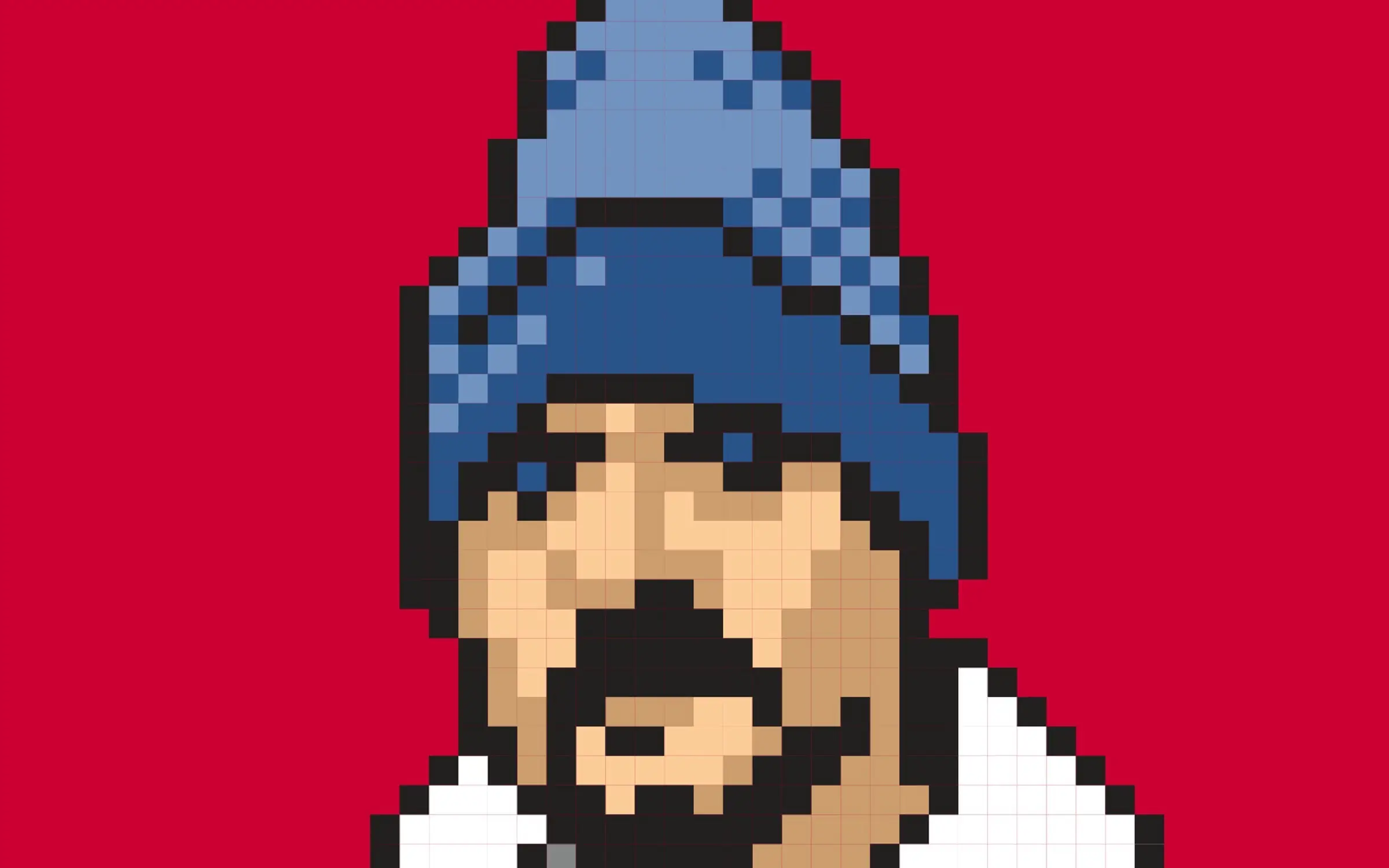
I realized last night that, in tracking my shifting musical tastes via my Last.fm Pro account, I’m basically remaking “Pardon My Icons,” the creative project I launched on this very website in 1995, back when it was still at a tilde address (it did not become zeldman.com until ’96), and which first brought my work to the attention of other creatives who were also discovering the early web and making it their own.

Me, collage, and music

Although I was not serious about it, I started making collage art when I lived in Washington DC in my 20s.

Back then I was serious about composing and producing. I used an Akai 12-track recorder, a rack of synth modules commanded by my Yamaha DX7 with a custom E! card, and a PC running Personal Composer MIDI, arranging, and composition software. I also had an old Selmer Bundy flute, an African reed instrument whose name I forget (and whose “reed” turned out to be a dried locust carcass, as I would discover, to my horror, when the instrument broke), Fender amps, mics, and a variety of percussion instruments with which I made music in my Washington, DC-based recording studio. But that’s a whole ’nother story.

I did not expect to earn a living as a composer, and in that negative expectation I was more than amply fulfilled.

So I scrounged up a day job at a local advertising agency as a naively optimistic copywriter.

And a night job as a stringer for The Washington Post’s Arts section.

Music journalist by night

The paper’s arts section editor in those days was named Richard. I’d gotten his attention without soliciting it after creating “Khz” for City Paper. Khz was my weekly music column. I covered the emerging go-go and hardcore scenes, as they were what was happening in DC, and the whole country would soon be listening. Naturally, the Post made me stop writing about that interesting and relevant stuff, and instead paid me $40 per to crank out anodyne concert reviews of mainstream artists like Kenny Rogers when their tours came through DC. (I was comped to the ticket but paid my own travel and gas out of the 40 bucks.)

I typically had 30 minutes from the time the headliner started to call in my review, which meant I had to write it in my head while watching the beginning of the performance, then run to a pay phone booth (kids, ask your parents) and dictate it aloud to someone on the copy desk, before the concert had even begun to build up a head of steam. This wasn’t fair to the artists. I did the best job I could under the circumstances, taking pride in how quickly I could structure and ship a news story. Richard fired me before I could quit, but that, too, is another story.

Most importantly at that time, I lived with a girlfriend. She was an artist and architect who had left that career to study computer programming. We were social (many friends, drinking was often involved), and serious about our art—which, in my case, was music, even if I earned my living writing concert reviews and crafting passable but hardly brilliant ads.

Through all of those ups and downs, and to the side of those major efforts, I kept at the collage for years, putting in several hours a night making the things. When each was finished—and deciding that any art product was finished was damned tough for my restless young mind—I would carefully frame it behind glass, and mount it on the walls of our apartment.

Was it art? Just a hobby? Who knows? It made me happy.

And then gradually, as I put more effort into my music and ad careers, I set the collage-making aside, for a time.

New career in a new town

Ten years later, I was a New York art director and copywriter, two years sober, and no longer in that same romantic relationship. That’s okay, I was in a new one.

I’d packed my music studio equipment—now obsolete because Akai stopped making the proprietary multitrack tape format that their 12-track unit ran on—in a storage unit. Eventually I’d give away all that music and recording equipment (keeping only the multitrack masters), but that, too, is another story.

Cutting-edge for a day

Then in 1995, one of our ad clients asked the agency if we could make them a website. Like many of you, we lied and said, sure. And then we figured out how to actually do it.

The client was Warner Bros., the project was “Batman Forever,” our visionary client was Donald Buckley, my partners were Steve McCarron, Alec Pollak, and Doug Rice, and the website was a huge hit, attracting half the people who visited the early web. (Alec’s “Flashback 1995: batmanforever” shares screenshots, which are great, although they cannot convey what a breakthrough the site was in March, 1995.)

With 3 million people using the web in 1995, the site got 1.5 million visits a day for over a year. Not bad.

Pardon my icons (1995)

First gallery spread of “Pardon My Icons,” a zeldman.com entertainment from 1995 ff.

I immediately set to work creating a personal site (this one), and Pardon My Icons was one of its first “entertainments.”

As is often the case with my creative efforts, I made these tiny, Warhol-inflected bits of art as a protest against what I saw as the mediocrity of the icons in general use on that early, early web.

(Similarly, my friends and I would later start The Web Standards Project in protest against the dumb ways most folks were being told to create websites, e.g. using proprietary tags instead of W3C and ECMA standards, because browsers didn’t properly support those. Having lost access to my musical master tapes because I’d invested in Akai’s non-standard and eventually discontinued tape format, I was kind of keen on not letting the internet fall victim to the same kind of nonstandard f*ckery. But that, too, is another story. We are gathered here to talk about icons and collage. So let’s do that:)

A mental break

I track my music on Last.fm Pro. Here’s my account. (But don’t look unless you, too, have a Pro account. I’ll explain why in a moment.)

Photo spread: some of the artists I listen to, as shown on last.fm Pro.
Some of the artists I listen to, as shown on last.fm Pro.

Last.fm lists the artists you play, arranging them by the number of plays. Thus, if you were to play three tracks by Freddie Gibbs and two by Bill Evans, you’d have a collage featuring those two artists, with Freddie preceding Bill because he has one more play than Bill.

But if you play three tracks each of Freddie Gibbs and Bill Evans, then Bill will come first, because Bill comes before Freddie alphabetically.

Through such moves, over time, an ever-shifting collage unfolds. But only in Last.fm Pro.

In regular, free old last.fm, you can see other people’s artists as a list, arranged by number of plays, interrupted by an ugly barrage of ads. This is a useful free service for those who are curious about what their friends listen to. But it is a list, not an artful collage, of course.

Collage for days

In Pro, you can see their artists and yours as an ad-free collage that goes on for pages and pages. Plus, as a Pro user, you can choose which photo represents which artist—and even upload your own. When viewing your collection, you and your visitors will see a collage of your favorite artists, in descending order of plays (and with the English alphabet deciding who at each play count precedes whom), using artwork you not only select, but you can also create and upload to the service.

I like Pro. And even though the product isn’t exactly in what you’d call hyper active development—even though the server isn’t always fast, even though there are a few bugs that will probably never get fixed, even though new features are introduced rarely, and the company’s customer service department isn’t exactly the most active help desk in tech—despite those minor drawbacks, the site does things no other website can do. And at US $3, the Pro account isn’t exactly priced out of reach for most customers. (If you can afford a computer, internet access, a music collection and/or a music streaming service, you can probably scratch the 3 bucks together as well.)

How to collage on last.fm

By controlling what I listen to, and the order in which I listen, I’m slowly building an infinite collage of my evolving musical tastes.

By choosing or finding the artist photos (often post-producing them in Photoshop), I create my mood, my rhythm, and my shifting color palettes.

There are design rules governing where portraits should be placed. For instance, people whose face or gaze points rightward get placed on the left of the grid, so they lead the viewer’s eye from left to right, into the composition, whereas those who gaze to my left belong on the right side, leading the viewer’s eye back in.

To reposition someone, I may listen to a few extra plays of them. Or use last.fm’s Pro Admin to subtract a few plays.

When I started using Last.fm, I merely wanted a visual record of what I was listening to, and when I listened. But as you may have inferred, an accurate count of everything I’ve listened to over the past years is no longer my goal in using last.fm; the goal is now the endless collage.

It’s kinda spiritual.

(Reminder: the only way to see it is to be a Pro member of last.fm, which turns off ads and enables you to view your own and other people’s collections in a grid format instead of a list. If you’re a non-member, you see a list jammed with ads.)

If a tree falls, is it art?

Unlike the real-world collages I made in my 20s (which could be mounted on a wall), and unlike 1995’s “Pardon My Icons” (which could be viewed in any browser connected to the web), my current art-making/hobby activity is not publicly viewable except by last.fm Pro users. And that’s okay. ’Cause I’m not designing this for anyone besides myself to enjoy. I mean, if you see it, cool. But if nobody ever sees it, engaging with it will still make me happy.

Which makes this collage business—what? Therapy? Gaming? (Just of a different sort than anybody else?) A form of stimming? It definitely helps lower my general anxiety, providing a space where I can make pretty pictures while listening to my favorite music, which, driven in part by the desire to expand the collage, is widely inclusive and always expanding.

The hunt for fresh collage material also helps keep me interested in new music. (Readers who feel stuck, take note.) And my collage-making, however unimportant it may be, also provides a needed mental health break during these hellish times.

I do this activity every weekend when my more normal friends are biking or baking or dancing.

Is this activity, into which I’ve now poured many hours of my life, artistry or autism? Who cares? The point is that it’s escapist and harmless and we all need some of that in our lives, however we can grab it.

However you grab your moments of calm, meditation, and happiness, never be ashamed of taking care of yourself.

See also…

Rediscovering music: If Spotify exposes you to new music other people are listening to, Last.fm helps remind you of great music in your existing collection that may have slipped your mind.

For love of pixels: Stroll with us down memory lane as we celebrate the pearl anniversary of pixel art creation’s primary progenitor, and some of the many artists and design languages it inspired.

Categories
Advertising business Search

Suckage begins here: why search engines now prioritize advertising over good UX

This kind of virtuous rising tide rent, which benefits everyone, doesn’t last. Once the growth of the new market slows, the now-powerful innovators can no longer rely on new user adoption and collective innovation from a vibrant ecosystem to maintain their extraordinary level of profit. In the dying stages of the old cycle, the companies on top of the heap turn to extractive techniques, using their market power to try to maintain their now-customary level of profits in the face of macroeconomic factors and competition that ought to be eating them away. They start to collect robber baron rents. That’s exactly what Google, Amazon, and Meta are doing today.

Tim O’Reilly, Rising Tide Rents and Robber Baron Rents: The Replacement of Organic Search with Advertising by Google and Amazon and What That Might Mean for the Future of AI

See also:

The Man Who Killed Google Search by EDWARD ZITRONThis is the story of how Google Search died, and the people responsible for killing it. (Hat tip: mORA.)

Search Party (2009): Triple Issue No. 292 of A List Apart, for people who make websites, is all about search. By JOHN FERRARA, AVINASH KAUSHIK, and LOU ROSENFELD.

Illustration: Kevin Cornell

Categories
Advertising client services Design glamorous industry

Fear of getting noticed

Back when I was in advertising, one of my team’s clients was a well-known Irish Airline. They could only afford an 1/8th-page ad in the travel section of the paper. But my partners and I didn’t think creativity was dependent on budget. We were determined to deliver great ads for them—ads that would make a viewer look, even though the ad was tiny and was surrounded by other ads.

So we created a standout campaign for them—the kind that would not simply be noticed, but would also make travel-focused consumers smile and encourage them to buy tickets.

We blew up our tiny layouts and mounted the enlargements on illustration board, for an impactful creative presentation when we met to show the client the work.

The great day came. The work was good, and we had rehearsed our presentation to perfection. We booked the conference room, had the client’s favorite snacks and beverages spread out when they arrived, and sold our little hearts out as we presented.

Silence.

The lead client blinked, cleared his throat, and finally said, in a thick Irish brogue:

“I’m afraid it’s far too clever for our needs. It calls too much attention to itself on the page,” he explained—as if getting a distracted newspaper reader to notice his company’s message was a bad thing.

The lead client asked us to set “Ireland $399” in bold type, stick a shamrock in one of the 9s, and call it a day.


Fear of getting noticed is a terrible thing. It’s also a self-fulfilling prophecy.

Clickbait headlines get a deservedly bad rap in digital marketing, but you know what else should get a bad rap? Blind, boring, infinitely ignorable links and titles, that’s what.

Crafting messages that get noticed and acted upon by their intended audience—the people for whom you create your company’s digital products in the first place—isn’t a crime. It’s your job.


Hat tip to Mark Mazut and Tim Irwin, my fellow passengers on the above disaster. Bit o’ nostalgia for those who remember The Ad Graveyard.

Categories
Advertising Best practices business Design

The dogs won’t eat it

My father used to tell this story to his project management students.

The executives of a dog food company were holding a meeting.

“The new label design tested through the roof!” said the VP of Marketing. “In double blind tests, it outperformed our B and C designs across all demos.”

“Unprompted recall has doubled since our last campaign,” the VP of Advertising chimed in. “Our ‘Share the Love’ theme line has gone viral.”

“‘Dog Mommies’ in key ethnic demos responded favorably to the new, ‘organic’ ingredients,” added the VP of Research. “The ‘fresh chunk of love’ concept is going over like gangbusters.”

“Our new ‘green’ delivery chain efficiencies look like a winner,” said the Director of PR and the Chief Scientist in unison. “We’re a cinch to win Green Co of the Month in Green Business Magazine.”

“So why,” asked the CEO, “are sales trending down?”

The executives looked blankly at one another. Finally the youngest of them spoke up.

“The dogs won’t eat it,” she explained.

No amount of marketing can save a bad product.


Photo by Victor Grabarczyk on Unsplash

Categories
Advertising Best practices Career creativity Design Designers glamorous links work Working

Never give up

This story is a bit long, but I promise it will be worth it, because it contains the two most important principles every designer must know and take to heart if you intend to do great work anywhere, under almost any circumstances, over the long, long haul of your career.

Sticking To It – fresh from JZ in Automattic.Design
Categories
Advertising Career Design glamorous

The Whims

One of my first professional jobs was at a tiny startup ad agency in Washington, DC. The owner was new to the business and made the mistake of hiring a college buddy as his creative director. This guy was not up to the job. He was not the slightest bit curious about our clients’ businesses, or what mattered to their customers. His day was one long lunch hour bookended by naps. He thought we couldn’t hear him snoring through the closed door of his office.

Once a day, he would call a “creative meeting” to discuss whichever project would soon fall due. He would not bring sketches, or notes, or a creative brief to these meetings. Instead, he would “lead a creative brainstorm,” which meant we had to listen to him spout whatever shallow, idiotic idea proposed itself to his limited mind at that moment. We were then supposed to leave the room and execute his so-called “concept.” It didn’t matter if the idea was derivative of someone else’s widely known better ad, or if it was superficially cute but meaningless, or wrong in tone, or more likely to hurt than help the client’s business. He had spoken, and that was that.

Needless to say, after a few weeks—and even though they were old friends—the agency owner realized he had to fire this creative director. After all, it was widely agreed, a quarter-page newspaper ad for a local Ford dealership was far too important to entrust to the whims of an imbecile.

Categories
Advertising content Design Publications Publishing

Medium to pay writers; program similar to Readability

INTERESTING. Medium will now pay writers. The revenue to pay writers will derive, not from advertising—Medium scorns it—but from member contributions.

How Medium will pay writers

Medium now publishes two kinds of content: public content, viewable by anyone; and private, members-only content. Medium members pay a small monthly fee; in return they get access to members-only content.

As in the past, writers who write public content will not be paid, but they will have access to a potentially large audience. Only writers who write members-only content will have the potential to earn.

Payments will be based on “claps,” a UI experiment Medium introduced seemingly only a few days ago; readers are supposed to indicate how much they like a story by how hard (or how long) they press on the clap widget. None of this is explained to readers in context, but it’s pretty easy to figure out. At least, it is easy to figure out that clapping indicates approval, and that the longer you lean on the clapper, the higher the numeric approval level you can share.

The “clap” widget also appears on public stories, where it has no effect on how much the author will get paid—since writers of public stories will not get paid. On public stories, it’s just there for fun, and/or the make the author feel good. You can’t clap for your own story, which helps prevent the most obvious types of system gaming.

Initially, the payment program will be open only to a select group of writers, but if it succeeds, more and more writers will be included.

Why it matters

As the publisher of A List Apart, which has relied on advertising revenue in the past but is about to stop doing that; as a writer, reader, and passionate devotee of web-delivered content; and as a blogger at zeldman.com since 1995, I will be watching this experiment and hoping for its success. I became a Medium member as soon as the publication offered it, even though I have no interest in reading “exclusive,” members-only content. I did it to support Medium, which I see as one web pioneer’s attempt to keep the web a vital content ecosystem.

It’s the same reason I cheered for the Readability app invented by my friend Rich Ziade and his team, back in the day. I even served on Readability’s advisory board, for which I was paid—and asked—nothing. I did it because I believed in Readability’s mission to find a way to pay for content. That particular experiment died, but in many ways its spirit lives on in Medium, whose readable visual layout Readability helped to inspire.

I will not apply to be a paid Medium writer since I have my own magazine’s content and finances to figure out, and since I choose to publish my content publicly. But I applaud what Ev and his teammates are doing, and I will be watching.

Source: Expanding the Medium Partner Program – 3 min read

Also published on Medium.

Categories
Advertising Advocacy Corporatism Design editorial ethics I see what you did there Ideas industry Journalism at its Finest Law & Legal nytimes Standards State of the Web The Essentials Usability User Experience UX Web Design Web Design History

Private Parts: unlikely advocate fights for online privacy, anonymity

MESMERIZED as we have been by the spectacle of the flaming garbage scow of U.S. election news, it would have been easy to miss this other narrative. But in the past few days, just as Google, AT&T, and Time-Warner were poised to turn the phrase “online privacy” into a George Carlin punchline, in marched an unlikely hero to stop them: the American Federal Government. Who have just…

approved broad new privacy rules on Thursday that prevent companies like AT&T and Comcast from collecting and giving out digital information about individuals — such as the websites they visited and the apps they used — in a move that creates landmark protections for internet users.

Broadband Providers Will Need Permission to Collect Private Data, by Cecilia Kang, The New York Times, Oct. 27, 2016

Given the increasingly deep bonds between corporate overlords and elected officials, this strong assertion of citizens’ right to privacy comes as something of a surprise. It’s especially startling given the way things had been going.

On Friday, Oct. 21, shortly before a massive DDOS attack took out most U.S. websites (but that’s another story), ProPublica reported that Google had quietly demolished its longstanding wall between anonymous online ad tracking and user’s names. I quote ProPublica’s reporting at length because the details matter:

When Google bought the advertising network DoubleClick in 2007, Google founder Sergey Brin said that privacy would be the company’s “number one priority when we contemplate new kinds of advertising products.”

And, for nearly a decade, Google did in fact keep DoubleClick’s massive database of web-browsing records separate by default from the names and other personally identifiable information Google has collected from Gmail and its other login accounts.

But this summer, Google quietly erased that last privacy line in the sand – literally crossing out the lines in its privacy policy that promised to keep the two pots of data separate by default. In its place, Google substituted new language that says browsing habits “may be” combined with what the company learns from the use Gmail and other tools.

The change is enabled by default for new Google accounts. Existing users were prompted to opt-in to the change this summer.

The practical result of the change is that the DoubleClick ads that follow people around on the web may now be customized to them based on your name and other information Google knows about you. It also means that Google could now, if it wished to, build a complete portrait of a user by name, based on everything they write in email, every website they visit and the searches they conduct.

The move is a sea change for Google and a further blow to the online ad industry’s longstanding contention that web tracking is mostly anonymous.

Google Has Quietly Dropped Ban on Personally Identifiable Web Tracking, by Julia Angwin, ProPublica, Oct. 21, 2016

Et tu, Google

Google has long portrayed itself as one of the good guys, and in many ways it continues to be that. I can’t think of any other insanely powerful mega-corporation that works so hard to advocate web accessibility and performance—although one of its recipes for improved web performance, making up a whole new proprietary markup language and then using its search engine dominance to favor sites that use that language and, of necessity, host their content on Google servers over sites that use standard HTML and host their own content, is hardly a white hat move. But that, too, is another story.

On privacy, certainly, Google had shown ethics and restraint. Which is why their apparent decision to say, “f–– it, everyone else is doing it, let’s stop anonymizing the data we share” came as such an unpleasant shock. And that sense of shock does not even take into account how many hundreds of millions of humans were slated to lose their privacy thanks to Google’s decision. Or just how momentous this change of heart is, given Google’s control and knowledge of our searches, our browsing history, and the contents and correspondents of our email.

Minority Report

Scant days after ProPublica broke the Google story, as a highlight of the proposed merger of AT&T and Time-Warner, came the delightful scenario of TV commercials customized just for you, based on combined knowledge of your web using and TV viewing habits. And while some humans might see it as creepy or even dangerous that the TV they’re watching with their family knows what they were up to on the internet last night, from an advertiser’s point of view the idea made $en$e:

Advertisers want … to combine the data intensity of internet advertising with the clear value and ability to change peoples’ perceptions that you get with a television ad. If you believe in a future where the very, very fine targeting of households or individuals with specific messaging makes economic sense to do at scale, what this merger does is enable that by making more audience available to target in that way.

Individualized Ads on TV Could Be One Result of AT&T-Time Warner Merger by Sapna Maheshwari, The New York Times, Oct. 26

An unlikely privacy advocate

Into this impending privacy hellscape marched the U.S. Government:

Federal officials approved broad new privacy rules on Thursday that prevent companies like AT&T and Comcast from collecting and giving out digital information about individuals — such as the websites they visited and the apps they used — in a move that creates landmark protections for internet users. …

The new rules require broadband providers to obtain permission from subscribers to gather and give out data on their web browsing, app use, location and financial information. Currently, broadband providers can track users unless those individuals tell them to stop.

The passage of the rules deal a blow to telecommunications and cable companies like AT&T and Comcast, which rely on such user data to serve sophisticated targeted advertising. The fallout may affect AT&T’s $85.4 billion bid for Time Warner, which was announced last week, because one of the stated ambitions of the blockbuster deal was to combine resources to move more forcefully into targeted advertising.

Broadband Providers Will Need Permission to Collect Private Data, by Cecilia Kang, The New York Times, Oct. 27

What happens next

The consequences of these new rules—exactly how advertising will change and networks will comply, the effect on these businesses and those that depend on them (i.e. newspapers), how Google in particular will be effected, who will cheat, who will counter-sue the government, and so on—remain to be seen. But, for the moment, we’re about to have a bit more online privacy and anonymity, not less. At least, more online privacy from advertisers. The government, one assumes, will continue to monitor every little thing we do online.


Co-published in Medium.

Categories
A Book Apart A List Apart Advertising Advocacy An Event Apart architecture automattic Blogs and Blogging business Career client services clients climate change Code Community conferences content Coudal Partners creativity CSS Design Designers development DWWS engagement eric meyer Future-Friendly glamorous HTML Ideas industry Jason Santa Maria launches Ma.gnolia My Back Pages Off My Lawn! parenting peachpit Publications Publisher's Note Publishing Redesigns Self-Employment software Standards Startups State of the Web Stories studio.zeldman The Essentials The Profession Usability User Experience UX Web Design Web Design History Web Standards Websites wordpress Working writing Zeldman zeldman.com

Ten Years Ago on the Web

2006 DOESN’T seem forever ago until I remember that we were tracking IE7 bugsworrying about the RSS feed validator, and viewing Drupal as an accessibility-and-web-standards-positive platform, at the time. Pundits were claiming bad design was good for the web (just as some still do). Joe Clark was critiquing WCAG 2. “An Inconvenient Truth” was playing in theaters, and many folks were surprised to learn that climate change was a thing.

I was writing the second edition of Designing With Web Standards. My daughter, who is about to turn twelve, was about to turn two. My dad suffered a heart attack. (Relax! Ten years later, he is still around and healthy.) A List Apart had just added a job board. “The revolution will be salaried,” we trumpeted.

Preparing for An Event Apart Atlanta, An Event Apart NYC, and An Event Apart Chicago (sponsored by Jewelboxing! RIP) consumed much of my time and energy. Attendees told us these were good shows, and they were, but you would not recognize them as AEA events today—they were much more homespun. “Hey, kids, let’s put on a show!” we used to joke. “My mom will sew the costumes and my dad will build the sets.” (It’s a quotation from a 1940s Andy Hardy movie, not a reflection of our personal views about gender roles.)

Jim Coudal, Jason Fried and I had just launched The Deck, an experiment in unobtrusive, discreet web advertising. Over the next ten years, the ad industry pointedly ignored our experiment, in favor of user tracking, popups, and other anti-patterns. Not entirely coincidentally, my studio had just redesigned the website of Advertising Age, the leading journal of the advertising profession.

Other sites we designed that year included Dictionary.com and Gnu Foods. We also worked on Ma.gnolia, a social bookmarking tool with well-thought-out features like Saved Copies (so you never lost a web page, even if it moved or went offline), Bookmark Ratings, Bookmark Privacy, and Groups. We designed the product for our client and developed many of its features. Rest in peace.

I was reading Adam Greenfield’s Everyware: The Dawning Age of Ubiquitous Computing, a delightfully written text that anticipated and suggested design rules and thinking for our present Internet of Things. It’s a fine book, and one I helped Adam bring to a good publisher. (Clearly, I was itching to break into publishing myself, which I would do with two partners a year or two afterwards.)

In short, it was a year like any other on this wonderful web of ours—full of sound and fury, true, but also rife with innovation and delight.


As part of An Event Apart’s A Decade Apart celebration—commemorating our first ten years as a design and development conference—we asked people we know and love what they were doing professionally ten years ago, in 2006. If you missed parts onetwothree, or four, have a look back.


Categories
Advertising An Event Apart Design State of the Web Web Design Web Design History Web Standards Zeldman

Helvetica With Curves—And Other Updated Classics

Keynotesnaps001

Title card from ‘Designing With Web Standards in 2016,’ An Event Apart presentation by Jeffrey Zeldman. Text is set in Forma, an upcoming face from Font Bureau.


NOT UNLIKE what Mattel has done with Barbie, the typographic geniuses at The Font Bureau are working on a humanist geometric sans-serif that could almost be thought of as Helvetica with curves.

Forma is the name of the as-yet unreleased font family, and you can get a peek at one weight of it in the above image, which is taken from my slide deck for “Designing With Web Standards in 2016,” which is the presentation I’ll premiere next month at An Event Apart Nashville.

This new presentation examines the seemingly ever-deepening complexity of designing for our medium today—a complexity that has driven some longtime web designers I know to declare that web design has become “too hard,” or that “the fun has gone out of it”—and asks what our traditions of designing with web standards can teach us about crafting web experiences for a multi-device, mobile-first world.

Given that my original (unpublished) title for Designing With Web Standards was going to be Forward Compatibility—and given that Forward Compatibility is not so different in concept from today’s phrase, Future-Friendly—I’m guessing that structured, semantically marked-up content, progressive enhancement, and the separation of style from structure and behavior still have a huge role to play in today’s day-to-day web design work.

Oh, dear, I hope that wasn’t a spoiler.

I look forward to sharing these ideas with you in greater detail at An Event Apart. Now celebrating our tenth year of bringing great ideas to our community, and creating a space where the smartest folks in web design and development can meet, mingle, bond, network, and learn together. Follow @aneventapart for show announcements, links to useful web resources, and free giveaways on the 10th of every month in 2016. (This month’s giveaway, ten beautiful fleece comforters monogrammed with the A Decade Apart logo, went to ten lucky winners on February 10th. Keep watching the skies.)

Categories
A Space Apart Advertising privacy Products Responsibility software Standards Startups State of the Web The Essentials Usability User Experience UX Web Design Web Design History

Ad Blocking Phase II

screenshot of Choice app from Been, Inc.

THE WORLD has finally caught up with Been, Inc. Three years ago, this tiny start-up company shared my studio space in New York. Their product idea was remarkably original: instead of passively accepting the data collection and loss of privacy that comes with most ad networks on the web, what if people had a choice—to either block ads and third-party trackers entirely, or earn rewards for letting ads through?

The initial web-based product, playfully designed by Monkey Do, took the scariness and complexity out of tracking issues, and returned the decision making power to the consumer. Unfortunately, the mainstream web wasn’t ready for ad blocking, and consumers en masse either weren’t ready to think about privacy, or simply didn’t know the company’s value proposition because of its nonexistent marketing budget. (The only thing that kills products faster than no marketing is poor execution—although a handful of products have survived both.)

To stay afloat in the face of mass indifference, the company temporarily pivoted, using a portion of their technology to facilitate sharing of web content between consumers, much like the late lamented Ma.gnolia or Pocket’s new Recommended section. But where Ma.gnolia and Pocket were/are text-powered, the pivoted Been app was primarily visual, which helped it gain traction in the eduation market. Grade-school teachers and kids loved using the app for research projects—and their support helped the company stay in business long enough for the internet to catch up with their ideas.

Version 2.0 of their Choice app for iOS is the product of years of work on user privacy, data ownership, and control. iOS fans can download it at www.been.mobi/getv2edu.

The company’s site explains the push-button mechanics through which you can choose to block ads and third-party trackers in your apps and Safari, or earn rewards by letting ads through and sharing (strictly non-personal) information with Been. (Earn Mode is limited to US users for now.)

When I foolhardily put down my deposit on a New York studio that was larger and more costly than what I needed, my hope was that it would attract a like-minded community of designers and tech companies from whom I would learn and be inspired. That was certainly the case with my friends at Been! I wish them great success at helping to bring the changes our web needs.

Categories
Advertising Amazon Apple Best practices Content-First Standards State of the Web

Ad Blocking and the Future of the Web

YOUR site may soon be collateral damage in a war between Silicon Valley superpowers. By including ad blocking in iOS9, Apple isn’t trying to take down your site or mine—just like the drone program doesn’t deliberately target civilians and children. Apple is trying to hurt arch-rival Google while providing a more elegant (i.e. more Apple-like) web experience than user-hostile ad networks have previously allowed. This is a great example of acting in your own self-interest, yet smelling like a rose. Will independent sites that depend on advertising be hurt along with Google?

We have always been at war with Eastasia

We should be used to this war between digital super companies by now. iPhone and iPad users, consider your Amazon experience on the platform. Notice how you can’t buy books in your Kindle app in iOS? Apple supports Amazon to the extent of letting Amazon distribute Kindle software on the iOS platform. But if you want to buy a Kindle book for your phone, you have to go to a desktop browser (or open Safari on your phone and navigate to Amazon.com). Kind of encourages you to get your digital books in iBooks instead.

Same with Amazon’s video app on iOS. You can stream all the movies you want on your phone or iPad, but you can’t buy them in the Amazon Video app. You must use a desktop browser or navigate to amazon.com in the version of Safari that comes with iOS. Kind of encourages you to buy videos from iTunes instead.

You also can’t buy Kindle books or streaming Amazon videos in the Amazon shopping app for iOS, although you can use that app to shop for anything else.

See, Amazon doesn’t want to give Apple a cut of its media sales, so Apple won’t let Amazon sell products in its apps. In Apple’s reasoning, all other vendors pay Apple a cut; Amazon shouldn’t get a pass. And Amazon is serious about not sharing revenue, because Amazon is a ruthless competitor that has taken over nearly all online retail sales in the U.S. by innovating service and delivery, and giving consumers the lowest possible price—a price that leaves them no margin to share with Apple. It’s also a price that strangles the companies that provide the goods Amazon sells. Oh, well.

Because Amazon is serious about not sharing sales revenue with Apple, and Apple is serious about blocking sales by any vendor that refuses to share revenue, Apple denies Amazon the right to sell products via its iOS apps. Who suffers? You, the consumer, as you put down your phone and toddle over to a desktop—or just shrug and do without. (Not that it’s the worst suffering in this world. But it is anti-consumer, and makes both Amazon and Apple look bad.)

And, of course, you can’t stream Amazon video on your Apple TV, and likewise can’t watch video content you’ve purchased through Apple iTunes on Amazon Fire TV without jumping through (possibly illegal) hoops. Not since Microsoft dominated the desktop software world in the 1990s have tech and media companies viewed success as a last-man-standing affair, with the consumer as collateral damage.

Still, we’re used to all this and don’t think about it.

Ad blocking is a different beast.

Certainly, at first, ad blocking seems like a different beast. After all, consumers may want to buy books in their Kindle app, but no consumer is clamoring for more ads. And media and advertising have only themselves to blame for the horrendous experience online advertising has become. We hate advertising so much, we’ve trained ourselves not to look at the top or right sidebar on most sites. In fact, it’s become a designer’s trick that if the client forces you to put the CEO’s pet link on the home page, you hide it in plain sight at the top of the sidebar, where no one but the CEO will see it. Popups and screen takeovers and every other kind of anti-user nightmare have made advertising a hated and largely ignored thing on the web.

There are tasteful ad networks, to be sure. The Deck, which Jim Coudal created with Jason Fried and me, serves one single, small, tasteful, well targeted ad per page. When we launched The Deck, I hoped other networks would take inspiration from it, and figure out how to increase engagement while minimizing clutter. I even tried to sell my studio’s media clients on the notion of fewer, better priced, better targeted ads. But of course the ad networks have done the opposite—constantly interrupting content to force misleading, low-interest ads on you.

Hip web consumers have long used third-party ad blockers to unfug the web experience, and great applications like Readability explored alternate content revenue models while boosting type size and removing ad clutter from web content. I served on the Readability advisory board. And I used to go around the world warning designers that if we didn’t figure out a way to create readable, clutter-free layouts for our clients’ sites, apps like Readability would do it for us—putting us out of work, and removing advertising as a revenue stream for media companies. As it happens, in the intervening years, many smart sites have found a way to put content first and emphasize not just legibility but readability in their layouts. The best of those sites—I’m thinking of The New York Times here—have found a way to integrate advertising tastefully in those large-type, content-focused, readability-oriented modern layouts. (Medium.com, of course, does an amazing job with big type and readability, but it doesn’t need to integrate advertising—at least not yet—as it floats on a sea of VC bucks.)

But advertisers don’t want to be ignored, and they are drunk on our data, which is what Google and other large networks are really selling. The ads are almost a by-product; what companies really want to know is what antiperspirant a woman of 25-34 is most likely to purchase after watching House of Cards. Which gets us into issues of privacy and spying and government intrusion and don’t ask.

And in this environment of sites so cluttered with misleading ads they are almost unnavigable, Apple looks heroic, riding to the consumer’s rescue by providing all the content from newspapers without the ads, and by blocking ugly advertising on websites. But if they succeed, will media companies and independent sites survive?

Consumer good vs. consumer good

What Apple’s doing wouldn’t matter as much if consumers were still sitting down at a desktop to get their news and cat gifs. But they’re not. Everyone does everything on mobile. Including browse the web.

Thus in The Verge today, Nilay Patel argues there’s a real risk that, in attacking Google’s revenue stream, Apple may hurt the web itself:

The collateral damage of that war — of Apple going after Google’s revenue platform — is going to include the web, and in particular any small publisher on the web that can’t invest in proprietary platform distribution, native advertising, and the type of media wining-and-dining it takes to secure favorable distribution deals on proprietary platforms. It is going to be a bloodbath of independent media. … Taking money and attention away from the web means that the pace of web innovation will slow to a crawl. —Welcome to hell: Apple vs. Google vs. Facebook and the slow death of the web

John Gruber thinks otherwise, at least for small indie sites like his:

Perhaps I am being smug. But I see the fact that Daring Fireball’s revenue streams should remain unaffected by Safari content-blocking as affirmation that my choices over the last decade have been correct: that I should put my readers’ interests first, and only publish the sort of ads and sponsorships that I myself would want to be served, even if that means leaving (significant) amounts of money on the table along the way. But I take no joy in the fact that a terrific publication like The Awl might be facing hard times. They’re smart; they will adapt.—Because of Apple

In Publishing Versus Performance, I looked at the conflict between advertising and content through the filter of performance. For those who didn’t read it (or don’t remember), I pointed out that most consumer interaction with the web happens on mobile, which means it happens on mobile networks, which, at times at least, may be severely bandwidth-constrained; so performance counts as it hasn’t in years. And while good designers and developers are working like never before to create performant websites, the junk ad networks spew interferes with their good work and slows websites to a crawl. This threatens the future of the web, as consumers will blame the web for poor performance, and stick to apps. But removing those ad networks isn’t an option, I pointed out, since, abhorrent or not, advertising dollars are the engine that drives digital media: no bucks, no content.

Well, now, Apple has decided for us. Removing those ad networks may not be an option, but it’s happening anyway. How will it affect your site?


Also published in Medium.com.

Categories
A List Apart Advertising Advocacy Authoring Bandwidth Deck, the Design development editorial glamorous HTML Ideas industry Journalism at its Finest maturity Publications Publisher's Note Publishing Responsibility Responsive Web Design Site Optimization Standards State of the Web Surviving The Essentials User Experience UX W3C Web Design Web Design History Web Standards writing

Publishing v. Performance—or, The Soul of the Web

MY SOUL is in twain. Two principles on which clued-in web folk heartily agree are coming more and more often into conflict—a conflict most recently thrust into relief by discussions around the brilliant Vox Media team, publishers of The Verge.

The two principles are:

  1. Building performant websites is not only a key differentiator that separates successful sites from those which don’t get read; it’s also an ethical obligation, whose fulfillment falls mainly on developers, but can only happen with the buy-in of the whole team, from marketing to editorial, from advertising to design.
  2. Publishing and journalism are pillars of civilized society, and the opportunity to distribute news and information via the internet (and to let anyone who is willing to do the work become a publisher) has long been a foundational benefit of the web. As the sad, painful, slow-motion decline of traditional publishing and journalism is being offset by the rise of new, primarily web-based publications and news organizations, the need to sustain these new publications and organizations—to “pay for the content,” in popular parlance—is chiefly being borne by advertising…which, however, pays less and less and demands more and more as customers increasingly find ways to route around it.

The conflict between these two principles is best summarized, as is often the case, by the wonderfully succinct Jeremy Keith (author, HTML5 For Web Designers). In his 27 July post, “On The Verge,” Jeremy takes us through prior articles beginning with Nilay Patel’s Verge piece, “The Mobile Web Sucks,” in which Nilay blames browsers and a nonexistent realm he calls “the mobile web” for the slow performance of websites built with bloated frameworks and laden with fat, invasive ad platforms—like The Verge itself.

The Verge’s Web Sucks,” by Les Orchard, quickly countered Nilay’s piece, as Jeremy chronicles (“Les Orchard says what we’re all thinking”). Jeremy then points to a half-humorous letter of surrender posted by Vox Media’s developers, who announce their new Vox Media Performance Team in a piece facetiously declaring performance bankruptcy.

A survey of follow-up barbs and exchanges on Twitter concludes Jeremy’s piece (which you must read; do not settle for this sloppy summary). After describing everything that has so far been said, Mr Keith weighs in with his own opinion, and it’s what you might expect from a highly thoughtful, open-source-contributing, standards-flag-flying, creative developer:

I’m hearing an awful lot of false dichotomies here: either you can have a performant website or you have a business model based on advertising. …

Tracking and advertising scripts are today’s equivalent of pop-up windows. …

For such a young, supposedly-innovative industry, I’m often amazed at what people choose to treat as immovable, unchangeable, carved-in-stone issues. Bloated, invasive ad tracking isn’t a law of nature. It’s a choice. We can choose to change.

Me, I’m torn. As a 20-year-exponent of lean web development (yes, I know how pretentious that sounds), I absolutely believe that the web is for everybody, regardless of ability or device. The web’s strength lies precisely in its unique position as the world’s first universal platform. Tim Berners-Lee didn’t invent hypertext, and his (and his creation’s) genius doesn’t lie in the deployment of tags; it subsists in the principle that, developed rightly, content on the web is as accessible to the Nigerian farmer with a feature phone as it is to a wealthy American sporting this year’s device. I absolutely believe this. I’ve fought for it for too many years, alongside too many of you, to think otherwise.

And yet, as a 20-year publisher of independent content (and an advertising professional before that), I am equally certain that content requires funding as much as it demands research, motivation, talent, and nurturing. Somebody has to pay our editors, writers, journalists, designers, developers, and all the other specialtists whose passion and tears go into every chunk of worthwhile web content. Many of you reading this will feel I’m copping out here, so let me explain:

It may indeed be a false dichotomy that “either you can have a performant website or you have a business model based on advertising” but it is also a truth that advertisers demand more and more for their dollar. They want to know what page you read, how long you looked at it, where on the web you went next, and a thousand other invasive things that make thoughtful people everywhere uncomfortable—but are the price we currently pay to access the earth’s largest library.

I don’t like this, and I don’t do it in the magazine I publish, but A List Apart, as a direct consequence, will always lack certain resources to expand its offerings as quickly and richly as we’d like, or to pay staff and contributors at anything approaching the level that Vox Media, by accepting a different tradeoff, has achieved. (Let me also acknowledge ALA’s wonderful sponsors and our longtime partnership with The Deck ad network, lest I seem to speak from an ivory tower. Folks who’ve never had to pay for content cannot lay claim to moral authority on this issue; untested virtue is not, and so on.)

To be clear, Vox Media could not exist if its owners had made the decisions A List Apart made in terms of advertising—and Vox Media’s decisions about advertising are far better, in terms of consumer advocacy and privacy, than those made by most web publishing groups. Also to be clear, I don’t regret A List Apart’s decisions about advertising—they are right for us and our community.

I know and have worked alongside some of the designers, developers, and editors at Vox Media; you’d be proud to work with any of them. I know they are painfully aware of the toll advertising takes on their site’s performance; I know they are also doing some of the best editorial and publishing work currently being performed on the web—which is what happens when great teams from different disciplines get together to push boundaries and create something of value. This super team couldn’t do their super work without salaries, desks, and computers; acquiring those things meant coming to some compromise with the state of web advertising today. (And of course it was the owners, and not the employees, who made the precise compromise to which Vox Media currently adheres.)

Put a gun to my head, and I will take the same position as Jeremy Keith. I’ll even do it without a gun to my head, as my decisions as a publisher probably already make clear. And yet, two equally compelling urgencies in my core being—love of web content, and love of the web’s potential—make me hope that web and editorial teams can work with advertisers going forward, so that one day soon we can have amazing content, brilliantly presented, without the invasive bloat. In the words of another great web developer I know, “Hope is a dangerous currency—but it’s all I’ve got.”


Also published in Medium.

Categories
Advertising Apple content Design Formats Publishing State of the Web Typography Usability User Experience

This Week In The Death of Publishing & The Web

FAST COMPANY writes:

Apple, like Facebook, has entered into a standoff with the publishing industry and the open, if for-profit, web. And it’s being done under the aegis of design: choose a better reading experience on our curated platform, they offer, or let us clean up that pesky advertising on the open web.

Source: Apple Saves Publishing… For Itself

N.B. This is not the first time this conversation has arisen, nor will it be the last. Off the top of my head, see also:

? Is the web under threat? Will Facebook or Apple kill or save journalism? Share your thoughts or your favorite links on the subject. Bonus points for older articles.

Categories
"Digital Curation" "Found Objects" Advertising Web Design Web Design History Websites

Click It

HERE’S A WEBSITE one of my students designed when she was in Seventh Grade. (She’s 27 now.) Notice that Angelfire still sells ads on it. Wonder how well they perform.