Categories
Advertising Collectibles Community content creativity Damned Fine Journalism Design Designers Desktops Digital Preservation Formats Free Advice glamorous HTML industry launches links music My Back Pages Own your content social media social networking software Surviving Tech Web Design Web Design History Web Standards Websites zeldman.com

My weekend project

It’s Sunday; I’m playing with my music collection, content as a fed-and-burped babe. Allow me to explain.

I realized last night that, in tracking my shifting musical tastes via my Last.fm Pro account, I’m basically remaking “Pardon My Icons,” the creative project I launched on this very website in 1995, back when it was still at a tilde address (it did not become zeldman.com until ’96), and which first brought my work to the attention of other creatives who were also discovering the early web and making it their own.

Me, collage, and music

Although I was not serious about it, I started making collage art when I lived in Washington DC in my 20s.

Back then I was serious about composing and producing. I used an Akai 12-track recorder, a rack of synth modules commanded by my Yamaha DX7 with a custom E! card, and a PC running Personal Composer MIDI, arranging, and composition software. I also had an old Selmer Bundy flute, an African reed instrument whose name I forget (and whose “reed” turned out to be a dried locust carcass, as I would discover, to my horror, when the instrument broke), Fender amps, mics, and a variety of percussion instruments with which I made music in my Washington, DC-based recording studio. But that’s a whole ’nother story.

I did not expect to earn a living as a composer, and in that negative expectation I was more than amply fulfilled.

So I scrounged up a day job at a local advertising agency as a naively optimistic copywriter.

And a night job as a stringer for The Washington Post’s Arts section.

Music journalist by night

The paper’s arts section editor in those days was named Richard. I’d gotten his attention without soliciting it after creating “Khz” for City Paper. Khz was my weekly music column. I covered the emerging go-go and hardcore scenes, as they were what was happening in DC, and the whole country would soon be listening. Naturally, the Post made me stop writing about that interesting and relevant stuff, and instead paid me $40 per to crank out anodyne concert reviews of mainstream artists like Kenny Rogers when their tours came through DC. (I was comped to the ticket but paid my own travel and gas out of the 40 bucks.)

I typically had 30 minutes from the time the headliner started to call in my review, which meant I had to write it in my head while watching the beginning of the performance, then run to a pay phone booth (kids, ask your parents) and dictate it aloud to someone on the copy desk, before the concert had even begun to build up a head of steam. This wasn’t fair to the artists. I did the best job I could under the circumstances, taking pride in how quickly I could structure and ship a news story. Richard fired me before I could quit, but that, too, is another story.

Most importantly at that time, I lived with a girlfriend. She was an artist and architect who had left that career to study computer programming. We were social (many friends, drinking was often involved), and serious about our art—which, in my case, was music, even if I earned my living writing concert reviews and crafting passable but hardly brilliant ads.

Through all of those ups and downs, and to the side of those major efforts, I kept at the collage for years, putting in several hours a night making the things. When each was finished—and deciding that any art product was finished was damned tough for my restless young mind—I would carefully frame it behind glass, and mount it on the walls of our apartment.

Was it art? Just a hobby? Who knows? It made me happy.

And then gradually, as I put more effort into my music and ad careers, I set the collage-making aside, for a time.

New career in a new town

Ten years later, I was a New York art director and copywriter, two years sober, and no longer in that same romantic relationship. That’s okay, I was in a new one.

I’d packed my music studio equipment—now obsolete because Akai stopped making the proprietary multitrack tape format that their 12-track unit ran on—in a storage unit. Eventually I’d give away all that music and recording equipment (keeping only the multitrack masters), but that, too, is another story.

Cutting-edge for a day

Then in 1995, one of our ad clients asked the agency if we could make them a website. Like many of you, we lied and said, sure. And then we figured out how to actually do it.

The client was Warner Bros., the project was “Batman Forever,” our visionary client was Donald Buckley, my partners were Steve McCarron, Alec Pollak, and Doug Rice, and the website was a huge hit, attracting half the people who visited the early web. (Alec’s “Flashback 1995: batmanforever” shares screenshots, which are great, although they cannot convey what a breakthrough the site was in March, 1995.)

With 3 million people using the web in 1995, the site got 1.5 million visits a day for over a year. Not bad.

Pardon my icons (1995)

First gallery spread of “Pardon My Icons,” a zeldman.com entertainment from 1995 ff.

I immediately set to work creating a personal site (this one), and Pardon My Icons was one of its first “entertainments.”

As is often the case with my creative efforts, I made these tiny, Warhol-inflected bits of art as a protest against what I saw as the mediocrity of the icons in general use on that early, early web.

(Similarly, my friends and I would later start The Web Standards Project in protest against the dumb ways most folks were being told to create websites, e.g. using proprietary tags instead of W3C and ECMA standards, because browsers didn’t properly support those. Having lost access to my musical master tapes because I’d invested in Akai’s non-standard and eventually discontinued tape format, I was kind of keen on not letting the internet fall victim to the same kind of nonstandard f*ckery. But that, too, is another story. We are gathered here to talk about icons and collage. So let’s do that:)

A mental break

I track my music on Last.fm Pro. Here’s my account. (But don’t look unless you, too, have a Pro account. I’ll explain why in a moment.)

Photo spread: some of the artists I listen to, as shown on last.fm Pro.
Some of the artists I listen to, as shown on last.fm Pro.

Last.fm lists the artists you play, arranging them by the number of plays. Thus, if you were to play three tracks by Freddie Gibbs and two by Bill Evans, you’d have a collage featuring those two artists, with Freddie preceding Bill because he has one more play than Bill.

But if you play three tracks each of Freddie Gibbs and Bill Evans, then Bill will come first, because Bill comes before Freddie alphabetically.

Through such moves, over time, an ever-shifting collage unfolds. But only in Last.fm Pro.

In regular, free old last.fm, you can see other people’s artists as a list, arranged by number of plays, interrupted by an ugly barrage of ads. This is a useful free service for those who are curious about what their friends listen to. But it is a list, not an artful collage, of course.

Collage for days

In Pro, you can see their artists and yours as an ad-free collage that goes on for pages and pages. Plus, as a Pro user, you can choose which photo represents which artist—and even upload your own. When viewing your collection, you and your visitors will see a collage of your favorite artists, in descending order of plays (and with the English alphabet deciding who at each play count precedes whom), using artwork you not only select, but you can also create and upload to the service.

I like Pro. And even though the product isn’t exactly in what you’d call hyper active development—even though the server isn’t always fast, even though there are a few bugs that will probably never get fixed, even though new features are introduced rarely, and the company’s customer service department isn’t exactly the most active help desk in tech—despite those minor drawbacks, the site does things no other website can do. And at US $3, the Pro account isn’t exactly priced out of reach for most customers. (If you can afford a computer, internet access, a music collection and/or a music streaming service, you can probably scratch the 3 bucks together as well.)

How to collage on last.fm

By controlling what I listen to, and the order in which I listen, I’m slowly building an infinite collage of my evolving musical tastes.

By choosing or finding the artist photos (often post-producing them in Photoshop), I create my mood, my rhythm, and my shifting color palettes.

There are design rules governing where portraits should be placed. For instance, people whose face or gaze points rightward get placed on the left of the grid, so they lead the viewer’s eye from left to right, into the composition, whereas those who gaze to my left belong on the right side, leading the viewer’s eye back in.

To reposition someone, I may listen to a few extra plays of them. Or use last.fm’s Pro Admin to subtract a few plays.

When I started using Last.fm, I merely wanted a visual record of what I was listening to, and when I listened. But as you may have inferred, an accurate count of everything I’ve listened to over the past years is no longer my goal in using last.fm; the goal is now the endless collage.

It’s kinda spiritual.

(Reminder: the only way to see it is to be a Pro member of last.fm, which turns off ads and enables you to view your own and other people’s collections in a grid format instead of a list. If you’re a non-member, you see a list jammed with ads.)

If a tree falls, is it art?

Unlike the real-world collages I made in my 20s (which could be mounted on a wall), and unlike 1995’s “Pardon My Icons” (which could be viewed in any browser connected to the web), my current art-making/hobby activity is not publicly viewable except by last.fm Pro users. And that’s okay. ’Cause I’m not designing this for anyone besides myself to enjoy. I mean, if you see it, cool. But if nobody ever sees it, engaging with it will still make me happy.

Which makes this collage business—what? Therapy? Gaming? (Just of a different sort than anybody else?) A form of stimming? It definitely helps lower my general anxiety, providing a space where I can make pretty pictures while listening to my favorite music, which, driven in part by the desire to expand the collage, is widely inclusive and always expanding.

The hunt for fresh collage material also helps keep me interested in new music. (Readers who feel stuck, take note.) And my collage-making, however unimportant it may be, also provides a needed mental health break during these hellish times.

I do this activity every weekend when my more normal friends are biking or baking or dancing.

Is this activity, into which I’ve now poured many hours of my life, artistry or autism? Who cares? The point is that it’s escapist and harmless and we all need some of that in our lives, however we can grab it.

However you grab your moments of calm, meditation, and happiness, never be ashamed of taking care of yourself.

See also…

Rediscovering music: If Spotify exposes you to new music other people are listening to, Last.fm helps remind you of great music in your existing collection that may have slipped your mind.

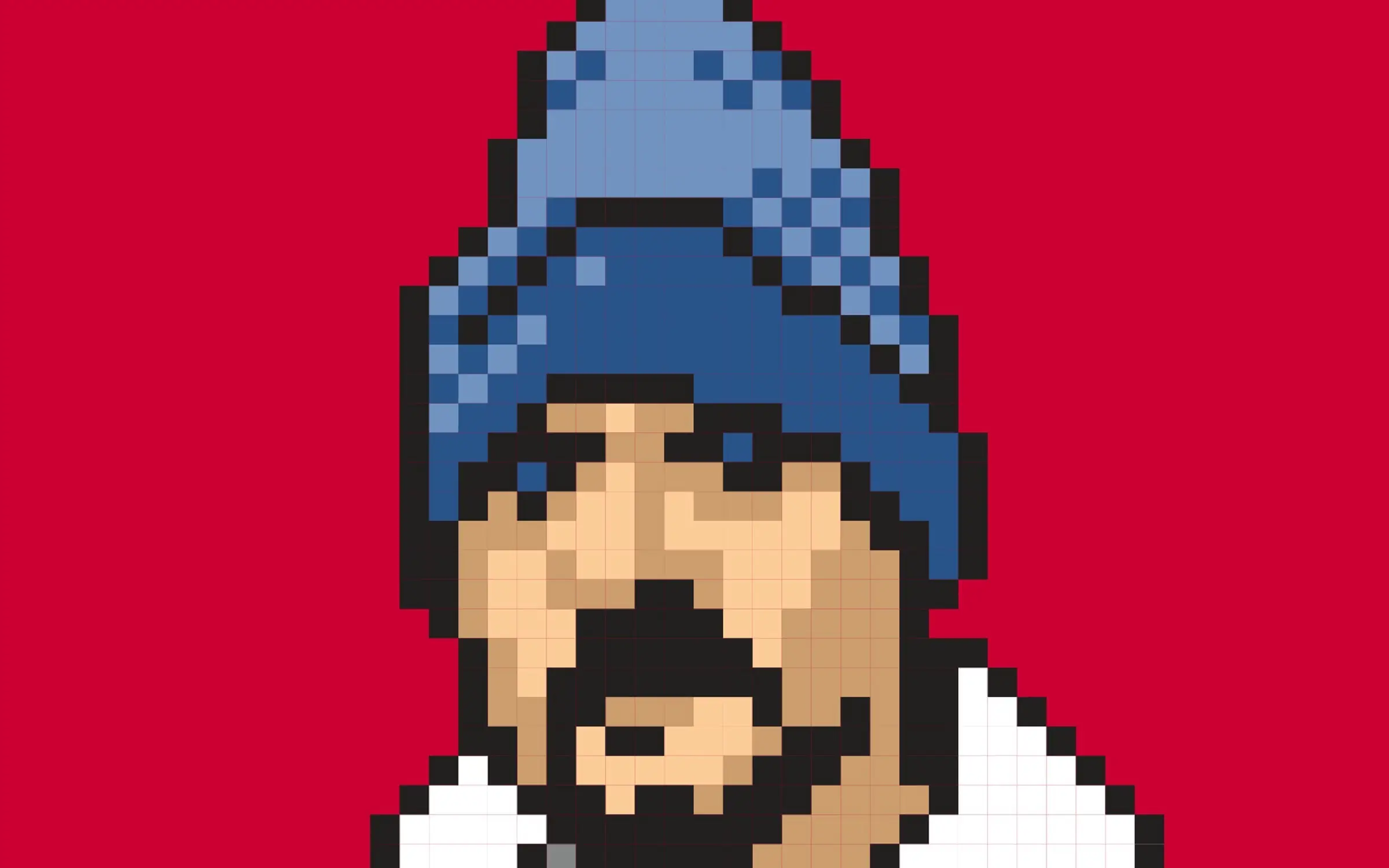
For love of pixels: Stroll with us down memory lane as we celebrate the pearl anniversary of pixel art creation’s primary progenitor, and some of the many artists and design languages it inspired.

Categories
37signals A Book Apart A List Apart Acclaim Adobe An Event Apart books Brands business Career Collectibles Community conferences content Coudal Partners Deck, the Designers E-Books editorial eric meyer Ethan Marcotte Free Advice glamorous Grief Happy Cog™ HTML5 Indieweb industry Jason Santa Maria Jeremy Keith launches Mentoring My Back Pages New York City NYC Products Publications Publisher's Note Publishing Responsibility Responsive Web Design San Francisco Small Business speaking State of the Web Surviving The Essentials The Profession This never happens to Gruber Typekit User Experience UX Wah! Web Design Web Design History Websites Wit and Wisdom Working writing zeldman.com

Of Books and Conferences Past

Some of A Book Apart’s 50-odd primary paperbacks, arranged like a color spectrum, and photographed against a piece of wood.

Just as nobody who marries spends their wedding day planning their divorce, almost nobody starts a business contemplating what rocks it will eventually splinter and break upon, and how to build a life raft for themselves.

I take that back. Some folks I know, who played pivotal roles in the evolution of the web, actually started their businesses with a clear goal of selling them to somebody bigger. Like Typekit was designed to sell to Adobe. Or Blogger was designed to sell to Google.

Such folks, several of whom are now post-economy wealthy, lived in the Bay Area in the 1990s and early 2000s, where building to flip was widely discussed and accepted.

Meanwhile, in NYC…

I, on the other hand, live in New York. So I started my web businesses (like Happy Cog™ design studio) to serve clients, as NYC creatives have always done, and with no understanding that I would one day need to leave the company and should have an exit plan. Why would I exit? Why would I ever stop doing work that brought excitement and meaning to my life?

Similarly, I started my personal site with its “Ask Dr. Web” tutorials in 1995, and co-founded my web design publication, A List Apart, in 1997, for the sheer joy of sharing knowledge, with no concept of making money, let alone of one day selling the business.

Eventually, despite my naivete, and mostly thanks to Jim Coudal and Jason Fried, A List Apart began making money by running one carefully screened ad per page. I used that money, as you will expect, to pay our writers, editors, and producers. And when it came time to stop running ads, I slowed our publication schedule, paid writers out of my own pocket, and worked with a small crew of fellow volunteers, who published ALA because we believed in the mission. (Still do.)

If I had come of business age in San Francisco, I likely would have sold A List Apart to somebody like O’Reilly, but that was never my plan because I make toys to play with, not to give away.

An ecosystem apart

In spite of A List Apart’s running at a loss, in the early 2010s I co-founded two businesses that spun out of it: An Event Apart design conference with Eric Meyer, and A Book Apart with Mandy Brown (later replaced by CEO Katel LeDu) and Jason Santa Maria. And during those first years, business was great.

We published HTML5 For Web Designers the day after Steve Jobs, waving an iPhone on the world’s biggest stage (okay, sitting at his desk), announced that Flash was dead because HTML5 would bring app-like dynamism to the web using open standards instead of proprietary code. It (our first book, I mean) sold brilliantly. “Gee, publishing isn’t that hard” I naively told myself. (No, I knew it was hard. My favorite publishers had been laying off my favorite editors for ten years before my partners and I took the plunge. But the early success did make me think the books we published about web design would always find a large, eager audience. In time, I would learn otherwise.)

And while we began the publishing house by relying on the best writers we knew personally to write about the topics they were most passionate about, I’m proud to say that, as we went along, we also discovered brilliant first-time book authors, helping them create perfectly polished, fluff-free manuscripts that made genuine contributions to our readers’ understanding of UX and all it entails. (And not just to our readers. The insights they brought to their work after digesting our books rubbed off on their colleagues.)

In giving these brilliant writers a platform, we not only helped them take their careers to the next level, we also helped people who create web content think and work better, which in turn helped the people who used the websites, applications, and products our readers designed and built. Of that, I am proud.

Stay hungry

An Event Apart (RIP) was also a damned fine early success. Web designers liked our innovation of a multi-day, single-track conference, with a holistic approach to web design, code, and content, and unifying themes between the individual talks. Our freaking-amazing speakers debuted Huge Ideas including Mobile First and Responsive Web Design—ideas which, like perfect contextual menus in UX, arrived at the very moment designers needed them.

Not only that, but these humble geniuses also sat in the auditorium with our audience for all three days of each conference event: listening to each other’s presentations, and updating their own presentations to better bounce off each other’s ideas and the evolving themes of that particular show. 

I could spend hours telling you how our producer Toby M. made miracles happen at every show, or how person-in-charge Marci E. brought joy to our community. How many of our speakers became authors. How some “graduated” from An Event Apart as newcomers replaced them. How the diversity of our speaking line-up, which wasn’t terrific in 2008, improved greatly each year. (Not that we ever said, “We need another black speaker” or “We need a trans speaker” or what-have-you. Just that we learned to swim outside the pool we came from, and discover great talent everywhere.) Our speakers were also almost uniformly Just Nice Good People, which doesn’t always happen when you’re collecting the greatest minds in an industry. 

That’s not even to mention the incredible people who attended our shows, some of whom became lifetime friends for me.

So why, given the joy these businesses brought to everyone connected to them, including me, would my partners and I have even conceived of an exit strategy? We wanted the Good Times to roll on forever.

But of course they never do.

Things end

COVID did in An Event Apart. Some conferences survived, of course. Different priorities, different overheads, different business models. Some that survived do not pay their speakers. Others, where the conference is an adjunct to a bigger business, laid off or reassigned conference staff while the pandemic made live events impossible. Others that survived mostly rely on volunteer labor, whereas we had paid staff. They were worth their weight in platinum, and we’d have paid them more (because they were worth more) if the pandemic and six-figure hotel contracts hadn’t made continuing the show impossible. My partner and I earned nothing during the business’s last five years, and got personally stuck with a six-figure debt when the event closed. It is what it is.

Although books should be COVID-proof, multiple financial problems eventually beset our publishing house as well. For most of the run of the business, my partner and I earned nothing beyond the glow of contributing to our community’s knowledge. We paid our CEO, authors, and editors, kept nothing for ourselves, and tried, oh how we tried, to keep the business going as its revenues tanked.

Speaking only for myself, I’ve learned that I am good at starting businesses and keeping them going creatively, as long as somebody else figures out the money. I suck at that, and I’m obsessed with the notions of fairness and self-sacrifice that were drummed into me by a narcissistic family that valued me for taking on the roles they were emotionally incapable of handling—such as bringing up my baby brother in my father’s absence, which no child is  equipped or should be asked to do, and yet it happens all the time. Growing up this way made me put my own self-interest last. Which is also why it never occurred to me to plan an exit. And by the time I needed to do so, the businesses were not in shape to sell.

Closing a conference is bad, but attendees can go to other conferences, and speakers can speak at other conferences; closing a conference doesn’t end a community. It sucks for the business but doesn’t strand participants.

But closing a publishing house hurts like hell, and you feel you let everybody down. I know how much our closing hurt some of our authors, and I think about that, instead of the good we achieved, when I look back. 

No doubt when my partner and I write the large personal checks to cover our deceased business’s outstanding debts, we’ll be regretting the harm our closing caused, not basking in the warm glow of how many careers we changed for the better. Like the standup comedian who obsesses about the guy who’s frowning at table 3, and doesn’t hear the laughter of the rest of the crowd. We also, hopefully, won’t focus too closely on our financial wreckage. Just pay the bill, and move on.

Anyway, I hadn’t publicly addressed the endings of these businesses, so I figured it was time to do so. I’m sharing my experience only. If you ask any of the people I worked with on these projects, they might have a different story to tell. And that would be their story, and it would be every bit as valid as anything I’ve said here.

I also didn’t ask permission of my partners, speakers, or authors before sharing these thoughts. Probably I should have. But, hey. As I’ve said. I’m speaking here only for myself.

So, anyway.

Parting gift

Is it worth the risk of starting a web-related business that isn’t a venture-backed startup? I still think it is, and I applaud all who try. Heck, I might even do so myself someday. If you’re doubtful because of (((gestures at everything))), it might be worth noting that I started Happy Cog™ during the dot-com crash, when studios were closing all around me. And we launched A Book Apart during the world financial crisis of late 2008. Don’t let (((all this))) deter you from trying something bold. Let me know when you do. I’ll keep watching the skies.

P.S. Under swell third-party ownership and management, Happy Cog is still going strong. Check it out!

Categories
automattic business Career Community glamorous jobs Open Source Own your content

I stayed.

My insight into corporate legal disputes is as meaningful as my opinion on Quantum Mechanics. What I do know is that, when given the chance this week to leave my job with half a year’s salary paid in advance, I chose to stay at Automattic.

Listen, I’m struggling with medical debts and financial obligations incurred by the closing of my conference and publishing businesses. Six months’ salary in advance would have wiped the slate clean. From a fiduciary point of view, if nothing else, I had to at least consider my CEO’s offer to walk out the door with a big bag of dollars.

But even as I made myself think about what six months’ salary in a lump sum could do to help my family and calm my creditors, I knew in my soul there was no way I’d leave this company. Not by my own choice, anyway.

I respect the courage and conviction of my departed colleagues. I already miss them, and most only quit yesterday. I feel their departure as a personal loss, and my grief is real. The sadness is like a cold fog on a dark, wet night.

The next weeks will be challenging. My remaining coworkers and I will work twice as hard to cover temporary employee shortfalls and recruit new teammates, while also navigating the complex personal feelings these two weeks of sudden, surprising change have brought on. Who needs the aggravation, right? But I stayed.

I stayed because I believe in the work we do. I believe in the open web and owning your own content. I’ve devoted nearly three decades of work to this cause, and when I chose to move in-house, I knew there was only one house that would suit me. In nearly six years at Automattic, I’ve been able to do work that mattered to me and helped others, and I know that the best is yet to come. 

I also know that the Maker-Taker problem is an issue in open source, just as I know that a friend you buy lunch for every day, and who earns as much money as you do, is supposed to return the favor now and then. If a friend takes advantage, you’re supposed to say or do something about it. Addressing these imbalances is rarely pretty. Doing it in public takes its own kind of courage. Now it’s for the lawyers to sort out. 

On May 1, 1992, a man who’d been horribly beaten by the L.A. police called for calm in five heartfelt, memorable words: “Can’t we all get along?” We couldn’t then, and we aren’t, now, but my job at Automattic is about helping people, and that remains my focus at the conclusion of this strange and stressful week. I’m grateful that making the tough business decisions isn’t my responsibility. In that light, my decision to stay at Automattic was easy.

P.S. We’re hiring.

Categories
A List Apart Blogs and Blogging business Career Community content copyright democracy editorial ethics glamorous Indieweb Internship My Back Pages Own your content Publications Publishing Responsibility Surviving The Essentials Web Design History Working writing

Ah yes, the famous “intern did it” syndrome

Soon after we launched A List Apart Magazine, we began to notice other websites reusing our content (including illustrations) without permission, and often without so much as a credit. As that violated our author’s copyrights and ours, we’d invariably reach out to the makers of those websites with brief, politely worded takedown requests. 

Not every content poacher was contactable, but those we did reach almost always quickly complied with our requests. They also nearly always claimed that an “intern” or “freelancer” had grabbed the content without their knowledge or permission. Some, perhaps fearing that we might be litigious, even went so far as to tell us that they’d “fired” the imaginary intern/freelancer the instant we informed them of the issue.

We always pretended to believe them.

Why? Because letting embarrassed people save face is kind. It also helps the whole interaction go more smoothly. Besides, the amateur pillager claiming “the intern did it” today may be your colleague or friend tomorrow.

I recalled this common awkwardness yesterday after a former US president who’s running for reelection blamed Nazi language in his social media post on a “staffer.” It would seem the buck stops anywhere but here.

Categories
Accessibility Adobe Advocacy AIGA art direction Authoring Bandwidth Best practices Browsers business Career client management Community creativity CSS Design Designers development Digital Preservation Fonts Future-Friendly HTML industry interface maturity Medium My Back Pages Off My Lawn! Performance Photoshop Rants Real type on the web Responsibility Responsive Web Design Site Optimization Standards State of the Web The Essentials The Profession Typography Usability User Experience UX Web Design Web Design History Web Standards Websites webtype work Working writing

This Web of Ours, Revisited

ONE MONTH and 24 years ago, in “Where Have All the Designers Gone?” (my HTMHell design column for Adobe of March 20, 2000), I discussed the deepening rift between aesthetically focused web designers and those primarily concerned with creating good experiences online:

More and more web designers seem less and less interested in web design.

Over the past 18 months or so, many of the best practitioners in the industry seem to have given up on the notion that a low-bandwidth, less than cutting-edge site is worth making. Much of the stuff they’ve been making instead has been beautiful and inspiring. But if top designers wash their hands of the rest of the Web, whose hands will build it, and whose minds will guide it? The possibilities are frightening.

An Imperfect Medium for Perfectionists

Why were many of the leading graphic designers and studios at the time uninterested in web design? For one thing, designers trained to strive for visual perfection found the web’s unpredictability depressing. The article provided clues to the frustrations of the time:

Good designers spend hours tweaking typography in Illustrator and Photoshop. Then visitors with slow connections turn off images.

Of course, where professionals trained in graphic design saw a distressing lack of control, others glimpsed in the infant technology a tremendous potential to help people, pixel-perfection be damned. To reduce the conflict to a cartoon, you might characterize it as David Carson versus Jakob Nielsen—though doing so would trivialize the concerns of both men. Designers already charged with creating websites found themselves somewhere in the middle—barking themselves hoarse reminding clients and managers that pixel-perfect rendering was not a thing on the web, while arguing with developers who told designers the exact same thing.

Visually inspiring websites like K10k showed that the web could, if approached carefully and joyfully, provide aesthetic delight. But many designers (along with organizations like AIGA) were unaware of those sites at the time.

Us and Them

Another source of tension in the medium in 2000 sprang from the discrepancy between the privileged access designers enjoyed—fast connections, up-to-date browsers and operating systems, high-res monitors (at least for the time) offering thousands of colors—versus the slow modems, aging and underpowered computers, outdated browsers, and limited-color monitors through which most people at the time experienced the web.

Which was the real design? The widescreen, multicolor, grid-based experience? Or the 216-color job with pixelated Windows type, a shallow “fold,” and pictures of headline text that took forever to be seen?

To view your masterpiece the way most users experienced it, and at the syrup-slow speed with which they experienced it, was to have an awakening or a nightmare—depending on your empathy quotient. Some designers began to take usability, accessibility, and performance seriously as part of their jobs; others fled for the predictability of more settled media (such as print).

A New (Old) Hope

My March, 2000 article ended on an upbeat note—and a gentle call to action:

For content sites to attain the credibility and usefulness of print magazines; for entertainment sites to truly entertain; for commerce sites and Web-based applications to function aesthetically as well as technically, the gifts of talented people are needed. We hope to see you among them.

That was my hope in 2000, and, all these years later, it remains my vision for this web of ours. For though the browsers, connections, and hardware have changed substantially over the past 24 years, and though the medium and its practitioners have, to a significant extent, grown the Hell up, beneath the surface, in 2024, many of these same attitudes and conflicts persist. We can do better.

Minus the framesets that formerly contained it, you may read the original text (complete with archaic instructions about 4.0 browsers and JavaScript that broke my heart, but which Adobe’s editors and producers insisted on posting) courtesy of the Wayback Machine.

☞  Hat tip to Andrey Taritsyn for digging up the article, which I had long forgotten.

Categories
A Book Apart A Feed Apart A List Apart An Event Apart Applications architecture Best practices Career client services Community conferences creativity CSS Design Designers Education eric meyer experience Formats glamorous Happy Cog™ Ideas industry Information architecture launches links maturity Mentoring Networks people social media social networking software Standards State of the Web Stories Teaching The Essentials The Profession twitter User Experience UX Web Design Web Design History wisdom

“Where the people are”

It’s nearly twenty years ago, now, children. Facebook had only recently burst the bounds of Harvard Yard. Twitter had just slipped the bonds of the digital underground. But web geeks like me still saw “social media” as a continuation of the older digital networks, protocols, listservs, and discussion forums we’d come up using, and not as the profound disruption that, partnered with smartphones and faster cellular networks, they would soon turn out to be. 

So when world-renowned CSS genius Eric Meyer and I, his plodding Dr Watson, envisioned adding a digital discussion component to our live front-end web design conference events, our first thought had been to create a bespoke one. We had already worked with a partner to adapt a framework he’d built for another client, and were considering whether to continue along that path or forge a new one.

And then, one day, I was talking to Louis Rosenfeld—the Prometheus of information architecture and founder of Rosenfeld Media. I told Lou about the quest Eric and I were on, to enhance An Event Apart with a private social network, and shared a roadblock we’d hit. And Lou said something brilliant that day. Something that would never have occurred to me. He said: “Why not use Facebook? It already exists, and that’s where the people are.”

The habit of building

Reader, in all my previous years as a web designer, I had always built from scratch or worked with partners who did so. Perhaps, because I ran a small design agency and my mental framework was client services, the habit of building was ingrained. 

After all, a chief reason clients came to us was because they needed something we could create and they could not. I had a preference for bespoke because it was designed to solve specific problems, which was (and is) the design business model as well as the justification for the profession. 

Our community web design conference had a brand that tied into the brand of our community web design magazine (and soon-to-emerge community web design book publishing house). All my assumptions and biases were primed for discovery, design, development, and endless ongoing experiments and improvements.

Use something that was already out there? And not just something, but a clunky walled garden with an embarrassing origin story as a hot-or-not variant cobbled together by an angry, virginal undergraduate? The very idea set off all my self-protective alarms.

A lesson in humility

Fortunately, on that day, I allowed a strong, simple idea to penetrate my big, beautiful wall of assumptions.

Fortunately, I listened to Lou. And brought the idea to Eric, who agreed.

The story is a bit more complicated than what I’ve just shared. More voices and inputs contributed to the thinking; some development work was done, and a prototype bespoke community was rolled out for our attendees’ pleasure. But ultimately, we followed Lou’s advice, creating a Facebook group because that’s where the people were. 

We also used Twitter, during its glory days (which coincided with our conference’s). And Flickr. Because those places are where the people were. 

And when you think about it, if people already know how to use one platform, and have demonstrated a preference for doing so, it can be wasteful of their time (not to mention arrogant) to expect them to learn another platform, simply because that one bears your logo.

Intersecting planes of simple yet powerful ideas

Of course, there are valid reasons not to use corporate social networks. Just as there are valid reasons to only use open source or free software. Or to not eat animals. But those real issues are not the drivers of this particular story. 

This particular story is about a smart friend slicing through a Gordian Knot (aka my convoluted mental model, constructed as a result of, and justification for, how I earned a living), and providing me with a life lesson whose wisdom I continue to hold close.

It’s a lesson that intersects with other moments of enlightenment, such as “Don’t tell people who they are or how they should feel; listen and believe when they tell you.” Meet people where they are. It’s a fundamental principle of good UX design. Like pave the cowpaths. Which is really the same thing. We take these ideas for granted, now.

But once, and not so long ago, there was a time. Not one brief shining moment that was known as Camelot. But a time when media was no longer one-to-many, and not yet many-to-many. A time when it was still possible for designers like me to think we knew best. 

I’m glad a friend knew better.

Afterword

I started telling this story to explain why I find myself posting, sometimes redundantly, to multiple social networks—including one that feels increasingly like Mordor. 

I go to them—even the one that breaks my heart—because, in this moment, they are where the people are. 

Of course, as often happens, when I begin to tell a story that I think is about one thing, I discover that it’s about something else entirely.

Categories
"Digital Curation" Advocacy Applications apps automattic Blogroll Blogs and Blogging Brands Community content ethics glamorous Ideas Indieweb industry interface links Microauthoring Microblogging Micropublishing Networks Off My Lawn! Own your content Platforms Publications Publishing Rants social media social networking software State of the Web The Essentials twitter Usability User Experience UX Web Design History Websites Weird writing

In search of a digital town square

Ever since an infantile fascist billionaire (hereafter, the IFB) decided to turn Twitter over to the racially hostile anti-science set, folks who previously used that network daily to discuss and amplify topics they cared about have either given up on the very premise of a shared digital commons, continued to post to Twitter while holding their noses, or sought a new digital place to call their own. This post is for the seekers, to compare notes. 

These are my personal observations; your views may differ (and that’s more than okay). In this quick survey, I’m omitting specialty platforms like Tribel, Post, and Substack. Feel free to comment, if you like.

The platforms

BlueSky: The most beautifully elegant web interface. Also the best features (other than omission of hashtags). What Twitter should have become. I joined late—Jack didn’t invite me, likely a sign that I was no longer industrially relevant. I have few followers there, and my posts so far get little traction, but that could change. It’s so pretty (and the few friends that use it matter so much to me) that I keep using it, and I reserve judgement as to its future potential. https://bsky.app/profile/zeldman.bsky.social

Threads: Currently my primary alternative to Twitter, and the only place besides Twitter where my posts get at least some response. Not as visually refined as BlueSky, and with a curiously restricted single-hashtag-only policy. Although this editorial decision helps focus the mind, and likely also cuts down on spam, it interferes with amplifying multidimensional posts. But I digress.

Rough edges and restrictive tagging aside, Threads feels like the place that’s likeliest to inherit the mantle of default town square—if any social platform can do that in these new times, that is.

Threads got its huge jump start because, while the IFB was busy finding new ways to make Twitter less useful and more dangerous, Meta leveraged its huge installed Instagram base to give users a more or less instant social network hookup. If it’s easy, and comes with a built-in network of people I already follow, it wins—at least initially.

Meta may also blow their opportunity if they pursue misguided policies, such as impeding (by algorithmic fiat) “political speech” when democracies hang in the balance, regional wars threaten to become world wars, and the climate crisis is approaching a point of no return. https://www.threads.net/@zeldman

Mastodon: How do you decentralize a digital town square? Provide universal social connection without locking in participants? Mastodon (and federation generally) are an attempt to do those things.

These are important and noble goals, but Mastodon (and federation generally) are a long shot at replacing a primary walled garden like Twitter because they require a fair degree of geekery to set up, and the price tag of mass acceptance is ease of setup. (Compare Threads—easy set-up, built-in friends and followers if you already use Instagram—versus the learning curve with Mastodon.)

If BlueSky is MacOS and Threads is Windows, Mastodon is Linux: a great choice for techies, but likely too steep a hill for Ma and Pa Normie. A techie friend invited me to join, and I write there frequently, but, for whatever it’s worth, my Mastodon posts get very little in the way of responses. It is, nonetheless, a highly effective network for most who use it. https://front-end.social/@zeldman

Tumblr: A bit o’ the OG weird wacky wonderful web, and a special place for nonconformist creative types. By its nature, and the nature of its fiercely loyal users, it is a cult jam. I was an early and enthusiastic Tumblr fan, but it was never my main axe, probably because, since the dawn of time itself, I have had zeldman.com.

For a while, when the IFB first started wrecking Twitter, an uptick in Tumblr usage suggested that the funky old network just might take over as the world’s town hall, but this hope was unrealistic, as Tumblr was never about being for everybody, and Tumblristas are mostly happy keeping the platform a home for self-selecting freaks, queers, and creatives.

I’ll note that Tumblr is part of the Automattic family, and I work at Automattic (just celebrated my fifth anniversary there!), but my opinions here are mine alone. BTW—in nearly 30 years of blogging, that’s the first time I’ve used that phrase. https://apartness.tumblr.com

LinkedIn: A comparatively safe social network with a huge network built up over years, hence a great place to share work-related news and ideas.

Some early Twitter adopters of my acquaintance—especially those who mainly write about work topics like UX—have made LinkedIn their primary social home. For most working folks, it is undoubtedly a place to post and amplify at least some of the content that matters to you. OTOH, it’s not a place where I’d share deep takes on CSS (that’s probably Mastodon), cosplay (Tumblr), or personal true confessions (one’s blog, Threads, Twitter before the IFB took over). https://www.linkedin.com/in/zeldman

Twitter itself: During its heyday, before the IFB, and when it was the only game in town, I loved going there to see what clever things my smartest friends were saying, post my own bon mots, and promote content that mattered to me.

I’ll limit my comments on Twitter’s current state to noting that I still post there, from stubbornness as well as habit, and primarily in the (increasingly forlorn) hope that the IFB will eventually tire of his toy, or of the ceaseless financial hemorrhage, and go away, leaving the site to rebirth itself as an open source project or under the care of new, non-fascist owners.

Though the algorithm punishes my posts, and though I’m continually appalled by the MAGA posts, Russian disinformation, racist/ misogynist/ anti-semitic spew, and Trumpian ego of the current owner, I shall, at least for now, continue to defend my tiny turf there.

8 responses to “In search of a digital town square”

  1. L. Jeffrey Zeldman Avatar

    Psst. Comments are back. This is a test.

  2. dusoft Avatar

    I follow you on Mastodon and even when usually don’t respond to bunch of posts, I can still appreciate people being there. Since I use RSS, I get to read your posts that way usually coming to your website.

  3. Zeldman on Web and Interaction Design Avatar

    It’s nearly twenty years ago, now, children. Facebook had only recently burst the bounds of Harvard Yard. Twitter had just slipped the bonds of the…

  4. […] In search of a digital town square – L. Jeffrey Zeldman, non l’ultimo dei fessi sul web, cerca di fare il punto sullo stato dell’arte del self publishing oggi; […]

  5. […] In search of a digital town square – L. Jeffrey Zeldman, talks about the state of the art on mantaining a presence on the web today, with the available tools. […]

  6. […] In search of a digital town square (Jeffrey Zeldman) […]

  7. Zeldman on Web and Interaction Design Avatar

    Bluesky introduces open-source, collaborative moderation for federated social media websites: Bluesky was created to put users and communities in control of their social spaces online.…

  8. Zeldman on Web and Interaction Design Avatar

    I’ve started a Bluesky list featuring some of the brilliant writers, designers, coders, editors, and others who’ve contributed to A List Apart “for people who…

To respond on your own website, enter the URL of your response which should contain a link to this post’s permalink URL. Your response will then appear (possibly after moderation) on this page. Want to update or remove your response? Update or delete your post and re-enter your post’s URL again. (Find out more about Webmentions.)

Mentions

  • Unknown's avatar 💬 Zeldman on Web and Interaction Design
  • Unknown's avatar 💬 Zeldman on Web and Interaction Design
  • Unknown's avatar 💬 Zeldman on Web and Interaction Design
Categories
A List Apart Career Community Coudal Partners creativity Design Designers glamorous Happy Cog™ Indieweb links Mentoring Off My Lawn! Products Small Business social media State of the Web User Experience UX Web Design History wisdom

Fly, my designers, fly!

Designers can either become drivers of business within their organizations, or they can create the businesses they want to drive. We’re entering an era of design entrepreneurship, in which some designers are realizing that they’re not just a designer employed by a business; they’re creative business people whose skill set is design.

The State of UX in 2024

The quotation above is from a report at trends.uxdesign.cc subtitled “Enter Late-Stage UX.” It is an important thought. And if it seems like a new one to designers in their first decade of work, it will feel quite familiar to to those of us who earned our merit badges during the 1990s and 2000s. See, for instance,

When You Are Your Own Client, Who Are You Going To Make Fun Of At The Bar?

by Jim Coudal (2005),

Starting a Business: Advice from the Trenches

by Kevin Potts (2003), and

THIS WEB BUSINESS, Part One

by Scott Kramer (2000, one of four terrific ALA articles by Scott on that subject).

That widespread, intoxicating entrepreneurial impulse led to a cornucopia of internet content and products (and, eventually, “real-world” products, too). Some flopped. Some flowered for a magical season (or twelve), and then faded as times and the market changed. Some grew and grew, growing communities with them. A few changed the world, for better or worse. (And, occasionally, for both.)

History repeats, but it also changes. If flying from your corporate perch feels like your best response to an industry where the idealism that led you to UX feels somewhat beside the point, go for it! —But first, check your bank balance, and talk with family, friends, and a business advisor, if you have one.

Trusting my ability to use design and words to say something original enabled me to work for myself (and with partners) from 1999–2019, and it was good. Financially, running independent businesses is a perpetual rollercoaster, and it can crush your soul if your beloved creation fails to connect with a community. Some people exit rich. Others just exit. “Don’t burn any bridges” is a cliché that exists for a reason. But I digress.

“Consider entrepreneurship” is but one piece of useful advice in this year’s excellent State of UX report by Fabricio Teixeira and Caio Braga, with deeply clever illustrations by Fabio Benê and significant contributions from Emily Curtin (God bless the editors!) and Laura Vandiver.

I invite you to read and bookmark the whole thing. I plan to reread it several times myself over the next weeks. It’s that deep, and that good. Hat tip to my colleague Jill Quek for sharing it.

Read: The State of UX in 2024.

Categories
Best practices blogger Blogs and Blogging Community content Content First Content-First creativity editorial findability Free Advice Ideas Indieweb industry links Marketing Off My Lawn! Own your content Platforms Publications Publishing Search Standards State of the Web Teapot The Essentials The Profession Wah! writing

Algorithm & Blues

Examining last week’s Verge-vs-Sullivan “Google ruined the web” debate, author Elizabeth Tai writes:

I don’t know any class of user more abused by SEO and Google search than the writer. Whether they’re working for their bread [and] butter or are just writing for fun, writers have to write the way Google wants them to just to get seen.

I wrote extensively about this in Google’s Helpful Content Update isn’t kind to nicheless blogs and How I’m Healing from Algorithms where I said: “Algorithms are forcing us to create art that fits into a neat little box — their neat little box.”

So, despite Sullivan’s claims to the contrary, the Internet has sucked for me in the last 10 years. Not only because I was forced to create content in a way that pleases their many rules, but because I have to compete with SEO-optimized garbage fuelled by people with deep pockets and desires for deep pockets.

Is the Internet really broken?

For digital creators who prefer to contain multitudes, Tai finds hope in abandoning the algorithm game, and accepting a loss of clout, followers, and discoverability as the price of remaining true to your actual voice and interests:

However, this year, I regained more joy as a writer when I gave upon SEO and decided to become an imperfect gardener of my digital garden. So there’s hope for us yet.

As for folks who don’t spend their time macro-blogging—“ordinary people” who use rather than spend significant chunks of their day creating web content—Tai points out that this, statistically at least a more important issue than the fate and choices of the artists formerly known as digerati, remains unsolved, but with glimmers of partially solution-shaped indicators in the form of a re-emerging indieweb impulse:

Still, as much as I agree with The Verge’s conclusions, I feel that pointing fingers is useless. The bigger question is, How do we fix the Internet for the ordinary person?

The big wigs don’t seem to want to answer that question thoroughly, perhaps because there’s no big money in this, so people have been trying to find solutions on their own.

We have the Indieweb movement, the Fediverse like Mastodon and Substack rising to fill the gap. It’s a ragtag ecosystem humming beneath Google’s layer on the Internet. And I welcome its growth.

For more depth and fuller flavor, I encourage you to read the entirety of “Is the internet really broken?” on elizabethtai.com. (Then read her other writings, and follow her on our fractured social web.)


“The independent content creator refuses to die.” – this website, ca. 1996, and again in 2001, paraphrasing Frank Zappa paraphrasing Edgar Varese, obviously.

Hat tip: Simon Cox.

Categories
Advocacy Archiving Browsers Community Design glamorous HTML industry javascript launches links Off My Lawn! people Publications Responsive Web Design Standards State of the Web Stories The Profession W3C Web Design Web Design History Web Standards Websites

He Built This City: The Return of Glenn Davis

You may not know his name, but he played a huge part in creating the web you take for granted today. 

As the first person to realize, way back in 1994, that the emerging web could be a playground, he created Cool Site of the Day as a single-focused blog dedicated to surfacing interesting sites, thereby demonstrating the web’s potential while creating its first viral content. (As an example, traffic from his followers, or, as we called them back then, readers, brought NASA’s web server to its knees.)

He co-founded The Web Standards Project, which succeeded in bringing standards to our browsers at a time when browser makers saw the web as a software market to be dominated, and not a precious commons to be nurtured.

He anticipated responsive web design by more than 20 years with his formulation of Liquid, Ice, and Jello as the three possible ways a designer could negotiate the need for meaningful layout vis-a-vis the unknowns of the user’s browsing environment.

He taught the web DHTML through his educational Project Cool Site. 

And then, like a handful of other vital contributors to the early web (e.g. Todd Fahrner and Dean Allen), he vanished from the scene he’d played so large a role in creating.

He’s ba-ack

Glenn Davis wasn’t always missed. Like many other creators of culture, he is autistic and can be abrasive and socially unclueful without realizing it. Before he was diagnosed, some people said Glenn was an a**hole—and some no doubt still will say that. I think of him as too big for any room that would have him. And I’m talking about him here because he is talking about himself (and the history of the early web) on his new website, Verevolf.

If you go there, start with the introduction, and, if it speaks to you, read his stories and consider sharing your own. That’s how we did it in the early days, and it’s still a fine way to do it—maybe even the best way.

I knew Glenn, I worked with him and a lot of other talented people on The Web Standards Project (you’re welcome!), and it’s my opinion that—if you’re interested in how the web got to be the web, or if you were around at the time and are curious about a fellow survivor—you might enjoy yourself.

Categories
Code Community Diversity Education

Gender Bias and Reputation on Stack Overflow

This paper concludes that women are not disadvantaged by their own actions; they are penalised by a scoring structure which conceals sexism and disregarded by a masculine-majority userbase. Far from programmers’ paradise, gender-biases dictate the sharing and recognition of technical knowledge on SO.

Trouble in programmer’s paradise: gender-biases in sharing and recognising technical knowledge on Stack Overflow by S. J. Brooke

Hat tip: Shannon Smith (@cafenoirdesign).

Categories
Advocacy automattic Blogs and Blogging Brands Community Design industry Own your content software Standards Web Design Web Standards wordpress

Enabling Folks to Express Themselves on the Web: State of the Word 2021

Screenshot of slide highlighting the four phases of WordPress Gutenberg.

Not only are we enabling folks to express themselves uniquely on the web, unlike the cookie cutter looks that all the social sites try to put you into. We’re doing it in a way which is standards-based, interoperable, based on open source, and increases the amount of freedom on the web.

—Matt Mullenweg, State of the Word 

In a live address, Automattic’s Matt Mullenweg

  • Introduces Openverse (an opt-in content commons);
  • Announces that WordPress’s beginner-friendly Learn.Wordpress.org is now available in 21 languages;
  • Philosophizes about Web3 and the “decentralized web” —which, despite big company colonization attempts, is really what the web has always been;
  • Extols the virtues of Open Source;
  • And more. 

Watch the 2021 #StateoftheWord annual keynote address on YouTube. It’s two hours long, so bring popcorn.

Selected Additional Reactions & Commentary

Hat tips to Chenda Ngak, Reyes Martínez, and Josepha Haden.

Categories
Community music

Music is the Best

Love music? Follow your own tastes? Let’s share.

Connect on Spotify.
Connect on Last.fm.

Previously, in this same series: Let’s Hang (Spotify).

Categories
Community content ethics Fascism Lite social media

Resist revenge tweeting.

The people have removed a tyrant. I feel the joy and wonder of a newborn thing.

My relief is so intense, it’s physical—my body has begun a slow unkinking, cell by cell, muscle by clenched muscle.

But I’m resisting my urge to be publicly clever about Trump’s defeat.

Because, darn it, Joe Biden calls on us to be better.

Yes, many on the other side, if they had won, would exult in rubbing our faces in it. Yes, it should be our turn to hurt them.

But isn’t that how we got here? Tribalism and ridicule of the other?

Isn’t resentment at being looked down upon by better educated, more privileged people part of what led to Trump’s victory in 2016?

There’s lots I could say about the racism and cruelty of many Trump supporters that would justify rubbing their noses in Trump’s defeat.

And after our country’s narrow escape from Fascist authoritarianism, the desire is strong to punish those who, knowingly or not, carried us to the precipice.

But an eye for an eye—well, you know.

Today, how I contribute to my nation’s healing is by taking this really fine tweet I just wrote, and deleting it, unposted.


Photo by H Shaw on Unsplash. Hat tip to Button Monkey for his friendship.

Categories
climate change Community glamorous iphone NYC

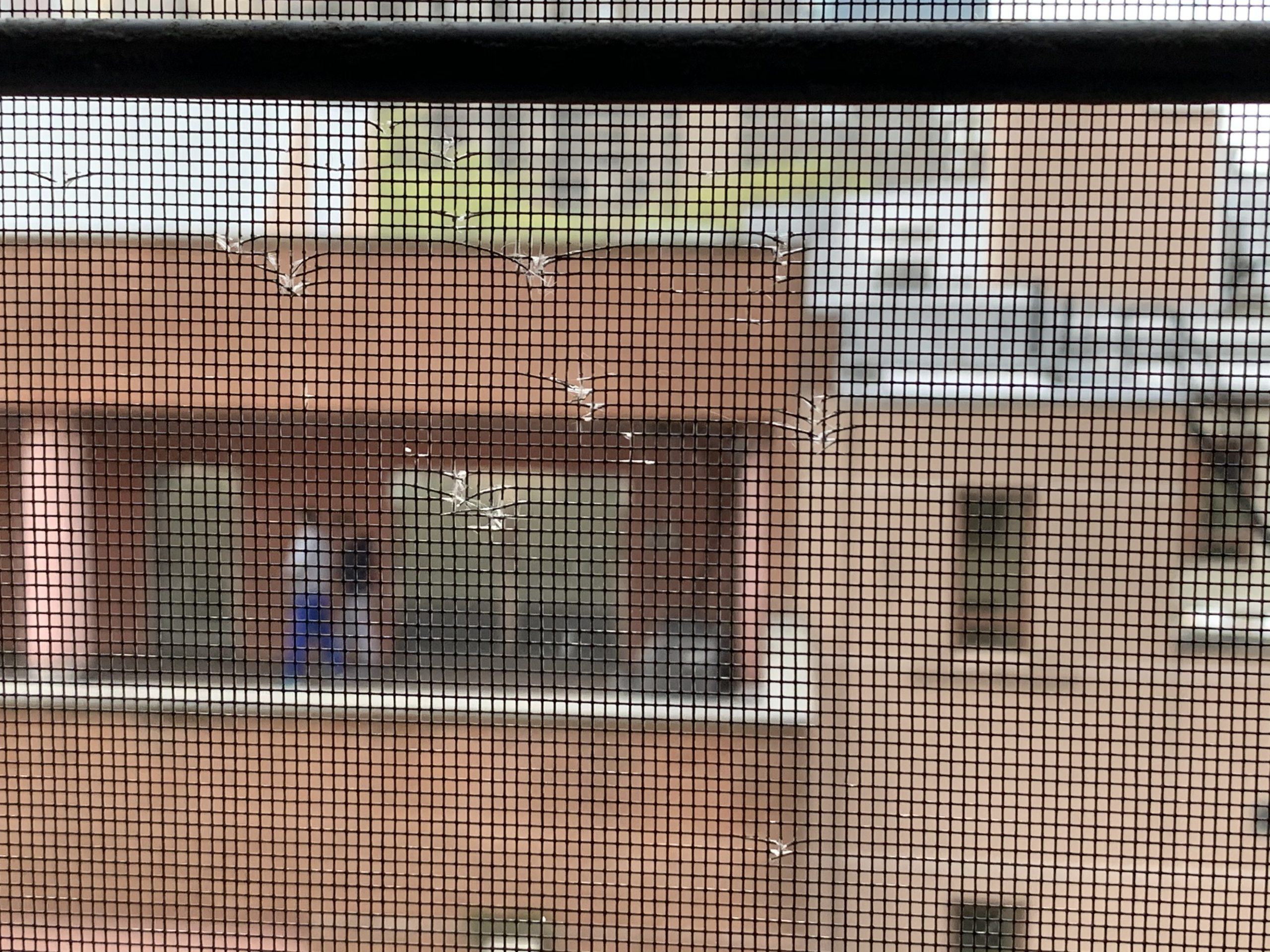
Eight line poem.

May 9. Snowing in New York. Wearing face masks, two men stand on a balcony of the Chinese Mission to the UN, photographing the snowfall with their phones. I try to photograph them and the snow, but they are already leaving the balcony, and my phone autofocuses on the window screen.