Categories
Advertising Collectibles Community content creativity Damned Fine Journalism Design Designers Desktops Digital Preservation Formats Free Advice glamorous HTML industry launches links music My Back Pages Own your content social media social networking software Surviving Tech Web Design Web Design History Web Standards Websites zeldman.com

My weekend project

It’s Sunday; I’m playing with my music collection, content as a fed-and-burped babe. Allow me to explain.

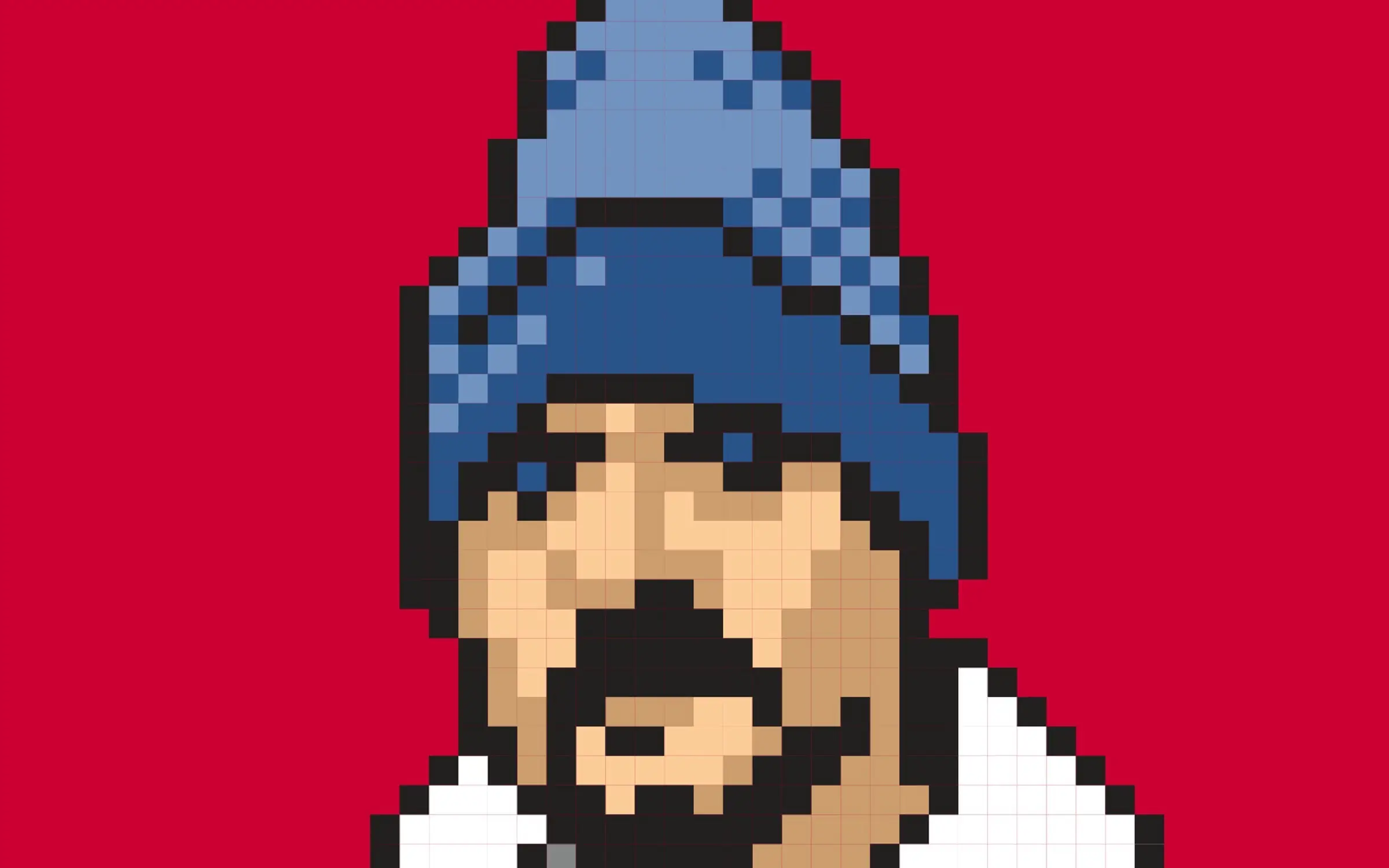
I realized last night that, in tracking my shifting musical tastes via my Last.fm Pro account, I’m basically remaking “Pardon My Icons,” the creative project I launched on this very website in 1995, back when it was still at a tilde address (it did not become zeldman.com until ’96), and which first brought my work to the attention of other creatives who were also discovering the early web and making it their own.

Me, collage, and music

Although I was not serious about it, I started making collage art when I lived in Washington DC in my 20s.

Back then I was serious about composing and producing. I used an Akai 12-track recorder, a rack of synth modules commanded by my Yamaha DX7 with a custom E! card, and a PC running Personal Composer MIDI, arranging, and composition software. I also had an old Selmer Bundy flute, an African reed instrument whose name I forget (and whose “reed” turned out to be a dried locust carcass, as I would discover, to my horror, when the instrument broke), Fender amps, mics, and a variety of percussion instruments with which I made music in my Washington, DC-based recording studio. But that’s a whole ’nother story.

I did not expect to earn a living as a composer, and in that negative expectation I was more than amply fulfilled.

So I scrounged up a day job at a local advertising agency as a naively optimistic copywriter.

And a night job as a stringer for The Washington Post’s Arts section.

Music journalist by night

The paper’s arts section editor in those days was named Richard. I’d gotten his attention without soliciting it after creating “Khz” for City Paper. Khz was my weekly music column. I covered the emerging go-go and hardcore scenes, as they were what was happening in DC, and the whole country would soon be listening. Naturally, the Post made me stop writing about that interesting and relevant stuff, and instead paid me $40 per to crank out anodyne concert reviews of mainstream artists like Kenny Rogers when their tours came through DC. (I was comped to the ticket but paid my own travel and gas out of the 40 bucks.)

I typically had 30 minutes from the time the headliner started to call in my review, which meant I had to write it in my head while watching the beginning of the performance, then run to a pay phone booth (kids, ask your parents) and dictate it aloud to someone on the copy desk, before the concert had even begun to build up a head of steam. This wasn’t fair to the artists. I did the best job I could under the circumstances, taking pride in how quickly I could structure and ship a news story. Richard fired me before I could quit, but that, too, is another story.

Most importantly at that time, I lived with a girlfriend. She was an artist and architect who had left that career to study computer programming. We were social (many friends, drinking was often involved), and serious about our art—which, in my case, was music, even if I earned my living writing concert reviews and crafting passable but hardly brilliant ads.

Through all of those ups and downs, and to the side of those major efforts, I kept at the collage for years, putting in several hours a night making the things. When each was finished—and deciding that any art product was finished was damned tough for my restless young mind—I would carefully frame it behind glass, and mount it on the walls of our apartment.

Was it art? Just a hobby? Who knows? It made me happy.

And then gradually, as I put more effort into my music and ad careers, I set the collage-making aside, for a time.

New career in a new town

Ten years later, I was a New York art director and copywriter, two years sober, and no longer in that same romantic relationship. That’s okay, I was in a new one.

I’d packed my music studio equipment—now obsolete because Akai stopped making the proprietary multitrack tape format that their 12-track unit ran on—in a storage unit. Eventually I’d give away all that music and recording equipment (keeping only the multitrack masters), but that, too, is another story.

Cutting-edge for a day

Then in 1995, one of our ad clients asked the agency if we could make them a website. Like many of you, we lied and said, sure. And then we figured out how to actually do it.

The client was Warner Bros., the project was “Batman Forever,” our visionary client was Donald Buckley, my partners were Steve McCarron, Alec Pollak, and Doug Rice, and the website was a huge hit, attracting half the people who visited the early web. (Alec’s “Flashback 1995: batmanforever” shares screenshots, which are great, although they cannot convey what a breakthrough the site was in March, 1995.)

With 3 million people using the web in 1995, the site got 1.5 million visits a day for over a year. Not bad.

Pardon my icons (1995)

First gallery spread of “Pardon My Icons,” a zeldman.com entertainment from 1995 ff.

I immediately set to work creating a personal site (this one), and Pardon My Icons was one of its first “entertainments.”

As is often the case with my creative efforts, I made these tiny, Warhol-inflected bits of art as a protest against what I saw as the mediocrity of the icons in general use on that early, early web.

(Similarly, my friends and I would later start The Web Standards Project in protest against the dumb ways most folks were being told to create websites, e.g. using proprietary tags instead of W3C and ECMA standards, because browsers didn’t properly support those. Having lost access to my musical master tapes because I’d invested in Akai’s non-standard and eventually discontinued tape format, I was kind of keen on not letting the internet fall victim to the same kind of nonstandard f*ckery. But that, too, is another story. We are gathered here to talk about icons and collage. So let’s do that:)

A mental break

I track my music on Last.fm Pro. Here’s my account. (But don’t look unless you, too, have a Pro account. I’ll explain why in a moment.)

Photo spread: some of the artists I listen to, as shown on last.fm Pro.
Some of the artists I listen to, as shown on last.fm Pro.

Last.fm lists the artists you play, arranging them by the number of plays. Thus, if you were to play three tracks by Freddie Gibbs and two by Bill Evans, you’d have a collage featuring those two artists, with Freddie preceding Bill because he has one more play than Bill.

But if you play three tracks each of Freddie Gibbs and Bill Evans, then Bill will come first, because Bill comes before Freddie alphabetically.

Through such moves, over time, an ever-shifting collage unfolds. But only in Last.fm Pro.

In regular, free old last.fm, you can see other people’s artists as a list, arranged by number of plays, interrupted by an ugly barrage of ads. This is a useful free service for those who are curious about what their friends listen to. But it is a list, not an artful collage, of course.

Collage for days

In Pro, you can see their artists and yours as an ad-free collage that goes on for pages and pages. Plus, as a Pro user, you can choose which photo represents which artist—and even upload your own. When viewing your collection, you and your visitors will see a collage of your favorite artists, in descending order of plays (and with the English alphabet deciding who at each play count precedes whom), using artwork you not only select, but you can also create and upload to the service.

I like Pro. And even though the product isn’t exactly in what you’d call hyper active development—even though the server isn’t always fast, even though there are a few bugs that will probably never get fixed, even though new features are introduced rarely, and the company’s customer service department isn’t exactly the most active help desk in tech—despite those minor drawbacks, the site does things no other website can do. And at US $3, the Pro account isn’t exactly priced out of reach for most customers. (If you can afford a computer, internet access, a music collection and/or a music streaming service, you can probably scratch the 3 bucks together as well.)

How to collage on last.fm

By controlling what I listen to, and the order in which I listen, I’m slowly building an infinite collage of my evolving musical tastes.

By choosing or finding the artist photos (often post-producing them in Photoshop), I create my mood, my rhythm, and my shifting color palettes.

There are design rules governing where portraits should be placed. For instance, people whose face or gaze points rightward get placed on the left of the grid, so they lead the viewer’s eye from left to right, into the composition, whereas those who gaze to my left belong on the right side, leading the viewer’s eye back in.

To reposition someone, I may listen to a few extra plays of them. Or use last.fm’s Pro Admin to subtract a few plays.

When I started using Last.fm, I merely wanted a visual record of what I was listening to, and when I listened. But as you may have inferred, an accurate count of everything I’ve listened to over the past years is no longer my goal in using last.fm; the goal is now the endless collage.

It’s kinda spiritual.

(Reminder: the only way to see it is to be a Pro member of last.fm, which turns off ads and enables you to view your own and other people’s collections in a grid format instead of a list. If you’re a non-member, you see a list jammed with ads.)

If a tree falls, is it art?

Unlike the real-world collages I made in my 20s (which could be mounted on a wall), and unlike 1995’s “Pardon My Icons” (which could be viewed in any browser connected to the web), my current art-making/hobby activity is not publicly viewable except by last.fm Pro users. And that’s okay. ’Cause I’m not designing this for anyone besides myself to enjoy. I mean, if you see it, cool. But if nobody ever sees it, engaging with it will still make me happy.

Which makes this collage business—what? Therapy? Gaming? (Just of a different sort than anybody else?) A form of stimming? It definitely helps lower my general anxiety, providing a space where I can make pretty pictures while listening to my favorite music, which, driven in part by the desire to expand the collage, is widely inclusive and always expanding.

The hunt for fresh collage material also helps keep me interested in new music. (Readers who feel stuck, take note.) And my collage-making, however unimportant it may be, also provides a needed mental health break during these hellish times.

I do this activity every weekend when my more normal friends are biking or baking or dancing.

Is this activity, into which I’ve now poured many hours of my life, artistry or autism? Who cares? The point is that it’s escapist and harmless and we all need some of that in our lives, however we can grab it.

However you grab your moments of calm, meditation, and happiness, never be ashamed of taking care of yourself.

See also…

Rediscovering music: If Spotify exposes you to new music other people are listening to, Last.fm helps remind you of great music in your existing collection that may have slipped your mind.

For love of pixels: Stroll with us down memory lane as we celebrate the pearl anniversary of pixel art creation’s primary progenitor, and some of the many artists and design languages it inspired.

Categories
37signals A Book Apart A List Apart Acclaim Adobe An Event Apart books Brands business Career Collectibles Community conferences content Coudal Partners Deck, the Designers E-Books editorial eric meyer Ethan Marcotte Free Advice glamorous Grief Happy Cog™ HTML5 Indieweb industry Jason Santa Maria Jeremy Keith launches Mentoring My Back Pages New York City NYC Products Publications Publisher's Note Publishing Responsibility Responsive Web Design San Francisco Small Business speaking State of the Web Surviving The Essentials The Profession This never happens to Gruber Typekit User Experience UX Wah! Web Design Web Design History Websites Wit and Wisdom Working writing zeldman.com

Of Books and Conferences Past

Some of A Book Apart’s 50-odd primary paperbacks, arranged like a color spectrum, and photographed against a piece of wood.

Just as nobody who marries spends their wedding day planning their divorce, almost nobody starts a business contemplating what rocks it will eventually splinter and break upon, and how to build a life raft for themselves.

I take that back. Some folks I know, who played pivotal roles in the evolution of the web, actually started their businesses with a clear goal of selling them to somebody bigger. Like Typekit was designed to sell to Adobe. Or Blogger was designed to sell to Google.

Such folks, several of whom are now post-economy wealthy, lived in the Bay Area in the 1990s and early 2000s, where building to flip was widely discussed and accepted.

Meanwhile, in NYC…

I, on the other hand, live in New York. So I started my web businesses (like Happy Cog™ design studio) to serve clients, as NYC creatives have always done, and with no understanding that I would one day need to leave the company and should have an exit plan. Why would I exit? Why would I ever stop doing work that brought excitement and meaning to my life?

Similarly, I started my personal site with its “Ask Dr. Web” tutorials in 1995, and co-founded my web design publication, A List Apart, in 1997, for the sheer joy of sharing knowledge, with no concept of making money, let alone of one day selling the business.

Eventually, despite my naivete, and mostly thanks to Jim Coudal and Jason Fried, A List Apart began making money by running one carefully screened ad per page. I used that money, as you will expect, to pay our writers, editors, and producers. And when it came time to stop running ads, I slowed our publication schedule, paid writers out of my own pocket, and worked with a small crew of fellow volunteers, who published ALA because we believed in the mission. (Still do.)

If I had come of business age in San Francisco, I likely would have sold A List Apart to somebody like O’Reilly, but that was never my plan because I make toys to play with, not to give away.

An ecosystem apart

In spite of A List Apart’s running at a loss, in the early 2010s I co-founded two businesses that spun out of it: An Event Apart design conference with Eric Meyer, and A Book Apart with Mandy Brown (later replaced by CEO Katel LeDu) and Jason Santa Maria. And during those first years, business was great.

We published HTML5 For Web Designers the day after Steve Jobs, waving an iPhone on the world’s biggest stage (okay, sitting at his desk), announced that Flash was dead because HTML5 would bring app-like dynamism to the web using open standards instead of proprietary code. It (our first book, I mean) sold brilliantly. “Gee, publishing isn’t that hard” I naively told myself. (No, I knew it was hard. My favorite publishers had been laying off my favorite editors for ten years before my partners and I took the plunge. But the early success did make me think the books we published about web design would always find a large, eager audience. In time, I would learn otherwise.)

And while we began the publishing house by relying on the best writers we knew personally to write about the topics they were most passionate about, I’m proud to say that, as we went along, we also discovered brilliant first-time book authors, helping them create perfectly polished, fluff-free manuscripts that made genuine contributions to our readers’ understanding of UX and all it entails. (And not just to our readers. The insights they brought to their work after digesting our books rubbed off on their colleagues.)

In giving these brilliant writers a platform, we not only helped them take their careers to the next level, we also helped people who create web content think and work better, which in turn helped the people who used the websites, applications, and products our readers designed and built. Of that, I am proud.

Stay hungry

An Event Apart (RIP) was also a damned fine early success. Web designers liked our innovation of a multi-day, single-track conference, with a holistic approach to web design, code, and content, and unifying themes between the individual talks. Our freaking-amazing speakers debuted Huge Ideas including Mobile First and Responsive Web Design—ideas which, like perfect contextual menus in UX, arrived at the very moment designers needed them.

Not only that, but these humble geniuses also sat in the auditorium with our audience for all three days of each conference event: listening to each other’s presentations, and updating their own presentations to better bounce off each other’s ideas and the evolving themes of that particular show. 

I could spend hours telling you how our producer Toby M. made miracles happen at every show, or how person-in-charge Marci E. brought joy to our community. How many of our speakers became authors. How some “graduated” from An Event Apart as newcomers replaced them. How the diversity of our speaking line-up, which wasn’t terrific in 2008, improved greatly each year. (Not that we ever said, “We need another black speaker” or “We need a trans speaker” or what-have-you. Just that we learned to swim outside the pool we came from, and discover great talent everywhere.) Our speakers were also almost uniformly Just Nice Good People, which doesn’t always happen when you’re collecting the greatest minds in an industry. 

That’s not even to mention the incredible people who attended our shows, some of whom became lifetime friends for me.

So why, given the joy these businesses brought to everyone connected to them, including me, would my partners and I have even conceived of an exit strategy? We wanted the Good Times to roll on forever.

But of course they never do.

Things end

COVID did in An Event Apart. Some conferences survived, of course. Different priorities, different overheads, different business models. Some that survived do not pay their speakers. Others, where the conference is an adjunct to a bigger business, laid off or reassigned conference staff while the pandemic made live events impossible. Others that survived mostly rely on volunteer labor, whereas we had paid staff. They were worth their weight in platinum, and we’d have paid them more (because they were worth more) if the pandemic and six-figure hotel contracts hadn’t made continuing the show impossible. My partner and I earned nothing during the business’s last five years, and got personally stuck with a six-figure debt when the event closed. It is what it is.

Although books should be COVID-proof, multiple financial problems eventually beset our publishing house as well. For most of the run of the business, my partner and I earned nothing beyond the glow of contributing to our community’s knowledge. We paid our CEO, authors, and editors, kept nothing for ourselves, and tried, oh how we tried, to keep the business going as its revenues tanked.

Speaking only for myself, I’ve learned that I am good at starting businesses and keeping them going creatively, as long as somebody else figures out the money. I suck at that, and I’m obsessed with the notions of fairness and self-sacrifice that were drummed into me by a narcissistic family that valued me for taking on the roles they were emotionally incapable of handling—such as bringing up my baby brother in my father’s absence, which no child is  equipped or should be asked to do, and yet it happens all the time. Growing up this way made me put my own self-interest last. Which is also why it never occurred to me to plan an exit. And by the time I needed to do so, the businesses were not in shape to sell.

Closing a conference is bad, but attendees can go to other conferences, and speakers can speak at other conferences; closing a conference doesn’t end a community. It sucks for the business but doesn’t strand participants.

But closing a publishing house hurts like hell, and you feel you let everybody down. I know how much our closing hurt some of our authors, and I think about that, instead of the good we achieved, when I look back. 

No doubt when my partner and I write the large personal checks to cover our deceased business’s outstanding debts, we’ll be regretting the harm our closing caused, not basking in the warm glow of how many careers we changed for the better. Like the standup comedian who obsesses about the guy who’s frowning at table 3, and doesn’t hear the laughter of the rest of the crowd. We also, hopefully, won’t focus too closely on our financial wreckage. Just pay the bill, and move on.

Anyway, I hadn’t publicly addressed the endings of these businesses, so I figured it was time to do so. I’m sharing my experience only. If you ask any of the people I worked with on these projects, they might have a different story to tell. And that would be their story, and it would be every bit as valid as anything I’ve said here.

I also didn’t ask permission of my partners, speakers, or authors before sharing these thoughts. Probably I should have. But, hey. As I’ve said. I’m speaking here only for myself.

So, anyway.

Parting gift

Is it worth the risk of starting a web-related business that isn’t a venture-backed startup? I still think it is, and I applaud all who try. Heck, I might even do so myself someday. If you’re doubtful because of (((gestures at everything))), it might be worth noting that I started Happy Cog™ during the dot-com crash, when studios were closing all around me. And we launched A Book Apart during the world financial crisis of late 2008. Don’t let (((all this))) deter you from trying something bold. Let me know when you do. I’ll keep watching the skies.

P.S. Under swell third-party ownership and management, Happy Cog is still going strong. Check it out!

Categories
launches music Pete Zeldman

New music from the beyond

Happy heavenly birthday to my dear, deceased, devil brother Pete Zeldman. Today, 5 March 2024, to celebrate Pete’s life…

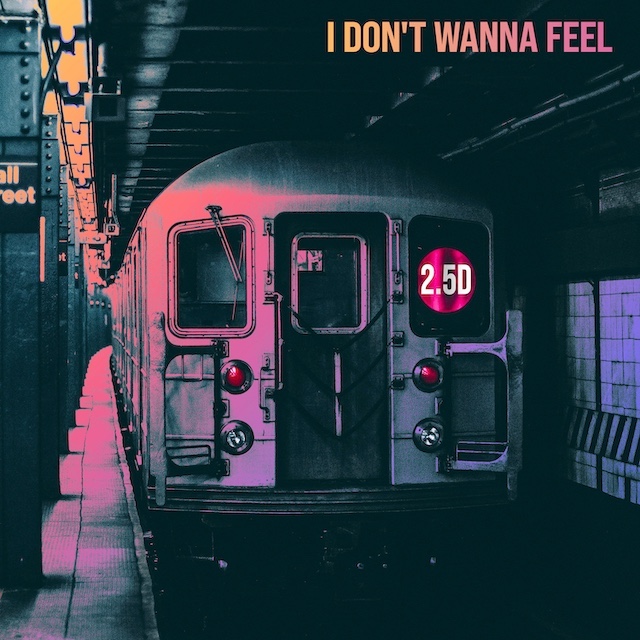
Lost in Sound Records is releasing an album of solo drums, Enigma, which will keep rhythmic enthusiasts and scholars busy for…well, forever. And ALSO 2.5D, his crazy interesting NYC rock band… [has released] its first single.

Cindy Shapiro

Hear that single, written by Pete, performed with fire by 2.5D, and released roughly 30 years after the fact:

Wish Pete a happy birthday on Facebook. You never know; whatever plane Pete now inhabits, he just might hear you.

Related:

Categories
A Book Apart A Feed Apart A List Apart An Event Apart Applications architecture Best practices Career client services Community conferences creativity CSS Design Designers Education eric meyer experience Formats glamorous Happy Cog™ Ideas industry Information architecture launches links maturity Mentoring Networks people social media social networking software Standards State of the Web Stories Teaching The Essentials The Profession twitter User Experience UX Web Design Web Design History wisdom

“Where the people are”

It’s nearly twenty years ago, now, children. Facebook had only recently burst the bounds of Harvard Yard. Twitter had just slipped the bonds of the digital underground. But web geeks like me still saw “social media” as a continuation of the older digital networks, protocols, listservs, and discussion forums we’d come up using, and not as the profound disruption that, partnered with smartphones and faster cellular networks, they would soon turn out to be. 

So when world-renowned CSS genius Eric Meyer and I, his plodding Dr Watson, envisioned adding a digital discussion component to our live front-end web design conference events, our first thought had been to create a bespoke one. We had already worked with a partner to adapt a framework he’d built for another client, and were considering whether to continue along that path or forge a new one.

And then, one day, I was talking to Louis Rosenfeld—the Prometheus of information architecture and founder of Rosenfeld Media. I told Lou about the quest Eric and I were on, to enhance An Event Apart with a private social network, and shared a roadblock we’d hit. And Lou said something brilliant that day. Something that would never have occurred to me. He said: “Why not use Facebook? It already exists, and that’s where the people are.”

The habit of building

Reader, in all my previous years as a web designer, I had always built from scratch or worked with partners who did so. Perhaps, because I ran a small design agency and my mental framework was client services, the habit of building was ingrained. 

After all, a chief reason clients came to us was because they needed something we could create and they could not. I had a preference for bespoke because it was designed to solve specific problems, which was (and is) the design business model as well as the justification for the profession. 

Our community web design conference had a brand that tied into the brand of our community web design magazine (and soon-to-emerge community web design book publishing house). All my assumptions and biases were primed for discovery, design, development, and endless ongoing experiments and improvements.

Use something that was already out there? And not just something, but a clunky walled garden with an embarrassing origin story as a hot-or-not variant cobbled together by an angry, virginal undergraduate? The very idea set off all my self-protective alarms.

A lesson in humility

Fortunately, on that day, I allowed a strong, simple idea to penetrate my big, beautiful wall of assumptions.

Fortunately, I listened to Lou. And brought the idea to Eric, who agreed.

The story is a bit more complicated than what I’ve just shared. More voices and inputs contributed to the thinking; some development work was done, and a prototype bespoke community was rolled out for our attendees’ pleasure. But ultimately, we followed Lou’s advice, creating a Facebook group because that’s where the people were. 

We also used Twitter, during its glory days (which coincided with our conference’s). And Flickr. Because those places are where the people were. 

And when you think about it, if people already know how to use one platform, and have demonstrated a preference for doing so, it can be wasteful of their time (not to mention arrogant) to expect them to learn another platform, simply because that one bears your logo.

Intersecting planes of simple yet powerful ideas

Of course, there are valid reasons not to use corporate social networks. Just as there are valid reasons to only use open source or free software. Or to not eat animals. But those real issues are not the drivers of this particular story. 

This particular story is about a smart friend slicing through a Gordian Knot (aka my convoluted mental model, constructed as a result of, and justification for, how I earned a living), and providing me with a life lesson whose wisdom I continue to hold close.

It’s a lesson that intersects with other moments of enlightenment, such as “Don’t tell people who they are or how they should feel; listen and believe when they tell you.” Meet people where they are. It’s a fundamental principle of good UX design. Like pave the cowpaths. Which is really the same thing. We take these ideas for granted, now.

But once, and not so long ago, there was a time. Not one brief shining moment that was known as Camelot. But a time when media was no longer one-to-many, and not yet many-to-many. A time when it was still possible for designers like me to think we knew best. 

I’m glad a friend knew better.

Afterword

I started telling this story to explain why I find myself posting, sometimes redundantly, to multiple social networks—including one that feels increasingly like Mordor. 

I go to them—even the one that breaks my heart—because, in this moment, they are where the people are. 

Of course, as often happens, when I begin to tell a story that I think is about one thing, I discover that it’s about something else entirely.

Categories
Advocacy Archiving Browsers Community Design glamorous HTML industry javascript launches links Off My Lawn! people Publications Responsive Web Design Standards State of the Web Stories The Profession W3C Web Design Web Design History Web Standards Websites

He Built This City: The Return of Glenn Davis

You may not know his name, but he played a huge part in creating the web you take for granted today. 

As the first person to realize, way back in 1994, that the emerging web could be a playground, he created Cool Site of the Day as a single-focused blog dedicated to surfacing interesting sites, thereby demonstrating the web’s potential while creating its first viral content. (As an example, traffic from his followers, or, as we called them back then, readers, brought NASA’s web server to its knees.)

He co-founded The Web Standards Project, which succeeded in bringing standards to our browsers at a time when browser makers saw the web as a software market to be dominated, and not a precious commons to be nurtured.

He anticipated responsive web design by more than 20 years with his formulation of Liquid, Ice, and Jello as the three possible ways a designer could negotiate the need for meaningful layout vis-a-vis the unknowns of the user’s browsing environment.

He taught the web DHTML through his educational Project Cool Site. 

And then, like a handful of other vital contributors to the early web (e.g. Todd Fahrner and Dean Allen), he vanished from the scene he’d played so large a role in creating.

He’s ba-ack

Glenn Davis wasn’t always missed. Like many other creators of culture, he is autistic and can be abrasive and socially unclueful without realizing it. Before he was diagnosed, some people said Glenn was an a**hole—and some no doubt still will say that. I think of him as too big for any room that would have him. And I’m talking about him here because he is talking about himself (and the history of the early web) on his new website, Verevolf.

If you go there, start with the introduction, and, if it speaks to you, read his stories and consider sharing your own. That’s how we did it in the early days, and it’s still a fine way to do it—maybe even the best way.

I knew Glenn, I worked with him and a lot of other talented people on The Web Standards Project (you’re welcome!), and it’s my opinion that—if you’re interested in how the web got to be the web, or if you were around at the time and are curious about a fellow survivor—you might enjoy yourself.

Categories
A Book Apart A List Apart Advertising Advocacy An Event Apart architecture automattic Blogs and Blogging business Career client services clients climate change Code Community conferences content Coudal Partners creativity CSS Design Designers development DWWS engagement eric meyer Future-Friendly glamorous HTML Ideas industry Jason Santa Maria launches Ma.gnolia My Back Pages Off My Lawn! parenting peachpit Publications Publisher's Note Publishing Redesigns Self-Employment software Standards Startups State of the Web Stories studio.zeldman The Essentials The Profession Usability User Experience UX Web Design Web Design History Web Standards Websites wordpress Working writing Zeldman zeldman.com

Ten Years Ago on the Web

2006 DOESN’T seem forever ago until I remember that we were tracking IE7 bugsworrying about the RSS feed validator, and viewing Drupal as an accessibility-and-web-standards-positive platform, at the time. Pundits were claiming bad design was good for the web (just as some still do). Joe Clark was critiquing WCAG 2. “An Inconvenient Truth” was playing in theaters, and many folks were surprised to learn that climate change was a thing.

I was writing the second edition of Designing With Web Standards. My daughter, who is about to turn twelve, was about to turn two. My dad suffered a heart attack. (Relax! Ten years later, he is still around and healthy.) A List Apart had just added a job board. “The revolution will be salaried,” we trumpeted.

Preparing for An Event Apart Atlanta, An Event Apart NYC, and An Event Apart Chicago (sponsored by Jewelboxing! RIP) consumed much of my time and energy. Attendees told us these were good shows, and they were, but you would not recognize them as AEA events today—they were much more homespun. “Hey, kids, let’s put on a show!” we used to joke. “My mom will sew the costumes and my dad will build the sets.” (It’s a quotation from a 1940s Andy Hardy movie, not a reflection of our personal views about gender roles.)

Jim Coudal, Jason Fried and I had just launched The Deck, an experiment in unobtrusive, discreet web advertising. Over the next ten years, the ad industry pointedly ignored our experiment, in favor of user tracking, popups, and other anti-patterns. Not entirely coincidentally, my studio had just redesigned the website of Advertising Age, the leading journal of the advertising profession.

Other sites we designed that year included Dictionary.com and Gnu Foods. We also worked on Ma.gnolia, a social bookmarking tool with well-thought-out features like Saved Copies (so you never lost a web page, even if it moved or went offline), Bookmark Ratings, Bookmark Privacy, and Groups. We designed the product for our client and developed many of its features. Rest in peace.

I was reading Adam Greenfield’s Everyware: The Dawning Age of Ubiquitous Computing, a delightfully written text that anticipated and suggested design rules and thinking for our present Internet of Things. It’s a fine book, and one I helped Adam bring to a good publisher. (Clearly, I was itching to break into publishing myself, which I would do with two partners a year or two afterwards.)

In short, it was a year like any other on this wonderful web of ours—full of sound and fury, true, but also rife with innovation and delight.


As part of An Event Apart’s A Decade Apart celebration—commemorating our first ten years as a design and development conference—we asked people we know and love what they were doing professionally ten years ago, in 2006. If you missed parts onetwothree, or four, have a look back.


Categories
Browsers bugs Code CSS CSS3 Design HTML interface javascript launches Layout maturity Standards State of the Web Tools

Finally, cross-browser visual control over forms.

Now we have something else to be thankful for. Nathan Smith of Sonspring has created a library that gives designers and developers “some measure of control over form elements, without changing them so drastically as to appear foreign in a user’s operating system.” Smith calls his new library Formalize CSS:

I’ve attempted to bridge the gap between various browsers and OS’s, taking the best ideas from each, and implementing what is possible across the board. For the most part, this means most textual form elements have a slight inset, and all buttons look consistent, including the button tag.

For more, including demos, options, screenshots, thanks, and the library itself, read Smith’s write-up at SonSpring | Formalize CSS. Hat tip and happy Thanksgiving to my good friend Aaron Gustafson for sharing this gem.

Categories
Blogs and Blogging Design Happy Cog™ launches

Cog blog offloads comments.

The agency launched by a blog finally has a proper one of its own. Happy Cog gently introduces Cognition.

Speaking of experiments, there’s our comments section. [W]e’ve collocated our comments on Twitter. Share a tweet-length response here, and, with your permission, it will go there. If you are moved to respond with more than 140 characters, post the response on your website, and it will show up here.

Is This Thing On? – Cognition

Categories
A List Apart An Event Apart Announcements Appearances Applications architecture art direction Best practices Browsers chrome Code CSS CSS3 Damned Fine Journalism Design Designers editorial Education engagement glamorous Happy Cog™ HTML HTML5 Ideas industry interface ipad iphone launches Layout photography Press Publications Publishing Real type on the web Responsive Web Design Standards State of the Web The Big Web Show The Essentials The Profession This never happens to Gruber type Typography User Experience UX W3C Web Design Web Design History Web Standards webfonts webkit Websites webtype writing Zeldman zeldman.com

I guest-edit .net magazine

Web 2.1. Zeldman guest-edits .net magazine.

A List Apart and .net magazine have long admired each other. So when .net editor Dan Oliver did me the great honor of asking if I wished to guest edit an issue, I saluted smartly. The result is now arriving in subscriber post boxes and will soon flood Her Majesty’s newsstands.

In .net magazine Issue No. 206, on sale 17th August in UK (and next month in the US, where it goes by the name “Practical Web Design”), we examine how new standards like CSS3 and HTML5, new devices like iPhone and Droid, and maturing UX disciplines like content strategy are converging to create new opportunities for web designers and the web users we serve:

  • Exult as Luke Wroblewski shows how the explosive growth of mobile lets us stop bowing to committees and refocus on features customers need.
  • Marvel as Ethan Marcotte explains how fluid grids, flexible images, and CSS3 media queries help us create precise yet context-sensitive layouts that change to fit the device and screen on which they’re viewed.
  • Delight as Kristina Halvorson tells how to achieve better design through coherent content wrangling.
  • Thrill as Andy Hume shows how to sell wary clients on cutting-edge design methods never before possible.
  • Geek out as Tim Van Damme shows how progressive enhancement and CSS3 make for sexy experiences in today’s most capable browsers—and damned fine experiences in those that are less web-standards-savvy.

You can also read my article, which asks the musical question:

Cheap, complex devices such as the iPhone and the Droid have come along at precisely the moment when HTML5, CSS3 and web fonts are ready for action; when standards-based web development is no longer relegated to the fringe; and when web designers, no longer content to merely decorate screens, are crafting provocative, multi-platform experiences. Is this the dawn of a newer, more mature, more ubiquitous web?

Today’s web is about interacting with your users wherever they are, whenever they have a minute to spare. New code and new ideas for a new time are what the new issue of .net magazine captures. There has never been a better time to create websites. Enjoy!


Photo by Daniel Byrne for .net magazine. All rights reserved.

Categories
clients Design Happy Cog™ launches Redesigns Websites

Happy Cog redesigns Zappos.com

Zappos.com, redesigned by Happy Cog.

Free overnight shipping; a liberal return policy; friendly service: it’s no secret that Zappos.com positions the customer as the cornerstone of their brand promise. Yet despite their success, Zappos.com was a website with a problem: their business growth had outpaced the slowly-evolving aesthetic of their website. While the site enabled customers to make their purchases quickly, it didn’t capture and embrace the hallmarks of the Zappos.com culture. Enter Happy Cog. (Read more.)

Categories
A Feed Apart A List Apart An Event Apart Boston Community conferences content content strategy creativity CSS Design Designers Education eric meyer events Happy Cog™ HTML5 interface launches Standards Tools twitter User Experience UX Web Design Zeldman

A Feed Apart 2.0

A Feed Apart

As promised, a super-hot update to A Feed Apart, the official feed aggregator for An Event Apart, is up and running for your web design conference pleasure. You can now tweet from inside the application, and can even arrange meet-ups and make other social connections there.

Must-read: Designer Ali M. Ali talks about the interface design.

Steve Losh did back-end programming.

Nick Sergeant and Pete Karl created the original A Feed Apart and led the redesign effort.

If you can’t attend the sold-out show, which begins Monday, May 24, you can follow the live Tweetage from the comfort of your cubicle.

Enjoy An Event Apart Boston 2010 on A Feed Apart.

Categories
Design Ideas industry javascript launches Markup microformats Standards State of the Web The Essentials User Experience UX

Gowalla My Dreams

What if Gowalla and Foursquare could communicate seamlessly with Address Book? What if Google Maps contained the postal address, company names, and primary phone numbers of every pin on the map? All this information could be marked up in Microformats and standard HTML on optional detail pages you could visit with a click from your web browser or phone. Heck, while we’re at it, let’s add Bump, an iPhone app that lets two people share contact data the same way they share DNA—except that in this case they bump iPhones.

What if every time you used Gowalla to check into or found a spot, you had the option to add that spot’s street address, company name(s), and so on to your Address Book? Imagine meeting a potential client for the first time in an unfamiliar city or neighborhood. No longer simply a passive repository of spots you create, Gowalla or Foursquare could function as a guide, helping you locate the unfamiliar address to make your meeting on time.

As you check into your meeting in reality, you could notify not only Facebook and Twitter (as you can today) but also Basecamp, which would optionally check off a radio box, marking you as having arrived at your meeting.

Something like this (and much more than this) will surely happen soon, thanks to APIs and ubiquitous standard platforms. You just feel, when you’re around people developing the best new web software, that something new is happening, and that many strands are coming together.

We used to imagine a dystopian future in which Big Brother knew everything you did. Later it was the machines that knew. We’ve been talking about ubiquitous computing for years, and we’ve pictured it happening somehow without necessarily addressing the how—that is, some of the brightest and most inspiring futurists have concerned themselves more with the ethical and cultural transformative dimensions of ubiquitous computing than with the technical nuts and bolts of how it’s supposed to get done.

I’m thinking the nuts and bolts are here. To me it seems that it is already happening. The web is the platform. HTML, CSS, JavaScript/JQuery, Ruby, and PHP are the tools. I’m thinking an uplifting (non-dystopian) ubiquitous computing is going to get done with the stuff we already use every day. Am I dreaming?


Categories
Authoring Community content Design Ideas industry launches links podcasts Publishing

Hear This!

Dan Benjamin, creator of wonderful websites, apps, broadcasts, and platforms and longtime friend of A List Apart and your host, introduces a new venture.

5 by 5 Studios is a new internet broadcasting network, home to shows like EE Podcast, Tack Sharp, The Dev Show, The Ruby Show, and Utility Belt, releasing new episodes every week.

As part of the launch, 5 by 5 announces two new shows hosted by Dan:

NOTE: I’m pleased as punch to be the first Pipeline guest. Come hear us on Friday, January 29th, 2010.


Categories
Applications architecture art direction books business client services Code Community content creativity Design development editorial Happy Cog™ launches links people Publications Publishing social networking software Web Design Websites

The Amanda Project

Designed by Happy Cog and launched today, The Amanda Project is a social media network, creative writing project, interactive game, and book series combined:

The Amanda Project is the story of Amanda Valentino, told through an interactive website and book series for readers aged 13 & up. On the website, readers are invited to become a part of the story as they help the main characters search for Amanda.

The writing-focused social media network is designed and written as if by characters from the Amanda novels, and encourages readers to enter the novel’s world by joining the search for Amanda, following clues and reading passages that exist only online, and ultimately helping to shape the course of the Amanda narrative across eight novels. (The first Amanda novel—Invisible I, written by Melissa Kantor—comes out 22 September.)

The site developed over a year of intense creative collaboration between Happy Cog and Fourth Story Media, a book publisher and new media company spearheaded by publishing whiz Lisa Holton. Prior to starting Fourth Story, Lisa was was President, Scholastic Trade Publishing and Book Fairs; managed the publication of Harry Potter and the Deathly Hallows; and oversaw development of The 39 Clues. Before that she spent nearly a decade developing numerous bestselling, franchise-launching series at Disney.

Happy Cog‘s New York office developed this project. The team:

Equally vital to the project’s success were Fourth Story’s leaders and partners, including:

  • Lorraine Shanley, Principal Advisor
  • Ariel Aberg-Riger (website, Twitter), Creative Development & Marketing Manager
  • JillEllyn Riley, Editorial Director
  • Dale Robbins, Creative Director
  • David Stack, Director, Digital Partnerships
  • Melissa Kantor, Writer
  • Peter Silsbee, Writer
  • Polly Kanevsky, Art Director
  • Sam Gerstenzang, Technology Consultant

Today’s launch is not the end of our relationship with Fourth Story Media. The Amanda Project will continue to evolve, and Happy Cog will remain an active partner in its direction and growth. We thank our brilliant collaborators and congratulate them on today’s milestone.

Read more

[tags]amanda, amandaproject, theamandaproject, TAP, happycog, design, webdesign, contentstrategy, userexperience, publishing, books, aarongustafson, lizdanzico, erinkissane, whitneyhess, mattgoldenberg, kellymccarthy, jasonsantamaria, jeffreyzeldman, lisaholton, dalerobbins, davidstack, JillEllynRiley, ArielAberg-Riger[/tags]