Categories
Advertising Collectibles Community content creativity Damned Fine Journalism Design Designers Desktops Digital Preservation Formats Free Advice glamorous HTML industry launches links music My Back Pages Own your content social media social networking software Surviving Tech Web Design Web Design History Web Standards Websites zeldman.com

My weekend project

It’s Sunday; I’m playing with my music collection, content as a fed-and-burped babe. Allow me to explain.

I realized last night that, in tracking my shifting musical tastes via my Last.fm Pro account, I’m basically remaking “Pardon My Icons,” the creative project I launched on this very website in 1995, back when it was still at a tilde address (it did not become zeldman.com until ’96), and which first brought my work to the attention of other creatives who were also discovering the early web and making it their own.

Me, collage, and music

Although I was not serious about it, I started making collage art when I lived in Washington DC in my 20s.

Back then I was serious about composing and producing. I used an Akai 12-track recorder, a rack of synth modules commanded by my Yamaha DX7 with a custom E! card, and a PC running Personal Composer MIDI, arranging, and composition software. I also had an old Selmer Bundy flute, an African reed instrument whose name I forget (and whose “reed” turned out to be a dried locust carcass, as I would discover, to my horror, when the instrument broke), Fender amps, mics, and a variety of percussion instruments with which I made music in my Washington, DC-based recording studio. But that’s a whole ’nother story.

I did not expect to earn a living as a composer, and in that negative expectation I was more than amply fulfilled.

So I scrounged up a day job at a local advertising agency as a naively optimistic copywriter.

And a night job as a stringer for The Washington Post’s Arts section.

Music journalist by night

The paper’s arts section editor in those days was named Richard. I’d gotten his attention without soliciting it after creating “Khz” for City Paper. Khz was my weekly music column. I covered the emerging go-go and hardcore scenes, as they were what was happening in DC, and the whole country would soon be listening. Naturally, the Post made me stop writing about that interesting and relevant stuff, and instead paid me $40 per to crank out anodyne concert reviews of mainstream artists like Kenny Rogers when their tours came through DC. (I was comped to the ticket but paid my own travel and gas out of the 40 bucks.)

I typically had 30 minutes from the time the headliner started to call in my review, which meant I had to write it in my head while watching the beginning of the performance, then run to a pay phone booth (kids, ask your parents) and dictate it aloud to someone on the copy desk, before the concert had even begun to build up a head of steam. This wasn’t fair to the artists. I did the best job I could under the circumstances, taking pride in how quickly I could structure and ship a news story. Richard fired me before I could quit, but that, too, is another story.

Most importantly at that time, I lived with a girlfriend. She was an artist and architect who had left that career to study computer programming. We were social (many friends, drinking was often involved), and serious about our art—which, in my case, was music, even if I earned my living writing concert reviews and crafting passable but hardly brilliant ads.

Through all of those ups and downs, and to the side of those major efforts, I kept at the collage for years, putting in several hours a night making the things. When each was finished—and deciding that any art product was finished was damned tough for my restless young mind—I would carefully frame it behind glass, and mount it on the walls of our apartment.

Was it art? Just a hobby? Who knows? It made me happy.

And then gradually, as I put more effort into my music and ad careers, I set the collage-making aside, for a time.

New career in a new town

Ten years later, I was a New York art director and copywriter, two years sober, and no longer in that same romantic relationship. That’s okay, I was in a new one.

I’d packed my music studio equipment—now obsolete because Akai stopped making the proprietary multitrack tape format that their 12-track unit ran on—in a storage unit. Eventually I’d give away all that music and recording equipment (keeping only the multitrack masters), but that, too, is another story.

Cutting-edge for a day

Then in 1995, one of our ad clients asked the agency if we could make them a website. Like many of you, we lied and said, sure. And then we figured out how to actually do it.

The client was Warner Bros., the project was “Batman Forever,” our visionary client was Donald Buckley, my partners were Steve McCarron, Alec Pollak, and Doug Rice, and the website was a huge hit, attracting half the people who visited the early web. (Alec’s “Flashback 1995: batmanforever” shares screenshots, which are great, although they cannot convey what a breakthrough the site was in March, 1995.)

With 3 million people using the web in 1995, the site got 1.5 million visits a day for over a year. Not bad.

Pardon my icons (1995)

First gallery spread of “Pardon My Icons,” a zeldman.com entertainment from 1995 ff.

I immediately set to work creating a personal site (this one), and Pardon My Icons was one of its first “entertainments.”

As is often the case with my creative efforts, I made these tiny, Warhol-inflected bits of art as a protest against what I saw as the mediocrity of the icons in general use on that early, early web.

(Similarly, my friends and I would later start The Web Standards Project in protest against the dumb ways most folks were being told to create websites, e.g. using proprietary tags instead of W3C and ECMA standards, because browsers didn’t properly support those. Having lost access to my musical master tapes because I’d invested in Akai’s non-standard and eventually discontinued tape format, I was kind of keen on not letting the internet fall victim to the same kind of nonstandard f*ckery. But that, too, is another story. We are gathered here to talk about icons and collage. So let’s do that:)

A mental break

I track my music on Last.fm Pro. Here’s my account. (But don’t look unless you, too, have a Pro account. I’ll explain why in a moment.)

Photo spread: some of the artists I listen to, as shown on last.fm Pro.
Some of the artists I listen to, as shown on last.fm Pro.

Last.fm lists the artists you play, arranging them by the number of plays. Thus, if you were to play three tracks by Freddie Gibbs and two by Bill Evans, you’d have a collage featuring those two artists, with Freddie preceding Bill because he has one more play than Bill.

But if you play three tracks each of Freddie Gibbs and Bill Evans, then Bill will come first, because Bill comes before Freddie alphabetically.

Through such moves, over time, an ever-shifting collage unfolds. But only in Last.fm Pro.

In regular, free old last.fm, you can see other people’s artists as a list, arranged by number of plays, interrupted by an ugly barrage of ads. This is a useful free service for those who are curious about what their friends listen to. But it is a list, not an artful collage, of course.

Collage for days

In Pro, you can see their artists and yours as an ad-free collage that goes on for pages and pages. Plus, as a Pro user, you can choose which photo represents which artist—and even upload your own. When viewing your collection, you and your visitors will see a collage of your favorite artists, in descending order of plays (and with the English alphabet deciding who at each play count precedes whom), using artwork you not only select, but you can also create and upload to the service.

I like Pro. And even though the product isn’t exactly in what you’d call hyper active development—even though the server isn’t always fast, even though there are a few bugs that will probably never get fixed, even though new features are introduced rarely, and the company’s customer service department isn’t exactly the most active help desk in tech—despite those minor drawbacks, the site does things no other website can do. And at US $3, the Pro account isn’t exactly priced out of reach for most customers. (If you can afford a computer, internet access, a music collection and/or a music streaming service, you can probably scratch the 3 bucks together as well.)

How to collage on last.fm

By controlling what I listen to, and the order in which I listen, I’m slowly building an infinite collage of my evolving musical tastes.

By choosing or finding the artist photos (often post-producing them in Photoshop), I create my mood, my rhythm, and my shifting color palettes.

There are design rules governing where portraits should be placed. For instance, people whose face or gaze points rightward get placed on the left of the grid, so they lead the viewer’s eye from left to right, into the composition, whereas those who gaze to my left belong on the right side, leading the viewer’s eye back in.

To reposition someone, I may listen to a few extra plays of them. Or use last.fm’s Pro Admin to subtract a few plays.

When I started using Last.fm, I merely wanted a visual record of what I was listening to, and when I listened. But as you may have inferred, an accurate count of everything I’ve listened to over the past years is no longer my goal in using last.fm; the goal is now the endless collage.

It’s kinda spiritual.

(Reminder: the only way to see it is to be a Pro member of last.fm, which turns off ads and enables you to view your own and other people’s collections in a grid format instead of a list. If you’re a non-member, you see a list jammed with ads.)

If a tree falls, is it art?

Unlike the real-world collages I made in my 20s (which could be mounted on a wall), and unlike 1995’s “Pardon My Icons” (which could be viewed in any browser connected to the web), my current art-making/hobby activity is not publicly viewable except by last.fm Pro users. And that’s okay. ’Cause I’m not designing this for anyone besides myself to enjoy. I mean, if you see it, cool. But if nobody ever sees it, engaging with it will still make me happy.

Which makes this collage business—what? Therapy? Gaming? (Just of a different sort than anybody else?) A form of stimming? It definitely helps lower my general anxiety, providing a space where I can make pretty pictures while listening to my favorite music, which, driven in part by the desire to expand the collage, is widely inclusive and always expanding.

The hunt for fresh collage material also helps keep me interested in new music. (Readers who feel stuck, take note.) And my collage-making, however unimportant it may be, also provides a needed mental health break during these hellish times.

I do this activity every weekend when my more normal friends are biking or baking or dancing.

Is this activity, into which I’ve now poured many hours of my life, artistry or autism? Who cares? The point is that it’s escapist and harmless and we all need some of that in our lives, however we can grab it.

However you grab your moments of calm, meditation, and happiness, never be ashamed of taking care of yourself.

See also…

Rediscovering music: If Spotify exposes you to new music other people are listening to, Last.fm helps remind you of great music in your existing collection that may have slipped your mind.

For love of pixels: Stroll with us down memory lane as we celebrate the pearl anniversary of pixel art creation’s primary progenitor, and some of the many artists and design languages it inspired.

Categories
launches music Pete Zeldman

New music from the beyond

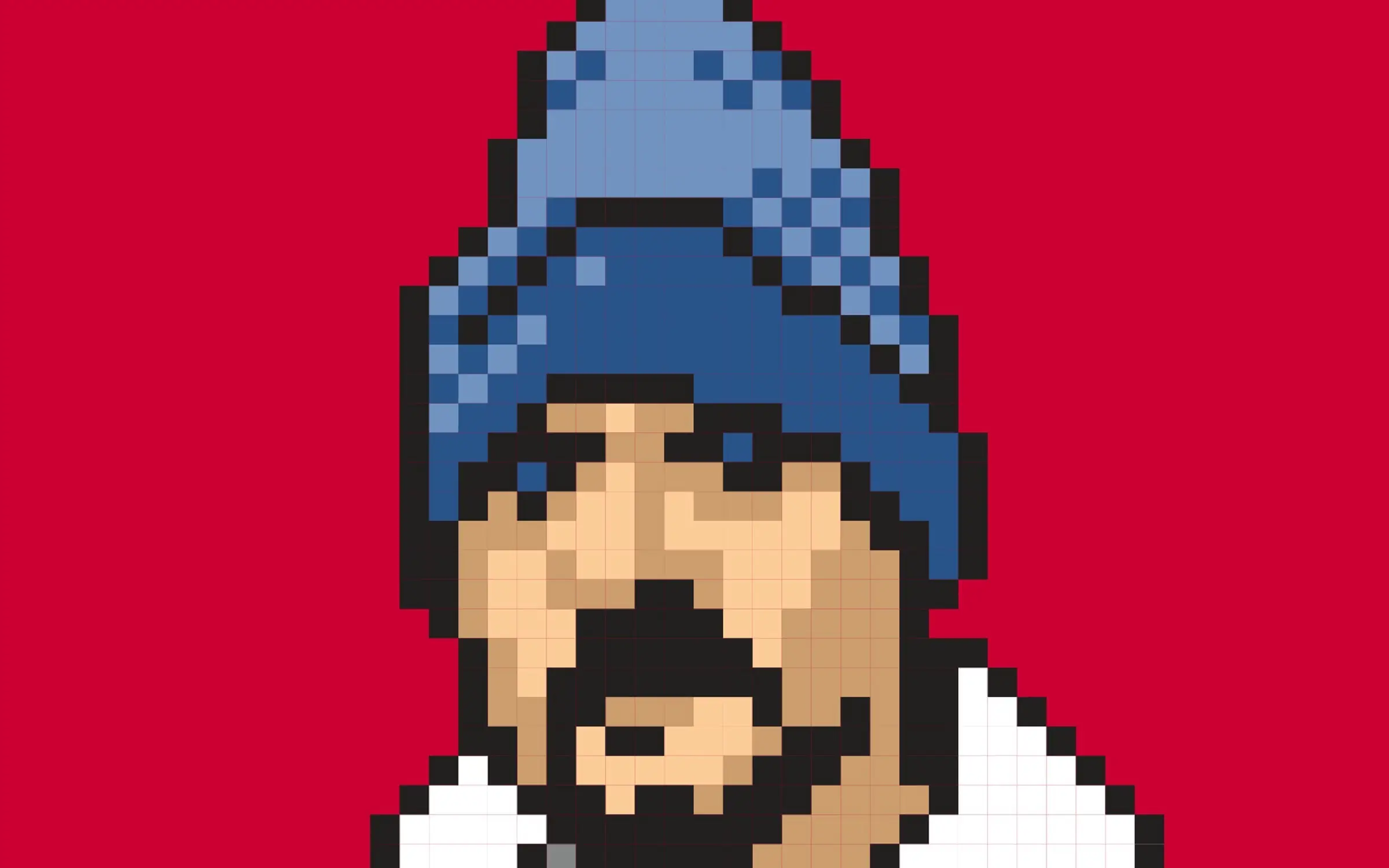
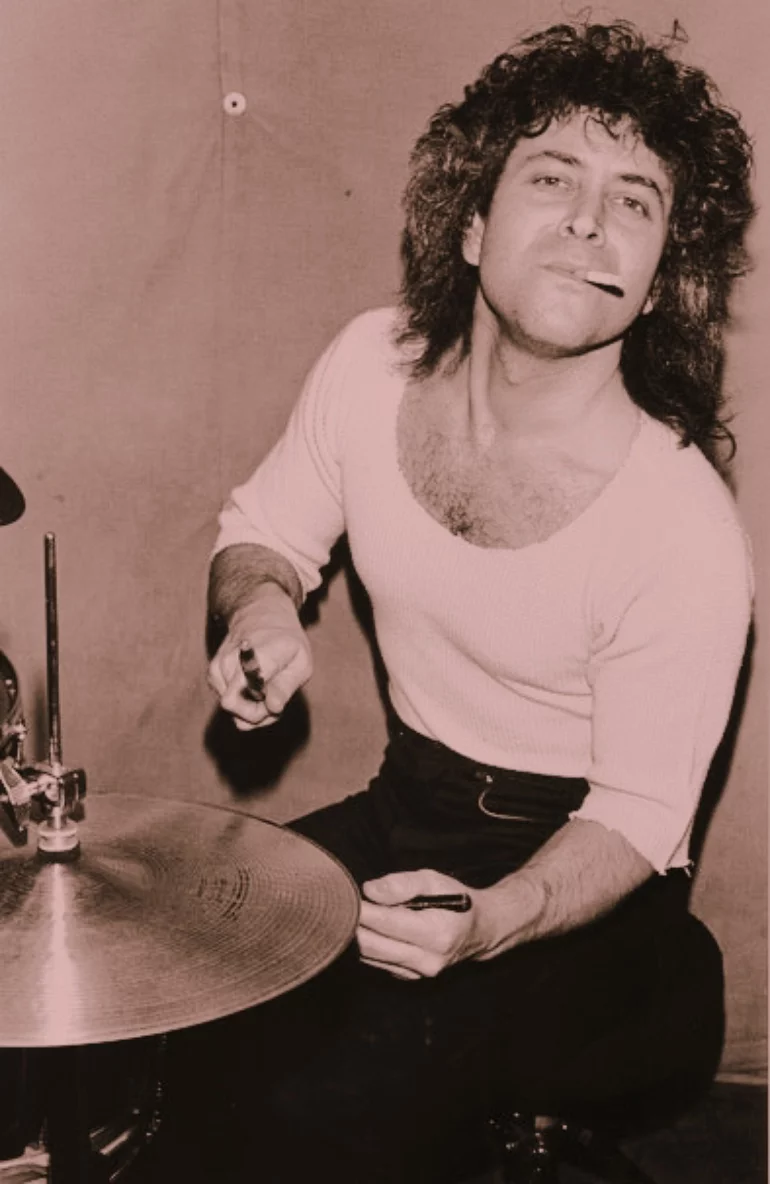
Happy heavenly birthday to my dear, deceased, devil brother Pete Zeldman. Today, 5 March 2024, to celebrate Pete’s life…

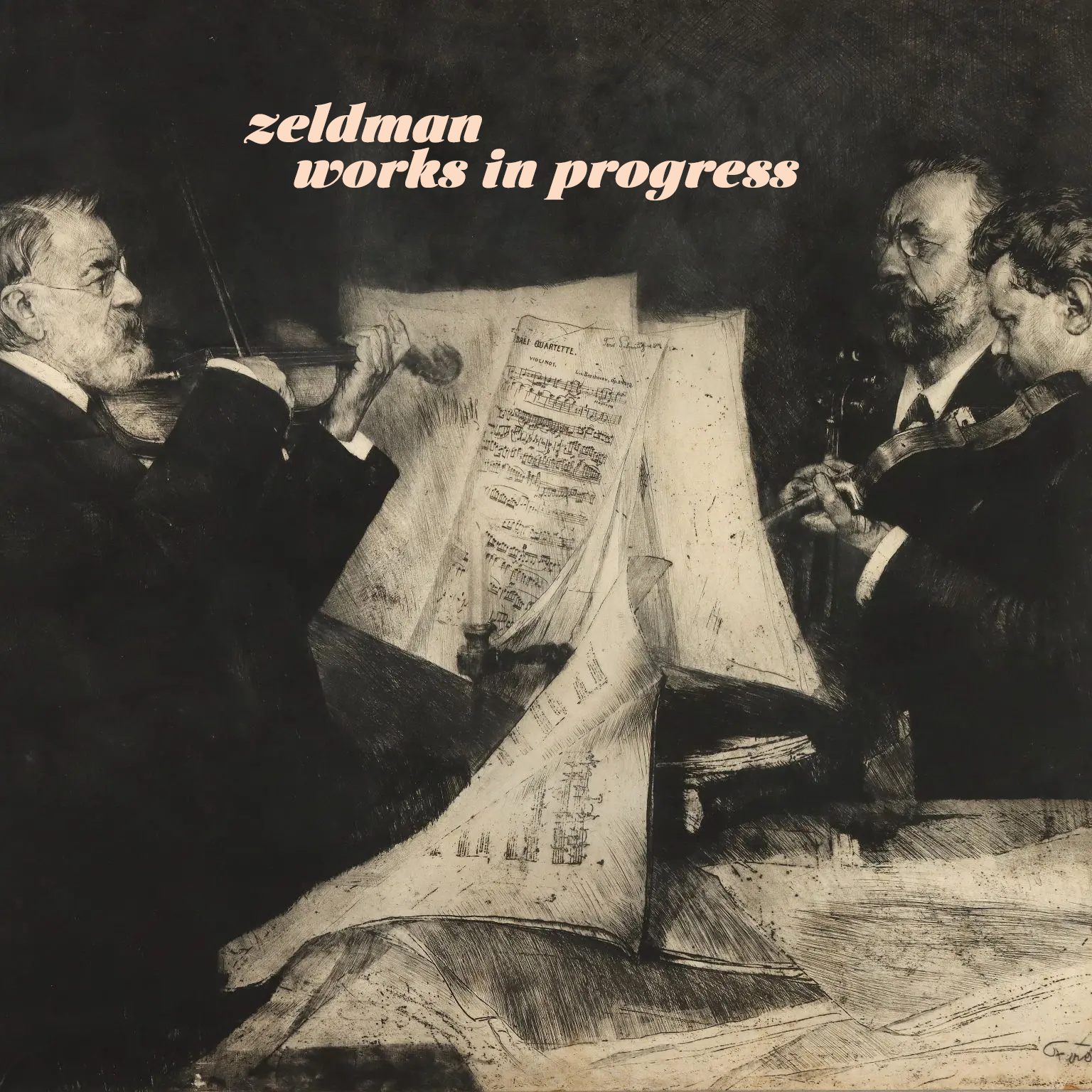
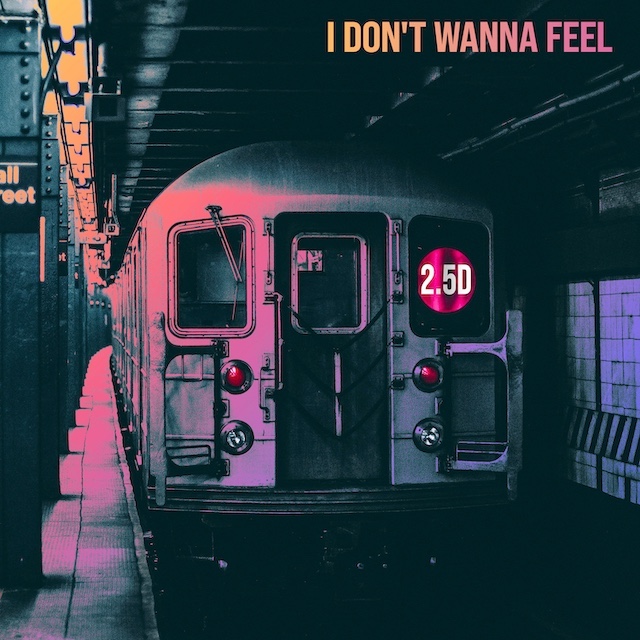
Lost in Sound Records is releasing an album of solo drums, Enigma, which will keep rhythmic enthusiasts and scholars busy for…well, forever. And ALSO 2.5D, his crazy interesting NYC rock band… [has released] its first single.

Cindy Shapiro

Hear that single, written by Pete, performed with fire by 2.5D, and released roughly 30 years after the fact:

Wish Pete a happy birthday on Facebook. You never know; whatever plane Pete now inhabits, he just might hear you.

Related:

Categories
"Digital Curation" art direction creativity Design Desktops editorial Fun interface Layout links Microblogging music Nonsense social media software The Mind User Experience Weird

Rediscovering music

Apropos of nothing in particular, I present my all-time listening (first 5.25 rows) and more recent listening:

Drag slider: at left, my all-time listening; at right, more recent listening.

Because I’m weird that way: Sometimes I’ll listen extensively to a particular artist from my collection whom I might not have played in a while, simply to bump them higher in the mosaic or reposition them for a more pleasing composition.

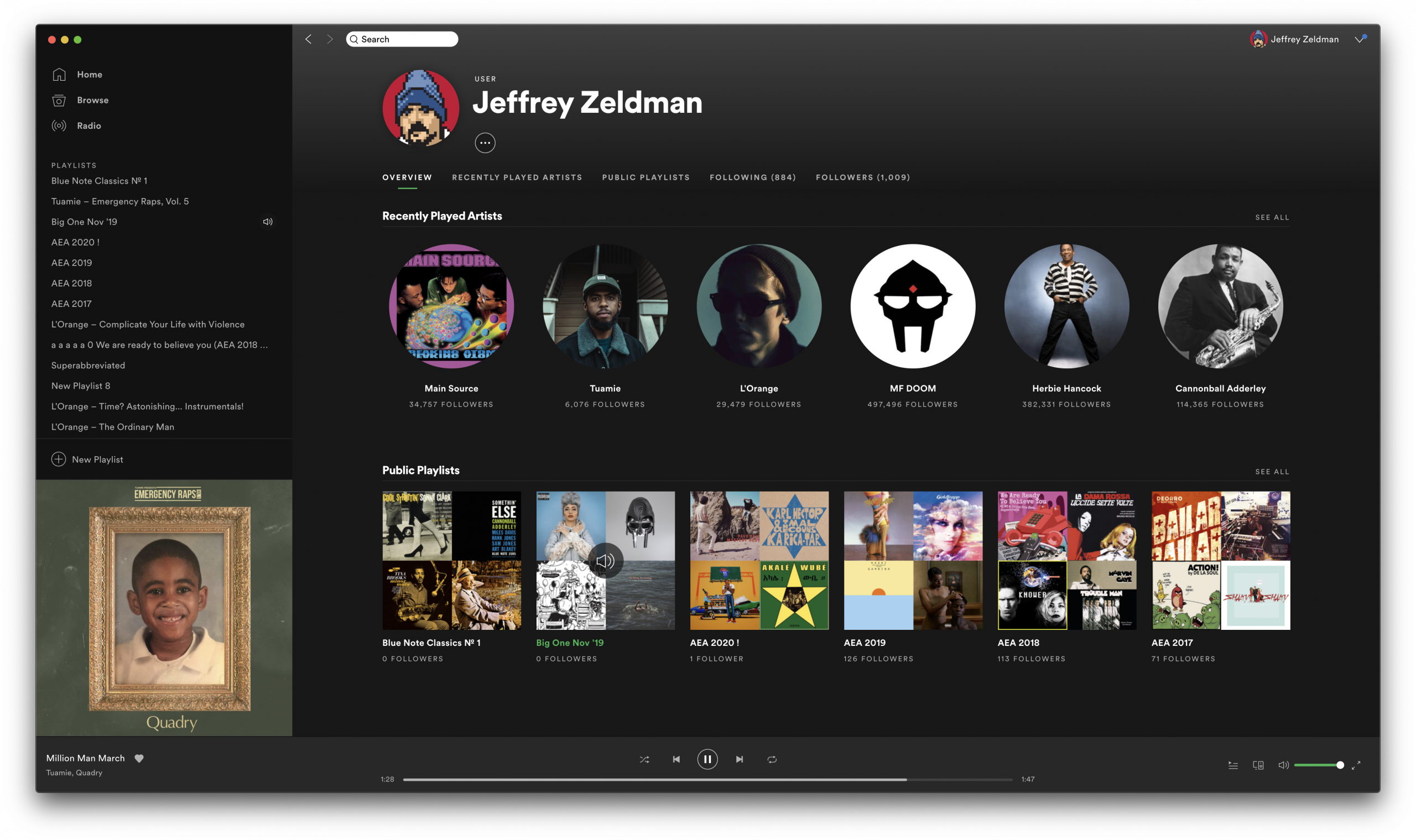
If Spotify exposes you to new music, Last.fm helps remind you of great music in your existing collection that may have slipped your mind. (Not an advertisement. I use last.fm and get great pleasure from how it helps me discover and fuss with my music, as I once spent hours in the old days stacking and rearranging my LPs and tapes.)

And that’s how I stay out of the pool halls.


Public Service P.S: If you do decide to try last.fm, please, by all means, pay the small monthly subscription fee if you can. Doing so supports the under-resourced team that keeps the service going. It also removes the ads, making the site usable (the ads are a nightmare), and gives you the option to view your music as a visual grid, like those shown in my screenshots. The grid-view makes the site. It gives you, not just a visual record collection, but a visual artist collection, if you’ll allow the conceit. I love it.

An earlier version of this post also appears on my Facebook stream.

Categories
Community music

Music is the Best

Love music? Follow your own tastes? Let’s share.

Connect on Spotify.
Connect on Last.fm.

Previously, in this same series: Let’s Hang (Spotify).

Categories
Community music

Let’s hang (Spotify)

Love music? Follow your own tastes? Let’s share.

Connect on Spotify.
Connect on Last.fm.

As a bonus, if we connect on Spotify, you not only get access to An Event Apart’s playlists from the past decade, you also get a preview of the 2020 playlist in progress.

Categories
Design music

For your pleasure

For your listening pleasure, I have prepared a 15-minute playlist composed of ten short songs.

Before I share the URL, here are the requirements:

You must have Spotify. (Sorry.)

To enjoy, in Spotify Settings: Advanced, you must turn on Crossfade: 12 seconds. Half the trip is listening to how each track yearns for and blends into the next. Without Crossfade, you won’t experience that. And with Crossfade set to any duration other than 12 seconds, you won’t experience it correctly. The timing matters.

For maximum pleasure, set the playlist to infinite Repeat, so that the very last track of the playlist begins crossfading into the first track. Listen forever, with volume as loud as you can handle it.

Got all that? Good. Now you can enjoy the playlist.

My design constraints in creating this playlist for you were as follows:

  • Each track must come from a different era—from 1969 to today.
  • Each must be of a different style, such that no one would think of putting it on the same playlist with any other track on the list.
  • No track could be longer than 2:30 or shorter than 1:00.
  • The 10 tracks chosen had to clock in at 15 minutes and the whole thing had to work as a narrative.

Enjoy.


Note: Some tracks contain adult language. If that bothers you, you may not enjoy this playlist.

Categories
Applications Microsoft music Usability User Experience UX

Spotify to music subscribers: drop dead

SINCE AT LEAST 2010, subscribers to Spotify’s paid music service have asked the company to include the ability to sort playlists alphabetically in the desktop player. It’s the sort of drop-dead obvious feature that should have been built into the player while it was still in alpha. Yet, after six years of requests by paying customers, the feature still does not exist. Many good people work at Spotify and take pride in working to create the best possible music service. But the management in charge of feature requests does not seem to care about or respect customers.

Spotify subscribers organize their music in playlists. Any serious music listener will soon have dozens, if not hundreds, of playlists. They appear in the sidebar in reverse chronological order of the date of their creation. From a programmatic standpoint, the order is random. The inability to sort playlists alphabetically soon makes listening to one’s entire collection problematic. You ignore most of your playlists because you can’t find them, and waste time recreating existing playlists because you’ve forgotten they exist—or can’t find them.

For years, Spotify users have taken to the company’s message boards to request that this basic, rudimentary, obviously necessary feature be added. And for years, Spotify’s official message-keepers have strung users along. Reading these message boards is a study in corporate indifference. In this board, for example, which began in 2012, one customer after another explains why the ability to alphabetize their list of playlists is necessary if they are to continue using the service. It’s almost comical to watch the customer support folks react to each post as if it is a new idea; or attempt to pacify the customer by assuring her that staff is “working around the clock to implement this feature.” That last comment was made in 2015, three years into the thread; there’s been no word about the feature since.

The desktop player does let users change the order of a given playlist by dragging it up or down. That feature would suffice for someone who had three playlists. It might even work for someone with a dozen playlists. But for someone with several dozen or more playlists, manual drag and drop is not only no solution, it’s actually insulting.

What Spotify has done is create an all-you-can-eat buffet, and equipped its customers with a toothpick in place of a knife and fork or chopsticks.

The problem can’t be that difficult to solve, as Spotify has added alphabetization of playlists to its phone and tablet apps. Yet the desktop, a primary source for folks who listen to music while working, remains as primitive as it was in 2010.

Six years of alternately pretending not to know that your paying customers require a basic tool to manage their subscriptions, and pretending to be working on a solution, shows a basic disregard for the paying customer. Which kind of goes along with a disregard for the working musician, who isn’t exactly getting rich off the Spotify royalties that have replaced CD sales.

Apple Music has rubbed me the wrong way since Apple first crammed it into their increasingly dysfunctional iTunes player (whose poor usability is what drove me to Spotify in the first place). I hate that Apple Music shows up on all my Apple devices, even though I don’t subscribe to it, and even after I’ve turn it off in Settings. In this regard, Apple today is like Microsoft in the 1990s. And I don’t mean that in a good way.

But, as obnoxious and overdesigned as it is, there’s one thing I like about Apple Music: it just may drive the complacent management at Spotify to actually start listening to their customers.

Categories
Acclaim Announcements creativity music people Pete Zeldman Zeldman

My Brother is a Monster

MY MOTHER played piano and cello. My father draws, paints, and sculpts; plays trumpet and guitar; and led an advanced R&D lab in the 1970s, developing robotics and rocket parts. You know what I do, but I also play keyboards and other instruments, studied music theory, and composed and produced music in my own studio before failing up into my present career. We Zeldmans go our own way, bring our own juice, and leave a trail of tears and gold. But my brother Pete Zeldman is the real talent in the family.

My brother Pete spontaneously composes and performs music of such rhythmic complexity that Edgard Varèse and Frank Zappa would be proud. Even with an advanced music degree, you’d have a tough time following the music analytically. But you don’t have to, because it grooves. That’s the crazy surprise of it. My brother plays 17 in the time of 16 in the time of 15 in the time of 14, with cross rhythms in simultaneous 3/4 and 7/8, and you could dance to it. Admittedly, you couldn’t pogo, but it doesn’t pretend to be punk. Musically it is probably the exact opposite of punk, but spiritually it is punk because it is pure affirmation.

My brother made two CDs before releasing his new video, Enigma, this week. I listen to these CDs a lot. Although I’ve watched my brother develop his unique rhythmic musical theories over the past 20 years, I don’t attempt to “follow” the music in any analytical fashion while listening. I just let it wash over me. So can you.

New art is rarely understood. New music is rarely what the people want. They threw tomatoes at Debussy and Stravinsky, and now their compositions are gentle backgrounds for dentist’s offices. White people laughed at rock and roll and their children danced to it. Those rockers laughed at hip hop and their kids dance to it. My brother’s music is like that. It is something new. It’s not going to be a movement because it takes a certain kind of twisted genius to conceive of and play it. But you might like it. And if you’re a drummer, you probably need to hear it.

I am proud of my brother and delighted to share his genius with you. Samples from his new video are available at pete-zeldman.com. His CDs are also available.

Categories
Community music

Music is the best.

Jeffrey Zeldman's Music Library on Last.fmJeffrey Zeldman's Music Library on Last.fm

Categories
music

Sound Taste

I ADORE MUSIC, especially rock, electronic, indie, hip-hop, and jazz, including:

MF DOOM, Beck, Brian Eno, David Bowie, Chet Baker, John Coltrane, DJ Vadim, The Rolling Stones, Arcade Fire, John Lurie, Beirut, of Montreal, Eels, Madvillain, Nick Lowe, Minutemen, King Crimson, Bob Dylan, Muslimgauze, Elvis Costello, Muse, The Clash, The Beatles, Kid Koala, Sugar Minott, Duke Ellington, Electric Six, Bad Brains, Talking Heads, Woody Guthrie, Björk, Cansei de Ser Sexy, Simone Dinnerstein, Moby, Prince, Johnny Cash, Frank Sinatra, John Foxx & Harold Budd, Air, Tom Waits, Thievery Corporation, Robyn Hitchcock, Minor Threat, Manu Chao, OutKast, Boards of Canada, Dean Martin, Freddy Kempf, Laurie Anderson, Philip Selway.

Check it out: www.last.fm/user/zeldman

Categories
downloads facebook film links love music social networking

Social Network Creep

The Social Network, a David Fincher film.

If you’re intrigued, as I am, by the trailer for David Fincher’s upcoming The Social Network, and if part of what compels you about the trailer is the musical score—a choral version of Radiohead’s “Creep”—you’ll be happy to know you can purchase said song via emusic.com: On The Rocks is the album, “Creep” is the track, and Scala, a Belgian all-teenage-girl choir, are the artists. Highly recommended.

P.S. If emusic.com had an affiliate program, I’d have free music for life.

Categories
creativity iphone music

iPhone synthesizer

Amazing! Jordan Rudess demonstrates and performs with Bebot, a new multi-touch performance synthesizer for iPhone.

via YouTube – Rudess Meets Bebot.

[tags]iphone, music, synthesizer, synthesis, instruments, demo, demos, synthesizers, Jordan Rudess[/tags]

Categories
music

Happy birthday, Pete Zeldman!

Pete Zeldman, impromptu polyrhythmic drum solo
Captured by the Drum Institute, London (video)
Pete Zeldman, Drum Wizard
Interview at drums.com.
Pete Zeldman on Facebook
Like it says.

Comments off.

[tags]petezeldman, drums, drumming, polyrthmic[/tags]

Categories
Genius Jazz music

Kind of Blue – 50th Anniversary

Kind of Blue: Fifty years ago, Miles Davis released an album of pure modal improvisation. It changed not only jazz but all music that came after. Wikipedia’s write-up explains, although their fact-filled prose misses all the poetry. Better still, just listen. Thanks for the nudge: Ray.

Comments off.

Categories
business Design fashion industry iphone music style

To be of use to others is the only true happiness. Although a 160 GB iPhone would also be nice.

I was hoping Apple would announce a new generation of iPhones with hard drives sufficient to hold an entire music collection plus a handful of videos. Failing that, I was hoping Apple would announce a new generation of iPods that were exactly like iPhones (sans the phone), with hard drives sufficient to hold an entire music collection plus a handful of videos. What Apple announced was an iPhone without the phone.

So I bought a 160 GB iPod Classic. I already have an iPhone, and you can borrow it when you pry it from my cold, dead fingers.

The Classic holds my digital music collection (currently, 31 GB) plus five or six movies digitized at high enough quality to play on a Cinema Screen, and has acres of drive space to spare. I feel that I will never fill it up, although I’ve thought that about every hard drive I’ve ever owned, and I soon filled them all.

The Classic is new and shiny and I almost never use it because the classic iPod interface feels prehistoric after using an iPhone. (Indeed, half the things I do on a computer feel awkward compared to doing them on an iPhone. Click on a friend’s street address in your iPhone. Wow! Now do the same thing on your computer. Ick.)

There are about five movies my toddler loves on the Classic, but she won’t watch them on the Classic. She wants the iPhone and asks for it by name, like cats do for Meow Mix.

The Classic is good for plugging your whole music collection into your stereo. Or it will be when the dock arrives. The Classic does not ship with a dock, and no dock is made for it, but you can order a $50 Universal Dock from Apple. The order takes four weeks to process plus another week to ship. Be kind and call those five weeks a month. A month after unpacking my new Classic I will be able to hook it into my stereo and charge it at the same time—something I expected to be able to do on the day it arrived.

The frustration of that wish is not tragic, but it is not particularly smart marketing, either. This, after all, is a product for people who ardently wish to carry their entire music collection plus a handful of movies in their pocket. Wish fulfillment is the product’s whole reason for being. (Well, wish fulfillment plus the execrable state of air travel, which can turn a jaunt between Chicago and New York into an odyssey of despair and boredom. Carry a Classic and those five hour delays fly by, even when nothing else is flying.)

The guaranteed nightmare of even the shortest business trip aside, what do you do with the Classic? Well, I sometimes bring it to the gym. Because sometimes at the gym, it takes a while to find the right groove. The iPhone’s 7.3 GBs aren’t enough to hold a sufficient musical selection to ensure a great workout.

On the other hand, I can’t answer a business call on my iPod. So even though the Classic gives me lots more music to choose from, I mostly bring my iPhone to the gym.

No iPod is an island, or should be.

Did I mention that the iPhone has a gorgeous, high-resolution screen and the iPod does not? Then there’s the whole gesturing with your fingertips business. How nice that feels, and how weird and slow and un-Apple-like it now feels to go back to the clickwheel that once felt so poshly smart and modern.

I tell you this. If Apple can put a capacious, chunked-out hard drive on the iPhone—even if doing so makes the phone a tad clunkier—the company will have on its hands its hottest convergent technology box yet. And I’ll be the first in line.

Only 95 shopping days ’til Christmas, Steve.

[tags]apple, ipod, iphone, comparison, shopping[/tags]