Categories
"Digital Curation" Applications Archiving Blogs and Blogging conferences content Design dreams Election engagement glamorous industry iphone Microblogging Micropublishing Mobile Networks Platforms social media social networking Standards State of the Web SXSW The Essentials The Old Man of the Mountain tweets Web Design Web Design History Websites writing

Valediction.

I started using Twitter before the dawn of the iPhone. Back then, in 2006, it was a fun, funky, fully functional (if barebones) beta messaging service used mainly by The People of the Web™—the kind of folks who attended the SXSW Interactive conference and probably spoke on the panels. 

You know. You were there. You were one of us: Designers. Developers. Pioneers. Writers of blog posts, trade books, and all the little guide texts that websites depended on to attract and serve their users. People who, in casual conversation, might use words like “digerati” unironically and without intending to be pretentious. 

We believed in the power of the web to highlight unheard voices and evolve a more just society. If we were naive, and we surely were, at least we were on the side of the angels. Turns out, not everybody was.

A new skill

Years before Slack, the early 140-character Twitter served as a kind of private pre-Slack for the digitally awake and aware.

Back in those days, if you’d asked me or my conference-going fellow bloggers and designers who that first, rudimentary Twitter was for, we’d have said it was for us. For people like us, who’d spent years mastering all manner of skills and technologies simply to communicate online. Who saw value in the act of putting words together, so long as there were people to read and react to those words.

(After expressing our feelings of pride and ownership in the Twitter community, of course, the more Ted-talk-y among us early users would have waxed rhapsodic about microblogging and its potential to improve the world. More about that in a moment.)

With the birth of Twitter, when we wanted to pin down something that was twitching about in our heads and transmit it to other heads, the skill we needed wasn’t CSS or HTML or art direction or back-end wrangling. It was the ability to edit our thoughts down to a glittering trophy built with 140 characters or less. A new skill to master!

How much do people like us love showing the world what we’ve learned! This much: Even after Twitter no longer relied on wireless carriers’ text messaging services, so that the permitted character count was consequently doubled, many of us would-be Oscar Wildes continued to whittle away at our tweets, limiting them to 140 characters or fewer on principle.

After all, if we could deliver fully functioning website in 10K or less, we could surely craft deathless sentences from a tightly constrained character count. Right? Of course right!

Only connect

Years later, with a huge international user base, the idea persisted that a globally connected free and open messaging network like Twitter could help humanity do less evil and more good.

If you wanted proof, you could look to the first Arab Spring, to Me Too, to Occupy Wall Street and Black Lives Matter—movements that were greatly abetted by the busy, worldwide network. 

Of course, while many cheered and participated in these activist-driven movements, others saw them as threatening. Some felt the world was changing too fast, and that their views on social issues, like their once-good jobs, had no champion among the ruling classes. We all know how that turned out. 

And now a brief digression about power and megaphones:

How I got over

Nearly two decades before Bluesky and its sweet starter packs, Twitter hired creatives to recommend selected  users to newcomers. Some of the coolest people I know did that work.

Web design was at its peak, so quite naturally the in-house team put together a list of influential designers, developers, and writers for new users to follow. And for a variety of reasons, I was among those early recommended follows. (I may still be listed there, if the current X still welcomes newcomers with follow recommendations.) Which is how, at my Twitter peak, I ended up with a blue checkmark and 355,000 followers.

Even now, on wretched “X,” where I no longer post, I still retain 305,000 followers. At least, that’s what the stats told me when I popped in just now to find out. But are there really that many folks following me there?

How many of my current Twitter/X “followers” used to participate but have since quit quietly, without bothering to close their accounts? Lots, I reckon.

Some may avoid the site but keep their accounts open for strategic reasons, such as preventing someone else from hijacking their name (not that the owner can’t take over your account whenever he feels like it—but I digress).

Mainly, I’m guessing a lot of folks lost interest in the site but forgot to close their accounts. In other words, the data says 305K, but it’s probably less than half that many active users at most, few of whom would even see my tweets if I still posted there, as the algorithm throttles texts from folks like me.

Who cares, besides me? Nobody. Nor should they. And, besides, except as a temptation to stay, my follower count is beside the point.

Come play with us, Danny

The point is that the former Twitter has become a hateful cesspool, not simply mirroring but amplifying its owner’s profound insecurities, god-awful beliefs, and self-serving lies, and forcing that insanity into the public consciousness, whether we avoid X or not.

Thus, millions of Americans who don’t use Twitter/X nevertheless believe conspiracies that the owner and his favorite acolytes use the site to broadcast.

And there’s no doubt that, in consequence of the above, X helped determine the results of the last US presidential election. (I use the phrase “last election” here to mean “most recent election,” although I fear it may come to mean more than that.)

So, in the interest of not supporting fascism, do I abandon these readers? Thanks for asking! Pretty much, yeah.

If you like my longer-form writing, you can find it here on zeldman.com, at A List Apart, and in my books.

If you like my chatty posts, news bytes, and occasional brief confessions, join me on Bluesky.

Good luck to us all in the coming year.

Categories
Authoring Best practices Blogs and Blogging Code Compatibility CSS Design development Free Advice Future-Friendly HTML industry Layout links maturity Off My Lawn! Platforms Rants Responsibility Standards State of the Web The Profession Web Design Web Design History Web Standards wisdom

The More Things Change… (or: What’s in a Job Title?)

I’m not a “[full-stack] developer,” regardless of what my last job title says.

I’m not even a front-end developer, thanks to the JavaScript–industrial complex.

I’m a front-of-the-front-end developer, but that’s too long.

So, I’m a web designer. And I also specialise in accessibility, design systems, and design.

…Why do I think that this is the best title? Here’s why.

I’m designing for the web. The infinitely flexible web. The web that doesn’t have one screen size, one browser, one operating system, or one device. The web that can be used by anyone, anywhere, on any internet connection, on any device, on any operating system, on any browser, with any screen size. I’m designing with the web. Using the web platform (HTML, CSS, JS, ARIA, etc.), not a bloated harmful abstraction. I have a deep understanding of HTML and its semantics. I love CSS, I know how and when to utilise its many features, and I keep up-to-date as more are added. I have a strong understanding of modern JavaScript and most importantly I know when not to use it.

Front-end development’s identity crisis by Elly Loel

See also:

The Wax and the Wane of the Web (2024): Forget death and taxes. The only certainty on the web is change. Ste Grainer takes a brief look at the history of the web and how it has been constantly reinvented. Then he explores where we are now, and how we can shape the future of the web for the better. – A List Apart

The Cult of the Complex (2018): If we wish to get back to the business of quietly improving people’s lives, one thoughtful interaction at a time, we must rid ourselves of the cult of the complex. Admitting the problem is the first step in solving it. – A List Apart

Dear AIGA, where are the web designers? (2007): For all the brand directors, creative directors, Jungian analysts, and print designers, one rather significant specimen of the profession is missing. – zeldman.com

Standardization and the Open Web (2015): How do web standards become, well, standard? Although they’re often formalized through official standards-making organizations, they can also emerge through popular practice among the developer community. If both sides don’t work together, we risk delaying implementation, stifling creativity, and losing ground to politics and paralysis. Jory Burson sheds light on the historical underpinnings of web standardization processes—and what that means for the future of the open web. – A List Apart

The profession that dare not speak its name (2007): “No one has tried to measure web design because web design has been a hidden profession.” – zeldman.com

Categories
Accessibility Advocacy architecture Authoring Best practices development ethics industry Performance Platforms Responsibility Standards State of the Web Usability User Experience UX W3C Web Standards

CAPTCHA excludes disabled web users

What’s widely used, no longer particularly effective, and makes web content inaccessible to many people with disabilities? It’s our old friend CAPTCHA! In a group note dated 16 December 2021, the W3C explains how CAPTCHA excludes disabled users, and suggests alternatives which may be kinder and more reliable:

Various approaches have been employed over many years to distinguish human users of web sites from robots. The traditional CAPTCHA approach asking users to identify obscured text in an image remains common, but other approaches have emerged. All interactive approaches require users to perform a task believed to be relatively easy for humans but difficult for robots. Unfortunately the very nature of the interactive task inherently excludes many people with disabilities, resulting in a denial of service to these users. Research findings also indicate that many popular CAPTCHA techniques are no longer particularly effective or secure, further complicating the challenge of providing services secured from robotic intrusion yet accessible to people with disabilities. This document examines a number of approaches that allow systems to test for human users and the extent to which these approaches adequately accommodate people with disabilities, including recent non-interactive and tokenized approaches. We have grouped these approaches by two category classifications: Stand-Alone Approaches that can be deployed on a web host without engaging the services of unrelated third parties and Multi-Party Approaches that engage the services of an unrelated third party.

W3C: Inaccessibility of CAPTCHA: Alternatives to Visual Turing Tests on the Web

We can do better!

Tell your friends. Tell your boss. Tell your clients.

Tip o’ the blue beanie to Adrian Roselli.

Categories
"Digital Curation" Advocacy Applications apps automattic Blogroll Blogs and Blogging Brands Community content ethics glamorous Ideas Indieweb industry interface links Microauthoring Microblogging Micropublishing Networks Off My Lawn! Own your content Platforms Publications Publishing Rants social media social networking software State of the Web The Essentials twitter Usability User Experience UX Web Design History Websites Weird writing

In search of a digital town square

Ever since an infantile fascist billionaire (hereafter, the IFB) decided to turn Twitter over to the racially hostile anti-science set, folks who previously used that network daily to discuss and amplify topics they cared about have either given up on the very premise of a shared digital commons, continued to post to Twitter while holding their noses, or sought a new digital place to call their own. This post is for the seekers, to compare notes. 

These are my personal observations; your views may differ (and that’s more than okay). In this quick survey, I’m omitting specialty platforms like Tribel, Post, and Substack. Feel free to comment, if you like.

The platforms

BlueSky: The most beautifully elegant web interface. Also the best features (other than omission of hashtags). What Twitter should have become. I joined late—Jack didn’t invite me, likely a sign that I was no longer industrially relevant. I have few followers there, and my posts so far get little traction, but that could change. It’s so pretty (and the few friends that use it matter so much to me) that I keep using it, and I reserve judgement as to its future potential. https://bsky.app/profile/zeldman.bsky.social

Threads: Currently my primary alternative to Twitter, and the only place besides Twitter where my posts get at least some response. Not as visually refined as BlueSky, and with a curiously restricted single-hashtag-only policy. Although this editorial decision helps focus the mind, and likely also cuts down on spam, it interferes with amplifying multidimensional posts. But I digress.

Rough edges and restrictive tagging aside, Threads feels like the place that’s likeliest to inherit the mantle of default town square—if any social platform can do that in these new times, that is.

Threads got its huge jump start because, while the IFB was busy finding new ways to make Twitter less useful and more dangerous, Meta leveraged its huge installed Instagram base to give users a more or less instant social network hookup. If it’s easy, and comes with a built-in network of people I already follow, it wins—at least initially.

Meta may also blow their opportunity if they pursue misguided policies, such as impeding (by algorithmic fiat) “political speech” when democracies hang in the balance, regional wars threaten to become world wars, and the climate crisis is approaching a point of no return. https://www.threads.net/@zeldman

Mastodon: How do you decentralize a digital town square? Provide universal social connection without locking in participants? Mastodon (and federation generally) are an attempt to do those things.

These are important and noble goals, but Mastodon (and federation generally) are a long shot at replacing a primary walled garden like Twitter because they require a fair degree of geekery to set up, and the price tag of mass acceptance is ease of setup. (Compare Threads—easy set-up, built-in friends and followers if you already use Instagram—versus the learning curve with Mastodon.)

If BlueSky is MacOS and Threads is Windows, Mastodon is Linux: a great choice for techies, but likely too steep a hill for Ma and Pa Normie. A techie friend invited me to join, and I write there frequently, but, for whatever it’s worth, my Mastodon posts get very little in the way of responses. It is, nonetheless, a highly effective network for most who use it. https://front-end.social/@zeldman

Tumblr: A bit o’ the OG weird wacky wonderful web, and a special place for nonconformist creative types. By its nature, and the nature of its fiercely loyal users, it is a cult jam. I was an early and enthusiastic Tumblr fan, but it was never my main axe, probably because, since the dawn of time itself, I have had zeldman.com.

For a while, when the IFB first started wrecking Twitter, an uptick in Tumblr usage suggested that the funky old network just might take over as the world’s town hall, but this hope was unrealistic, as Tumblr was never about being for everybody, and Tumblristas are mostly happy keeping the platform a home for self-selecting freaks, queers, and creatives.

I’ll note that Tumblr is part of the Automattic family, and I work at Automattic (just celebrated my fifth anniversary there!), but my opinions here are mine alone. BTW—in nearly 30 years of blogging, that’s the first time I’ve used that phrase. https://apartness.tumblr.com

LinkedIn: A comparatively safe social network with a huge network built up over years, hence a great place to share work-related news and ideas.

Some early Twitter adopters of my acquaintance—especially those who mainly write about work topics like UX—have made LinkedIn their primary social home. For most working folks, it is undoubtedly a place to post and amplify at least some of the content that matters to you. OTOH, it’s not a place where I’d share deep takes on CSS (that’s probably Mastodon), cosplay (Tumblr), or personal true confessions (one’s blog, Threads, Twitter before the IFB took over). https://www.linkedin.com/in/zeldman

Twitter itself: During its heyday, before the IFB, and when it was the only game in town, I loved going there to see what clever things my smartest friends were saying, post my own bon mots, and promote content that mattered to me.

I’ll limit my comments on Twitter’s current state to noting that I still post there, from stubbornness as well as habit, and primarily in the (increasingly forlorn) hope that the IFB will eventually tire of his toy, or of the ceaseless financial hemorrhage, and go away, leaving the site to rebirth itself as an open source project or under the care of new, non-fascist owners.

Though the algorithm punishes my posts, and though I’m continually appalled by the MAGA posts, Russian disinformation, racist/ misogynist/ anti-semitic spew, and Trumpian ego of the current owner, I shall, at least for now, continue to defend my tiny turf there.

8 responses to “In search of a digital town square”

  1. L. Jeffrey Zeldman Avatar

    Psst. Comments are back. This is a test.

  2. dusoft Avatar

    I follow you on Mastodon and even when usually don’t respond to bunch of posts, I can still appreciate people being there. Since I use RSS, I get to read your posts that way usually coming to your website.

  3. Zeldman on Web and Interaction Design Avatar

    It’s nearly twenty years ago, now, children. Facebook had only recently burst the bounds of Harvard Yard. Twitter had just slipped the bonds of the…

  4. […] In search of a digital town square – L. Jeffrey Zeldman, non l’ultimo dei fessi sul web, cerca di fare il punto sullo stato dell’arte del self publishing oggi; […]

  5. […] In search of a digital town square – L. Jeffrey Zeldman, talks about the state of the art on mantaining a presence on the web today, with the available tools. […]

  6. […] In search of a digital town square (Jeffrey Zeldman) […]

  7. Zeldman on Web and Interaction Design Avatar

    Bluesky introduces open-source, collaborative moderation for federated social media websites: Bluesky was created to put users and communities in control of their social spaces online.…

  8. Zeldman on Web and Interaction Design Avatar

    I’ve started a Bluesky list featuring some of the brilliant writers, designers, coders, editors, and others who’ve contributed to A List Apart “for people who…

To respond on your own website, enter the URL of your response which should contain a link to this post’s permalink URL. Your response will then appear (possibly after moderation) on this page. Want to update or remove your response? Update or delete your post and re-enter your post’s URL again. (Find out more about Webmentions.)

Mentions

  • 💬 Zeldman on Web and Interaction Design
  • 💬 Zeldman on Web and Interaction Design
  • 💬 Zeldman on Web and Interaction Design
Categories
Best practices blogger Blogs and Blogging Community content Content First Content-First creativity editorial findability Free Advice Ideas Indieweb industry links Marketing Off My Lawn! Own your content Platforms Publications Publishing Search Standards State of the Web Teapot The Essentials The Profession Wah! writing

Algorithm & Blues

Examining last week’s Verge-vs-Sullivan “Google ruined the web” debate, author Elizabeth Tai writes:

I don’t know any class of user more abused by SEO and Google search than the writer. Whether they’re working for their bread [and] butter or are just writing for fun, writers have to write the way Google wants them to just to get seen.

I wrote extensively about this in Google’s Helpful Content Update isn’t kind to nicheless blogs and How I’m Healing from Algorithms where I said: “Algorithms are forcing us to create art that fits into a neat little box — their neat little box.”

So, despite Sullivan’s claims to the contrary, the Internet has sucked for me in the last 10 years. Not only because I was forced to create content in a way that pleases their many rules, but because I have to compete with SEO-optimized garbage fuelled by people with deep pockets and desires for deep pockets.

Is the Internet really broken?

For digital creators who prefer to contain multitudes, Tai finds hope in abandoning the algorithm game, and accepting a loss of clout, followers, and discoverability as the price of remaining true to your actual voice and interests:

However, this year, I regained more joy as a writer when I gave upon SEO and decided to become an imperfect gardener of my digital garden. So there’s hope for us yet.

As for folks who don’t spend their time macro-blogging—“ordinary people” who use rather than spend significant chunks of their day creating web content—Tai points out that this, statistically at least a more important issue than the fate and choices of the artists formerly known as digerati, remains unsolved, but with glimmers of partially solution-shaped indicators in the form of a re-emerging indieweb impulse:

Still, as much as I agree with The Verge’s conclusions, I feel that pointing fingers is useless. The bigger question is, How do we fix the Internet for the ordinary person?

The big wigs don’t seem to want to answer that question thoroughly, perhaps because there’s no big money in this, so people have been trying to find solutions on their own.

We have the Indieweb movement, the Fediverse like Mastodon and Substack rising to fill the gap. It’s a ragtag ecosystem humming beneath Google’s layer on the Internet. And I welcome its growth.

For more depth and fuller flavor, I encourage you to read the entirety of “Is the internet really broken?” on elizabethtai.com. (Then read her other writings, and follow her on our fractured social web.)


“The independent content creator refuses to die.” – this website, ca. 1996, and again in 2001, paraphrasing Frank Zappa paraphrasing Edgar Varese, obviously.

Hat tip: Simon Cox.

Categories
Design Designers Platforms Real type on the web software State of the Web

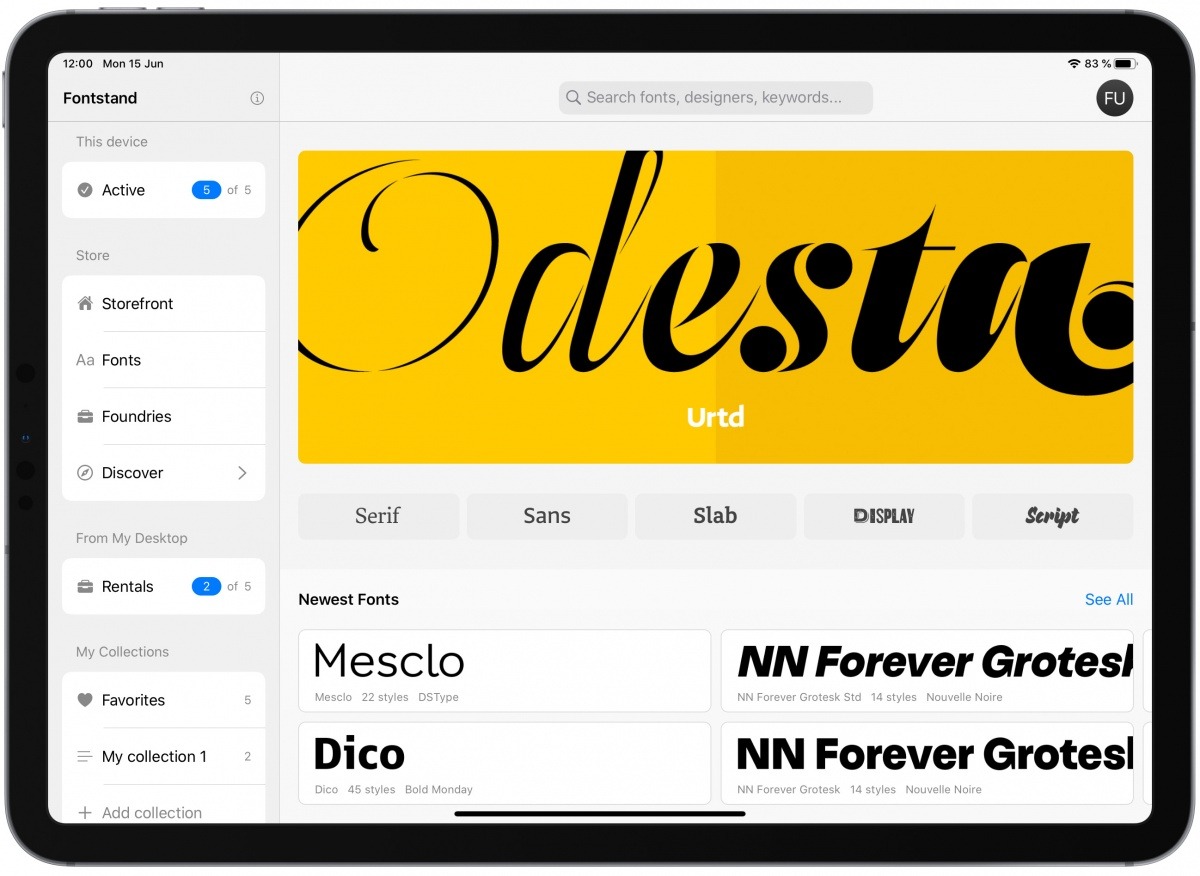
Pro Fonts for iPad

Fontstand has just launched an iPad app that designers (or anyone else) install third-party fonts on iPad. For a small fee, anyone can use thousands of high-quality fonts, directly from the designers. Its creators say:

We imagine that creative professionals and design enthusiasts will take advantage of the advanced possibilities of iPad to create their presentations, documents and graphics directly on the tablet, without the need to migrate projects across platforms.

Fontstand blog

Created by Andrej Krátky and Peter Bilak (also a founder of Typotheque), Fontstand is a font discovery platform that lets folks test and use high-quality fonts on all platforms.

Read all about it and download the app for free: blog.fontstand.com/

Categories
Advocacy Announcements art direction content Design Ideas interface Layout nytimes Platforms Publications Publishing Redesigns reportage State of the Web studio.zeldman The Essentials Usability User Experience UX Web Design

To Save Real News

IN a world where newspapers are dying and half the public believes fake news, what online news experiences need is design that is branded, authoritative, and above all, readable:

Branded, because we need to convert the current hummingbird model (where readers flit from flower to flower) back to the idea that your news source matters—and that it is worth your time to return to a source you trust.

Brand helps the social-media-driven seeker notice that they’re returning time and again to a certain resource, facilitating a mental model shift back toward destination web browsing. When every site looks the same, it’s easy to see all content as equal—all spun from the same amorphous mass. A strong brand, which is individual to the given newspaper, can cut through that amorphousness, which is the first step in building (or rebuilding) loyalty.

Authoritative, because combating fake news means visually cueing the reliability of a particular source—one staffed by real journalists and editors, with real sources in real countries. In the coming years this will be more important than ever.

Readable, because an informed public needs to grasp stories that can’t always be reduced to headlines or sound bytes. Readability means even longer articles actually get read, sometimes even all the way through. Readability requires a combination of typeface, type size, leading, measure, hierarchy, contrast, etc.—as well as the introduction of visual information, both to break up the flow of text, and to further illuminate what is being said.

Related news keeps readers reading

Additionally, this branded, authoritative, readable content needs to become (to use an ancient word) sticky: through a combination of editing and algorithms, related content must be presented at the appropriate time in the reading experience, to engage the visitor in continued reading.

Currently two publications—nytimes.com and medium.com—achieve all these goals better than any other publications on the web. One is the newspaper of record; the other is a vehicle for anyone’s content. Yet both really do the job all newspapers will need to do to survive—and to help the Republic survive these next years. I particularly admire the way both publications surface related content in a way that practically demands additional reading.

Design won’t solve all the problems facing newspapers, but it will help. And unlike more “immersive” approaches such as WebVR, original full-screen imagery, and original embedded video, the basics of solid, readable design should not be out of budgetary reach for even the most cash-strapped news publisher—budget being a problem for any business at any time, but especially for newspapers now.

In my studio, we’ve been pondering these problems for content sites of all types (not only newspapers). At the Poynter Digital Design Challenge next month, I hope to share designs that nudge the conversation along just a bit further.

Simultaneously published in Medium.

Categories
A Book Apart Big Web Show Design Mobile mobile Multi-Device Platforms Standards State of the Web The Big Web Show Touchscreen User Experience UX Web Design Web Design History Web Standards

? 139: Every Time We Touch—Josh Clark, author of “Designing For Touch”

Author Josh Clark on The Big Web ShowTOUCH introduces physicality to designs that were once strictly virtual, and puts forth a new test: How does this design feel in the hand? Josh Clark’s new book, Designing For Touch, guides designers through this new touchscreen frontier, and is the launchpad for today’s Big Web Show conversation.

In a fast-paced, freewheeling conversation, Josh and I discuss why game designers are some of our most talented and inspiring interaction designers; the economy of motion; perceptions of value when viewing objects on touchscreen versus desktop computer; teaching digital designers to think like industrial designers (and vice-versa); long press versus force touch; how and when to make gestures discoverable; and much more.

Sponsored by DreamHost and BrainTree. Big Web Show listeners can save 15% when ordering Designing For Touch at abookapart.com with discount code DFTBIGWEB. Discount valid through the end of January 2016.

URLS

Big Web Show Episode ? 139
Big Medium
Designing For Touch

Categories
Adobe Design Platforms software The Profession Web Design Web Design History Zeldman zeldman.com

Save “Save For Web”

TWENTY years or so ago, Adobe Photoshop was, as its name suggests, primarily a tool for professional commercial photographers. Strange though it may seem for a company that now sells its software via a “Cloud” subscription service, the web was not at all on Adobe’s radar in those days. “Save For Web” was not even a widely held concept, let alone a Photoshop menu option.

This vacuum created an opportunity for independent developers and designers. Which is how the very talented Craig Hockenberry of Iconfactory and I came to release Furbo Filters, an indie shareware product that let designers prepare images for the web. It did a few other things as well, such as offering garish, psychedelic treatments you could apply to any image—not unlike the far more expensive (and also far, far more developed) Kai’s Power Tools. (And you know what they say: if you’re old enough to remember Kai’s Power Tools, there’s a Drop Shadow in your closet. But I digress.) Some of you may have used DeBabelizer to manage your web color palettes in those days when Adobe and Photoshop ignored the web. Some may even have used Furbo Filters.

Then Adobe created a “Save For Web” option (in Photoshop 5.5), and Furbo Filters’s beautiful market was gone in a moment. All that remains as a memento of that time and that product is the domain name furbo.org, which is where Craig keeps his blog.

I was reminded of this during a workplace discussion about the seeming disappearance of “Save For Web” from modern Photoshop.

To be clear, “Save For Web” still exists in Photoshop CC 2015. But it has been rather awkwardly deprecated, as revealed through both UX (“Save For Web” no longer appears in the part of the interface where we’ve been trained to look for it for the past twenty years) and language: when we stumble onto “Save For Web” hiding under Export, after not finding it where we expect it, we’re presented with the words “Save For Web (Legacy),” clearly indicating that the feature is no longer a recommended part of today’s workflow.

Adobe explains: “Because Save for Web is built on the former ImageReady product (now discontinued), the code is too antiquated to maintain and develop new features.” (If Furbo Filters and DeBabelizer didn’t resurrect dead brain cells for some of you, I bet “ImageReady” did. Remember that one? Also, how scary is it for me that half the tools I’ve used in my career only exist today as Wikipedia entries?)

Instead of Save For Web, we’re to use Export: Export As…, which Adobe has built on its Generator platform. Stephen Nielson, writing on Jeff Tranberry’s blog for Adobe, explains:

Adobe Generator is a new, modern, and more efficient platform for exporting image assets from Photoshop. We have been building new capabilities on top of this platform for the past two years, including the new Export As and Device Preview features. The Generator platform allows us to build new, streamlined workflows and incorporate more efficient compression algorithms like PNGQuant into Photoshop.

The new Export As workflows are a complete redesign of how you export assets out of Photoshop. Export As has new capabilities like adding padding to an image and exporting shapes and paths to SVG. We also introduced the Quick Export option, which allows you to export an entire document or selected layers very quickly with no dialog.

Going forward, we will no longer develop new features in Save for Web, which is why it now is labeled as “Legacy”. Don’t worry; no features have been removed from it and we know there are critical workflows that still require Save for Web. However, Save for Web does not support, for example, new Artboard documents.

—Jeff Tranberry’s Digital Imaging Crawlspace, “Save for Web in Photoshop CC 2015

While I believe the Export As function is built on newer code, and I get that Adobe is committed to it, after months of use, I still spend a tremendous amount of time searching for Save For Web whenever I use Photoshop. And when I make myself use Export As, I still don’t feel that I’m getting the speed, power, and options I loved and came to depend on in Save For Web. This is a subjective reaction, of course, and “users hate change” is not a truth to which designers are immune—but I’ve yet to meet a designer who prefers the new tool and doesn’t feel confused, frustrated, and bummed out about the switch.

What I’m saying is, Craig, let’s talk.

Categories
Design glamorous Medium Molehill nytimes Platforms Publications Publishing Standards State of the Web The Essentials The Profession writing zeldman.com

Who’s Afraid of the Big Bad Medium?

IN 2003, long before he was a creative director at Twitter, Douglas Bowman wrote articles about design, posted case studies about his design projects, and shared his photography on his personal/business site, stopdesign.com.

A year previously, Doug had attained instant fame in standardista circles by recoding Wired.com using CSS for layout. That sounds nonsensical nowadays, but in 2002, folks like me were still struggling to persuade our fellow web designers to use CSS, and not HTML tables, for layout. Leading web designers had begun seeing the light, and there had been a sudden profusion of blogs and personal sites that used CSS for layout, and whose markup strove to be semantic and to validate. But nobody had as yet applied web standards to a large commercial site—giving rise to the charge, among Luddite web designers, that standards-based design was “okay for blogs” but had no business on the “real” web.

Then Doug recoded Wired.com with CSS, Mike Davidson did the same for ESPN.com, and all the old reactionary talking points were suddenly as dead as Generalissimo Franco—and the race was on to build a standards-compliant, open web across all content and application sectors.


IN THE PROCESS of helping to lead this sea change, Douglas Bowman became famous, and anybody who was anybody in web design began passionately reading his blog. And yet.

And yet, when Doug had a really big idea to share with our community, he published it on A List Apart, the magazine “for people who make websites.”

Did he do so because blogging was dead? Because the open web was in trouble? Of course not. He did it because publishing on A List Apart in 2003 allowed Doug to share his innovative design technique with the widest possible audience of his peers.


PUBLISHING in multiple venues is not new. Charles Dickens, the literary colossus of Victorian England, did it. (He also pioneered serial cross-cutting, the serial narrative, and the incorporation of audience feedback into his narrative—techniques that anticipated the suspense film, serial television narratives like Mad Men, and the modification of TV content in response to viewer feedback over the internet. But those are other, possibly more interesting, stories.)

Nobody said the open web was dead when Doug Bowman published “Sliding Doors of CSS” on A List Apart.

Nobody said the blog was dead when RSS readers made it easier to check the latest content from your favorite self-publishing authors without bothering to type their personal sites’ URLs into your browser’s address bar.

Forward thinkers at The New York Times did not complain when Mike Davidson’s Newsvine began republishing New York Times content; the paper brokered the deal. They were afraid to add comments to their articles on their own turf, and saw Newsvine as a perfect place to test how live reader feedback could fit into a New York Times world.

When Cameron Koczon noticed and named the new way we interact with online content (“a future in which content is no longer entrenched in websites, but floats in orbit around users”), smart writers, publishers, and content producers rejoiced at the idea of their words reaching more people more ways. Sure, it meant rethinking monetization; but content monetization on the web was mostly a broken race to the bottom, anyway, so who mourned the hastening demise of the “web user manually visits your site’s front page daily in hopes of finding new content” model? Not many of us.

By the time Cameron wrote “Orbital Content” in April of 2011, almost all visits to A List Apart and zeldman.com were triggered by tweets and other third-party posts. Folks were bookmarking Google and Twitter, not yourhomepage.com. And that was just fine. If you wrote good content and structured it correctly, people would find it. Instead of navigating a front-page menu hierarchy that was obsolete before you finished installing the templates, folks in search of exactly your content would go directly to that content. And it was good.

So just why are we afraid of Medium? Aside from not soliciting or editing most of its content, and not paying most of its authors, how does it differ from all previous web publications, from Slate to The Verge? Why does publishing content on Medium (in addition to your personal site and other publications) herald, not just the final-final-final death of blogging (“Death of Blogging III: This Time It’s Personal”), but, even more alarmingly, the death of the open web?

You may think I exaggerate, but I’ve heard more than one respected colleague opine that publishing in Medium invalidates everything we independent content producers care about and represent; that it destroys all our good works with but one stroke of the Enter button.

I’ve even had that thought myself.

But isn’t the arrival of a new-model web publication like Medium proof that the web is alive and healthy, and spawning new forms of creativity and success?

And when the publisher of a personal site writes for Medium, is she really giving up on her own site? Couldn’t she be simply hoping to reach new readers?

(If she succeeds, some of those new readers might even visit her site, occasionally.)


Thanks to Bastian Allgeier for inspiring this post.

This piece was also published on Medium.

This article has been translated into Chinese.

Categories
Platforms Publications Publishing Web Design Web Design History writing

This is a Website

LAST NIGHT at dinner, my friend Tantek Çelik (and if you don’t know who he is, learn the history of your craft) lamented that there was no longer any innovation in blogging—and hadn’t been for years. I replied by asking if anyone was still blogging.

Me, I regret the day I started calling what I do here “blogging.” When I launched this website in 1995, I thought of what I was doing as “writing and publishing,” which is the case. But in the early 2000s, after Rebecca Blood’s book came out, I succumbed to peer pressure. Not from Rebecca: Rebecca is awesome, and still going strong. The peer pressure came from the zeitgeist.

Nobody in the mainstream had noticed a decade of independent content producers, but they woke up when someone started calling it “blogging.” By the way, what an appalling word that is. Blogging. Yecch. I held my nose at the time. But I also held my tongue. If calling your activity blogging was the price of recognition and attention, so be it, my younger self said to itself.

Did Twitter and Facebook kill blogging? Was it withdrawal of the mainstream spotlight? Did people stop independently writing and publishing on the web because it was too much work for too little attention and gain? Or did they discover that, after all, they mostly had nothing to say?

Blogging may have been a fad, a semi-comic emblem of a time, like CB Radio and disco dancing, but independent writing and publishing is not. Sharing ideas and passions on the only free medium the world has known is not a fad or joke.

We were struggling, whether we knew it or not, to found a more fluid society. A place where everyone, not just appointed apologists for the status quo, could be heard. That dream need not die. It matters more now than ever.

Yes, recycling other people’s recycling of other people’s recycling of cat gifs is fun and easy on Tumblr. Yes, rubbing out a good bon mot on Twitter can satisfy one’s ego and rekindle a wistful remembrance of meaning. Yes, these things are still fine to do. But they are not all we can do on this web. This is our web. Let us not surrender it so easily to new corporate masters.

Keep blogging in the free world.

Categories
apps business Design Platforms The Big Web Show

Big Web Show: Squarespace

Squarespace founder Anthony Casalena

SQUARESPACE CEO and founder Anthony Casalena is my guest in Episode 87 of The Big Web Show (“everything web that matters”).

We discuss the platform’s capabilities and the three markets it serves (consumer, designer, developer); the journey from one-person start-up to 120-person company; the launch of Squarespace’s ecommerce platform; how to design a start-up that makes money the day it launches; ways to build community around a non-open-source platform; the effectiveness of good old-fashioned traditional advertising in marketing an internet company like Squarespace; staffing up and laying people off; and much more.

Anthony is the founder and CEO of Squarespace, which he started from his dorm room in 2003. During the company’s early years, Anthony acted as the sole engineer, designer and support representative for the entire Squarespace platform, allowing for it to be a stable and profitable business from the outset.

In addition to his main responsibilities in running the company and setting overall product strategy, he remains actively involved in the engineering, design, and product teams within the organization. Anthony holds a Bachelor of Science in Computer Science from the University of Maryland.

This episode of The Big Web Show is sponsored by Shutterstock.com. Use offer code “BIGWEBSHOW3” to save 30% off any Shutterstock photo package.

Categories
Design Platforms Products Publications Publishing Real type on the web Respect Responsibility Startups State of the Web The Essentials The Profession This never happens to Gruber

Readlists: behind the scenes

FROM THE HOME PAGE of today’s newly announced, totally disruptive, completely free product powered by Readability: “What’s a Readlist? A group of web pages—articles, recipes, course materials, anything—bundled into an e-book you can send to your Kindle, iPad, or iPhone.”

For some time now, people who miss the point have seen Readability as an app that competes in the read-it-later space. That’s like viewing Andy Warhol as a failed advertising art director. Readability is a platform that radically rethinks how we consume, and who pays for, web content. It monetizes content for authors and its technology is available to all via the API. It scares designers, angers some advertisers. Its transformative potential is huge. Readlists are the latest free product to manifest some of that potential.

With Readlist, anyone can create ebooks out of existing web content. It’s easy. Sign in with your Readability account or sign up for one, and start making books of your favorite web articles.

There are still some bugs being worked out, but hey.

I was honored to beta test the product and create one of the first Readlists, along with Erin Kissane, Anil Dash, Aaron Lammer, David Sleight, and Chris Dary.

Disclaimer: I am on the advisory board of Readability and cofounded The Deck advertising network with Jim Coudal and Jason Fried. Readability removes clutter (including ads) from the reading experience; The Deck sells ads. Conflict of interest? Here’s another: I design content websites so as to make Readability unnecessary (because I design for readers); yet I strongly support Readability as a platform and above all as a web idea that is at least 15 years overdue. Either designers will design for their end-users, or third-party apps will remove designers from the transaction. As a designer, I’m not afraid of that. Rather, it inspires me.

Enjoy Readlists.

Categories
An Event Apart Appearances CSS CSS3 Design development eric meyer HTML HTML5 Ideas industry Information architecture IXD Platforms Publishing Redesigns Responsive Web Design Scripting Standards State of the Web User Experience UX Web Design Web Standards

CSS & Mobile To The Future | Embrace Users, Constrain Design | An Event Apart Seattle 2012 Day II

TUESDAY, 3 APRIL 2012, was Day II of An Event Apart Seattle, a sold-out, three-day event for people who make websites. If you couldn’t be among us, never fear. The amazing Luke Wroblewski (who leads a day-long seminar on mobile web design today) took excellent notes throughout the day, and shares them herewith:

The (CSS) Future is Now – Eric Meyer

In his The Future is Now talk at An Event Apart in Seattle, WA 2012 Eric Meyer talked about some of the visual effects we can achieve with CSS today. Create shiny new visual elements with no images using progressive enhancement and CSS that is available in all modern browsers.

A Philosophy of Restraint
– Simon Collison

In his A Philosophy of Restraint talk at An Event Apart in Seattle, WA 2012 Simon Collison outlined his design philosophy and how he applies it to web projects. Embrace constraints; simplicity and complexity; design aesthetic; design systems as foundations that prepare us for future projects and complexity; affordances and type; focus and content; audit and pause — prevent catastrophic failures and shine a new light on what you’ve learned with each project.

Touch Events – Peter-Paul Koch (PPK)

In his Touch Events talk at An Event Apart in Seattle, WA 2012 Peter-Paul Koch talked about touch support in mobile browsers and how to handle touch events in web development. Includes a ranking of current mobile browsers; interaction modes in mobile versus desktop (mouse) and keyboard — how do we adjust scripts to work with touch?; touch events; supporting modes; event cascade; and “stick with click.”

Mobile to the Future – Luke Wroblewski

Alas, Luke could not take notes on his own presentation. Here’s what it was about: When something new comes along, it’s common for us to react with what we already know. Radio programming on TV, print design on web pages, and now web page design on mobile devices. But every medium ultimately needs unique thinking and design to reach its true potential. Through an in-depth look at several common web interactions, Luke outlined how to adapt existing desktop design solutions for mobile devices and how to use mobile to expand what’s possible across all devices.Instead of thinking about how to reformat your websites to fit mobile screens, attendees learned to see mobile as way to rethink the future of the web.

What’s Your Problem? – Whitney Hess

In her What’s Your Problem? Putting Purpose Back into Your Projects talk at An Event Apart in Seattle, WA 2012 Whitney Hess outlined the value of learning about opportunities directly from customers. Understand the problem before designing the solution. Ask why before you figure out how. There is no universal solution for all our projects, we need to determine which practices are “best” through our understanding of problems. Our reliance on best practices is creating a world of uniform websites that solve no one’s problem. Leave the desk and interact with people. Rather than the problem solver, be the person who can see the problem.

Properties of Intuitive Pages
– Jared Spool

At An Event Apart in Seattle WA 2012, Jared Spool walked through what makes a design intuitive, why some users need different treatment, and the role of design. Current versus acquired knowledge and how to bridge the gap (how to train users, thus making your site or app “intuitive”). Redesigns and how to avoid disaster. Design skills. The gap between current knowledge and target knowledge is where design happens. Why intuitive design is only possible in small, short iterations.


Day III begins in 90 minutes. See some of you there.

Photos: AEA Seattle Flickr pool or hashtags and #aeasea on Instagram.

Categories
Design industry Platforms Responsibility Standards State of the Web The Essentials

Say No to SOPA!

A LIST APART strongly opposes USHR 3261 AKA the Stop Online Piracy Act (SOPA), an ill-conceived lobbyist-driven piece of legislation that is technically impossible to enforce, cripplingly burdensome to support, and would, without hyperbole, destroy the internet as we know it.

SOPA approaches the problem of content piracy with a broad brush, lights that brush on fire, and soaks the whole web in gasoline. Learn why SOPA must not pass, and find out what you can do to help stop it.

A List Apart: Articles: Say No to SOPA.


Illustration by Kevin Cornell for A List Apart Magazine.