STOP ME if you’ve heard this one: The members of an extended family spend years curating a shared online photo album. Then the website they posted on vanishes, flushing their collective memories away forever.
Or this: A Queer kid growing up isolated in Nebraska discovers a welcoming community on MySpace; then, one day, MySpace is no more, obliterating that carefully built community—with no chance of recovery.
Or an author who’s spent years building a following on Twitter finds their posts there suddenly going unseen after a new owner with a radical political agenda biases the algorithm against their type of content (or even just against them personally, if that new owner is feeling particularly petty and peevish).
If you’ve used the internet for more than a few days, you’ve experienced losses like these, along with the frustration and disillusionment that come when our favorite digital walled gardens become more and more about extracting financial value from us while providing less and less actual value to us.
The new digital landowner class can also take away our favorite software, or change it in ways to which we never consented.
The answer to this destruction of our shared digital commons by a handful of billionaires is the same as it has always been: own your content on the open web (your domain on a server, like mine on this one), and replace proprietary software with open source alternatives.
That is the simple message of “Code for the People,” a short documentary film by Bao Nguyen, whose July 1, 2026 preview screening I was privileged to attend last night at the Crosby Street Hotel in SoHo, NYC. As the film’s mini-website explains:
We have traded a free internet for a collection of walled gardens. Today, a handful of digital landlords use algorithms to dictate our reality, while closed AI threatens to change the ways we connect. We are at a breaking point: we can either let gatekeepers continue to consolidate their power, or we can reclaim the open source spirit that built the web in the first place.
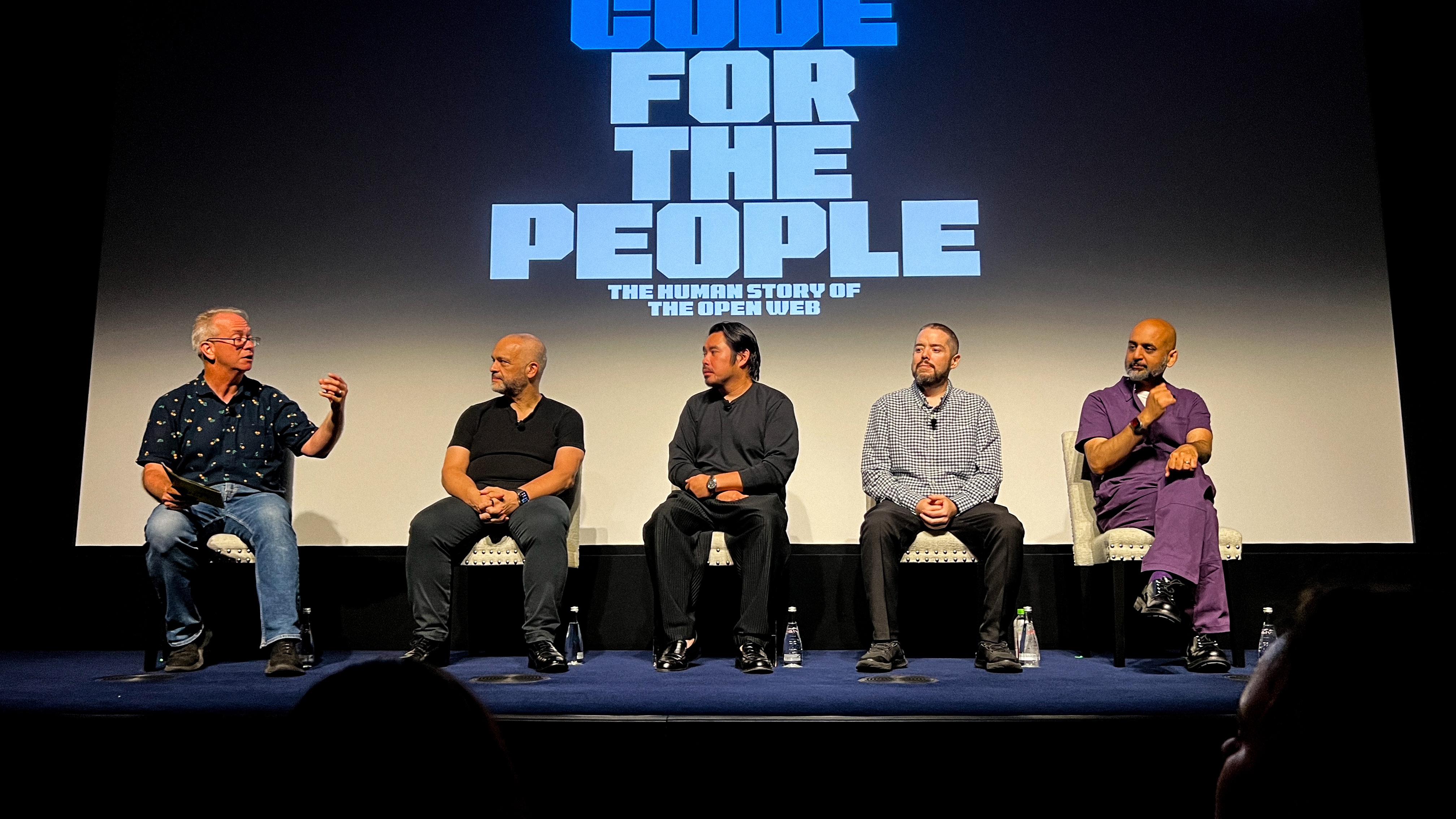
A terrific panel discussion (photo above) followed the film viewing and amplified its themes of digital self-determination in the age of AI and enshittification. Over and over, in different ways, a creatively diverse panel of experts asked us what future we want for the web, and invited us to help create that future.
(One of my favorite moments was when Anil Dash laughingly pointed out the irony of closed AI companies, who built their product by stealing the world’s IP without consent, threatening to sue any companies or people who try to reverse engineer their IP.)
“Code for the Future” will stream for free beginning on July 9, 2026.