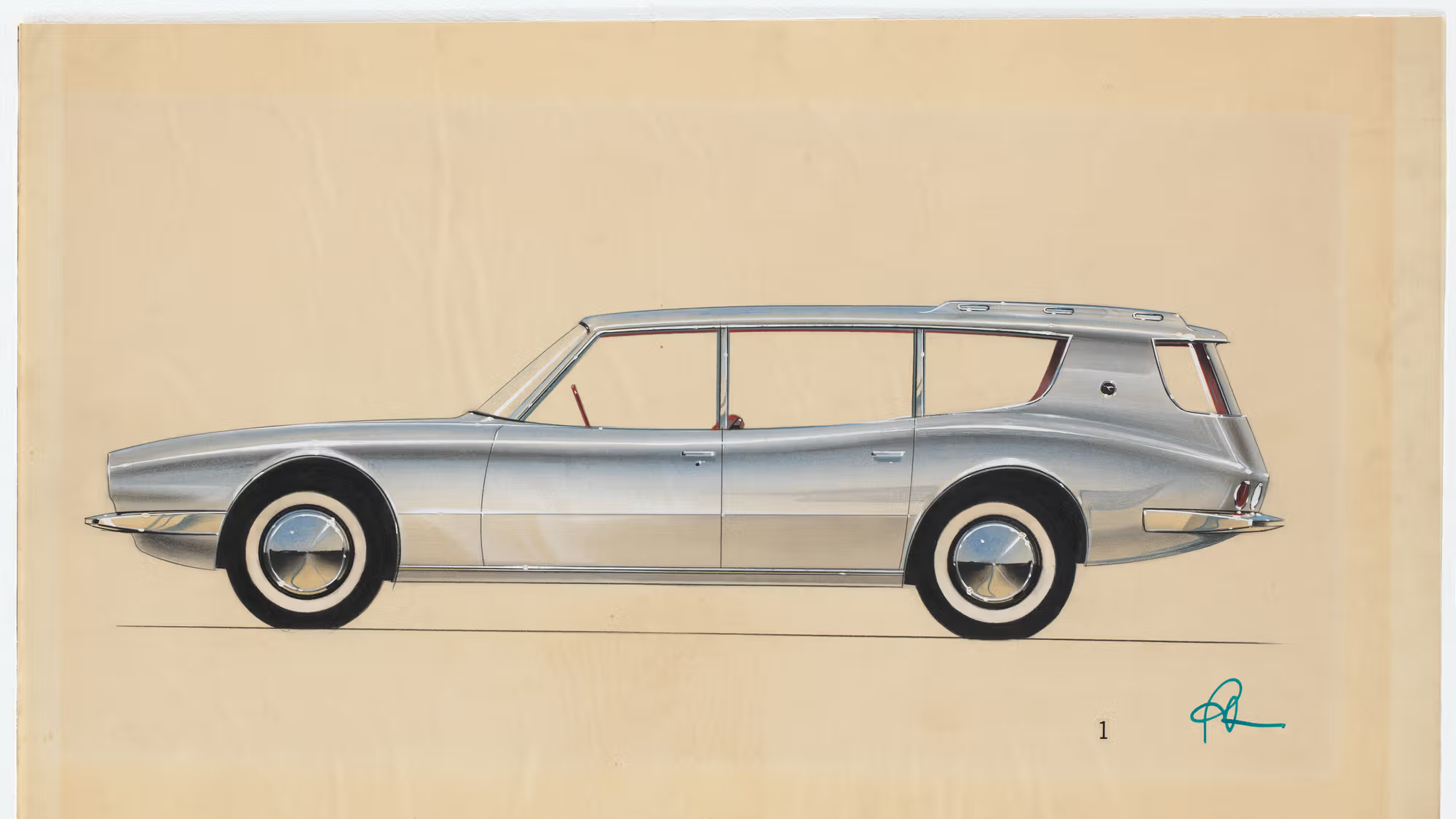
One man designed all of it. The fridge, the cigarette pack, the bus, the logo, the locomotive, the car. His name was Raymond Loewy, a French engineer who stepped off the boat in New York in 1919, and by mid-century you could live most of your day inside his imagination.
And he ran his whole career on one rule. He called it MAYA: Most Advanced Yet Acceptable.
Loewy believed every customer walks around with two forces pulling in opposite directions. One is attraction to the new. The other is fear of it. His job, as he saw it, was to design as far forward as possible, to push right up to the edge of what people can accept, and stop there. The most advanced thing they’ll still say yes to. —Glenn Pajarito, New, But Not Too New

“It should be humble, it should not jump at you, it should blend with the surroundings… that’s good design.”—Raymond Loewy
He was elected president of the American Society of Industrial Designers in 1946, and, in October 1949, he became the first of his profession to appear on the cover of Time magazine.
Loewy’s firm was associated with a steady stream of US design icons—including the “Coldspot” refrigerator, Lucky Strike cigarette packaging, Greyhound buses, Studebaker cars, Coca-Cola dispensers, radios, sewing machines, and Rosenthal dinnerware, as well as corporate graphics for Exxon, Shell, and the US Postal Service. This range testified to the potential impact of industrial design on the daily lives of millions, and its power as a commercial tool.
Loewy understood how essential package design and branding could be in the success of a product or an organization. In this respect, one of his most potent designs was for John F. Kennedy’s Air Force One, which began flying in 1962. His modern and elegant design of the plane’s livery (the external graphics and color scheme) transformed this particular Boeing 707 into an important element of the Kennedy administration’s global brand.
In his late career, Loewy was again at the heart of the American establishment as a consultant to the National Aeronautics and Space Administration (NASA) from 1967 to 1973.—MoMa: Raymond Loewy American, born Paris, 1893–1986

Thus began his career as the most important industrial designer of all time.
Outside of the field of product and transportation design, too few people know who Raymond Loewy was. The best-known industrial designer, founder of the industrial design profession, and member of the pantheon of our greatest designers, it is time for wider recognition of this amazing man. Coming to the United States from France in 1919 at the age of 25 with $40 in his pocket, Loewy brought with him a love of trains, cars, and good design, but he soon also developed a love of America. He was featured in Fortune and Life magazines and made the cover of Time. Forty years ago, he was engagingly interviewed on TV’s 60 Minutes.
Called “the frog” and “a refrigerator designer” by leaders of the auto industry, he created some of the most visionary automobiles in American history. He trained and developed dozens of other top designers. Today we see his work every time we see Air Force One, the Shell Oil or Exxon logos, or the Greyhound dog on a bus. Over his 60-year career, he reshaped the world as we know it. This is his story. —Gary Hoover: Raymond Loewy: The Unsung Story of the Greatest Industrial Designer (An American Original)